Feature
The long shadow of breast cancer in rural Kashmir



Many families are losing mothers in their 40s and 50s as stigma, scarce screening, and lifestyle changes fuel an alarming rise in cases
On a warm, sticky August afternoon in Bandipora, Bashir Ahmad sat by his open window. The smell of ripening apples from a nearby orchard filled the air. Outside, children’s laughter floated down the lane. Inside, the chair across from him stayed empty.
It was the same spot where his wife, Saqia, once sat, teasing their daughter about unfinished homework.
That rhythm ended in 2022, when fatigue and a low fever turned out to be signs of breast cancer.
“She was young,” Bashir said, his hands tightening around his knees. “We have a daughter, just ten years old. I prayed every day for her recovery.”
His hometown hospital now has 77 cancer patients. Twenty of them have breast cancer.
Across Jammu and Kashmir, the numbers are rising fast. From 2019 to 2023, doctors recorded 9,321 new breast cancer cases. In the same five years, 2,024 women died of the disease.
Last year alone, 732 women lost their lives. That’s an average of two women every day in the region.
Doctors say the shift is unmistakable.
At SKIMS in Srinagar, breast cancer cases have more than doubled, from 167 in 2010 to 358 in 2022.
In rural Kashmir, where healthcare is harder to reach, the impact is even harsher.
Experts worry about delayed diagnosis, loss of income, and growing emotional toll.
“We now have treatments like Paclitaxel and Carboplatin here,” Chief Medical Officer Dr. Ishtiyaq Naikoo said. “We’ve built capacity in the district [Bandipora], and women are entering screening programs, but too often when it’s already too late.”
Breast cancer is the most common cancer in women in India. It accounts for nearly three out of every ten cases.

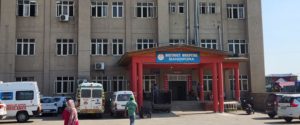
District Hospital Bandipora. [FPK Photo/ Sheeba Haji]
In Bandipora, as in many rural areas, fear and stigma often delay care, with breast cancer still seen by some as a source of shame or even a punishment, leading many women to hide their symptoms.
For Bashir, the diagnosis was the beginning of a heartbreaking journey.
Saqia endured chemotherapy and remained hopeful. In 2023, doctors discovered a serious liver condition. She had surgery, and for a time, recovery felt possible.
One summer evening, the couple sat together in the courtyard, laughing with their daughter. Yet months later, Saqia fell ill again and passed away.
“This disease breaks a family apart,” Bashir said, voice low. “You lose your partner, and the children lose their mother. The home feels empty.”
Oncologists link it to rising obesity, processed food, less physical activity, and smoking. Changes in childbirth patterns, like having children later and breastfeeding less, are also making breast cancer more common and appearing at younger ages.
Dr. Sameer Kaul emphasises the importance of early detection, public awareness, and routine exams.
A clinical study at Government Medical College, Srinagar, looked at 84 breast cancer cases between 2021 and 2023. The average patient was 45 years old, and more than 85 percent had invasive ductal carcinoma. About 89 percent were diagnosed at stage II or III, when treatment is often more complex.
Another family in Bandipora lived the same story as Bashir.
A woman had survived breast cancer but later developed liver and organ complications. Treated in Delhi, she appeared well for a while, then relapsed and died, leaving behind grieving children.
For families like this, life after the loss is just as hard. There’s debt, an emptiness at home, and a gap no one can fill.
Bashir now juggles work, chores, and raising his daughter, who still asks where her mother is.
“I had a partner who is gone,” he says. “Now it’s just me and my daughter. We keep going.”
Models like West Bengal’s “Pink Corridor,” which screened nearly six million women in a year, offer hope. But Bashir has already lost that hope and wishes no one else in his place will.
Outside his home in Bandipora, the August sun stretches over orchard-covered hills. Each day, he prays for the strength to carry on, and for the memory of his wife, alive in his daughter’s voice when she says “mama.”