Feature
Kashmiri medical students stranded in India months after fleeing Iran war
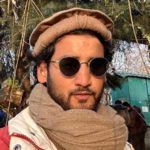


Displaced by a war they had no part in, Kashmiri medical students are stuck in a diplomatic limbo. Missing irreplaceable clinical rotations, paying fees for a university they cannot attend, and waiting for an embassy clearance that has not come.
Most mornings, Khan Farheen wakes up, goes to the gym, has breakfast, and heads to the library. At least, that is how it was.
“Although I haven’t been to the library for 2 weeks now,” she admits — khair, the Kashmiri shrug that means something between never mind and what can you do.
She is supposed to be in a hospital in Iran right now.
It has been three and a half months since Farheen was supposed to begin her clinical rotations.
“I was supposed to start my hospital rotations back in Feb,” she says. Instead, she is home — displaced by a war she had no part in, studying for exams that were cancelled, waiting for news that does not come, and slowly letting go, it seems, even of the library.
Farheen chose Iran for her MBBS deliberately and thoughtfully.
“I was personally inclined towards Persian as a language, plus the rich culture,” she explains. “It was a personal choice based on my own preferences.”
Her university, she adds with quiet pride, was “among the best universities in the world.”
The cost was also a factor, cheaper than private medical colleges in India, and comparable in fee structure to alternatives like Kazakhstan, Kyrgyzstan, and Uzbekistan.
That world has been upended.
On February 28, the US and Israel jointly attacked Iran, killing the Iranian Supreme Leader Ayatollah Ali Khamenei and several top commanders.
Iran’s retaliation extended the conflict across the Gulf region.
In the weeks that followed, the Indian Embassy in Tehran strongly advised citizens not to travel to Iran, whether by air or land, citing airspace restrictions and operational uncertainties affecting international flights.
When she heard the news, Farheen says, the weight of it did not land immediately.
“I couldn’t think of anything at that point… it basically hit me very late.”
What followed was a sustained, grinding anxiety.
“Obviously, I was very tense about this entire situation — how it would unfold and what would happen to my degree.”
Classes have since resumed for Iranian students.
For students like Farheen, the gates remain shut. “Ab ye depend karta hai Indian embassy ki guideline par ki deem karenge travel ko as safe or not,” she says — it all depends on when the embassy decides travel is safe again.
“This war has already cost everyone almost a semester’s worth of time,” she says plainly.
Her plan in the meantime? “I don’t know. Studying for the papers that were cancelled and waiting for any news to come through.”
She is not alone.
When the Indian government and the Ministry of External Affairs issued a notice asking citizens to leave Iran at the earliest opportunity, a group of Kashmiri medical students studying there did what they were told. They came home.
Months later, they are still here.
A fifth-year MBBS student at Urmia University of Medical Sciences, who spoke to me on condition of anonymity, left Iran on March 12, 2026. The reason, in his own words: “War.”
He has not been able to return since.
His account reveals the impossible bind these students now find themselves in.
The Indian government urged them to exit. Their university, however, was not willing to let them go quietly.
“We told the university, they did not allow it,” he said, recalling how the institution demanded official documentation before granting leave.
“They were asking for a letter from the ministry and embassy.”
Bureaucracy, it seems, does not pause for war.
Classes at Urmia University of Medical Sciences resumed more than a month and a half ago. The students remain stranded.
For most students, missed lectures can eventually be recovered. For medical students in their clinical years, it is a different matter entirely.
Farheen was at the threshold of that stage. She was about to begin her very first hospital rotation when the war broke out.
“Inshallah if I travel back, I will be supposed to start my rotations immediately,” she says — meaning no grace period, no transition. Straight into the wards, months behind, catching up in real time.
The student is further along, and facing a similar wall. “We have to repeat the ward duty we missed,” he says.
“The university will cooperate in this matter.” But when asked whether online classes might bridge the gap in the interim, his answer is blunt: “No, since we go to hospitals, there isn’t anything.”
Clinical rotations cannot be streamed. Patients cannot be examined over a video call.
Every week these students remain stranded is a week of irreplaceable hands-on training lost, the kind that forms the backbone of a medical degree and cannot simply be repeated from a textbook.
The financial toll compounds the academic one. Tuition fees had already been paid at the start of the semester.
Accommodation costs in Iran continue to accumulate, with no one to occupy the rooms.
“We have a semester thing which we have already paid for at the start of the semester,” the student said. And the accommodation? “Yes, we do. We’re paying.”
This is not entirely unprecedented. The student noted that Iraqi and Turkish students at his institution faced the same predicament earlier in the conflict, grounded, unable to return, but have since managed to travel back, because their countries share land borders with Iran.
For Indian passport holders, and particularly for Kashmiris studying there, no such geographic convenience exists.
They are dependent on diplomatic clearances, functioning airline routes, and a political will that has so far not materialised into concrete action. The Indian Embassy in Tehran did not respond to a request for comment.
The university, at least, has signalled goodwill. According to the student, the institution communicated that it wants students to be safe and to travel “as and when feasible,” and has indicated it will cooperate on the missed ward duties.
But goodwill is not a travel document. And cooperation, while welcome, does not open borders.
When asked if there was anything he wanted to say — to the authorities, or to other students caught in the same situation — a student’s response was spare and pointed.
“Standing together in times of war, and helping each other, whenever there is a possibility.”
It is the kind of quiet solidarity that emerges when official channels have offered little else.
These students did not ask to be caught between a geopolitical crisis and a university bureaucracy.
They followed their government’s advice, came home, and are now left navigating a limbo that no one seems to be in a hurry to resolve.
The war that drove them out is ongoing. The semester that continued without them is well underway. And the students are still waiting — at home, fees paid, rotations missed, futures uncertain.
One source’s name has been withheld at their request. Khan Farheen is quoted with her permission.