Healthcare
In Kashmir’s forgotten villages, parents carry children with disabilities across broken roads in search of healthcare


For many families living with disabilities in remote villages of Kashmir, the greatest obstacle is not the condition itself; it is the distance, the broken roads and the struggle to reach services that often remain out of reach.
Budgam: Twelve-year-old Insha Nabi cannot tell her father when she is in pain. She cannot ask for help in words or explain what she needs.
But inside their old single-storey home in Chill Brass village, her father has learned to understand a language beyond speech—one expressed through her eyes, gestures and silence.
“I know what she wants,” says 49-year-old Ghulam Nabi Lone. “She cannot speak properly, so I speak for her.”
For years, Lone has been more than Insha’s father. He has been her voice, her caregiver and whenever she needs medical attention, her only connection to the outside world.
Every visit to a doctor begins the same way.
Lone bends down, slips one arm beneath his daughter’s shoulders and the other beneath her legs, gently lifting her into his arms before setting off towards the nearest road.
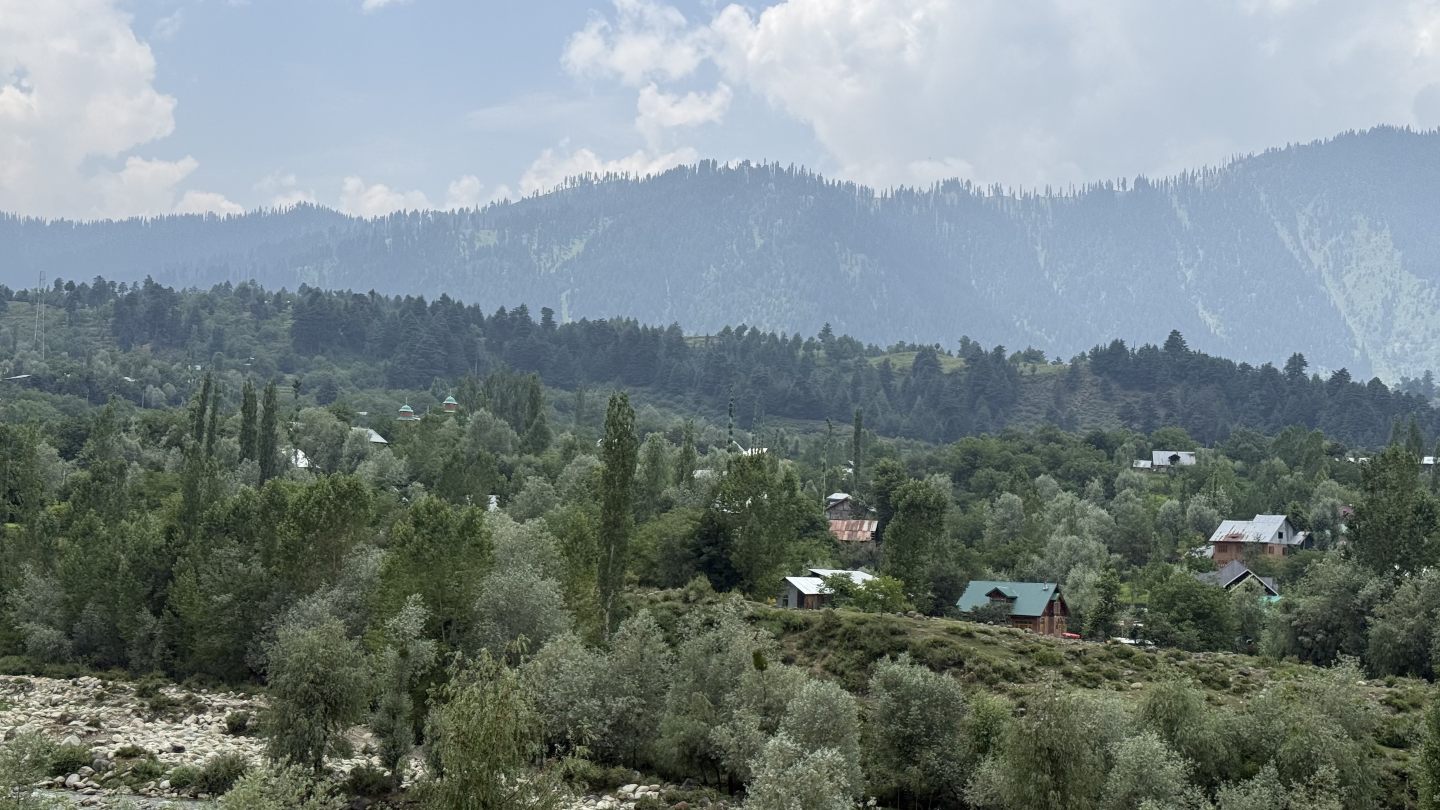
Their home in Chill Brass, a remote village in central Kashmir’s Budgam district, is connected by a narrow, uneven footpath that no vehicle can reach.
During the rainy season, sections of the trail become slick with mud. In winter, snow and freezing temperatures make the route even more treacherous.
For most people, seeking healthcare begins with arranging transport. For Insha, it begins with being carried.
There is no ambulance that can reach her doorstep, no wheelchair-accessible pathway connecting her home to the road and no transport system designed around her needs.
Before she can see a doctor, her father must first carry her to a point where a vehicle can finally reach them.
Lone recalls that Insha was healthy when she was born. But at around six months of age, before she had even begun crawling, she developed a disability that changed the course of her life.
Since then, almost every aspect of her world has depended on her family.
Her parents have become her primary caregivers, while Lone has carried the responsibility of ensuring she receives medical care whenever she needs it.
“When we have to take her for treatment, I first carry her to the road,” he says. “Only after that can we find transport.”
For families raising children with disabilities in Kashmir’s remote villages, the struggle often extends far beyond the medical condition itself.
Geography becomes another barrier between them and the care they need.
The distance between home and hospital is measured not only in kilometres.
It is measured in physical endurance, transport costs, lost wages and the emotional burden borne by families who must overcome multiple obstacles before they can even begin seeking treatment.

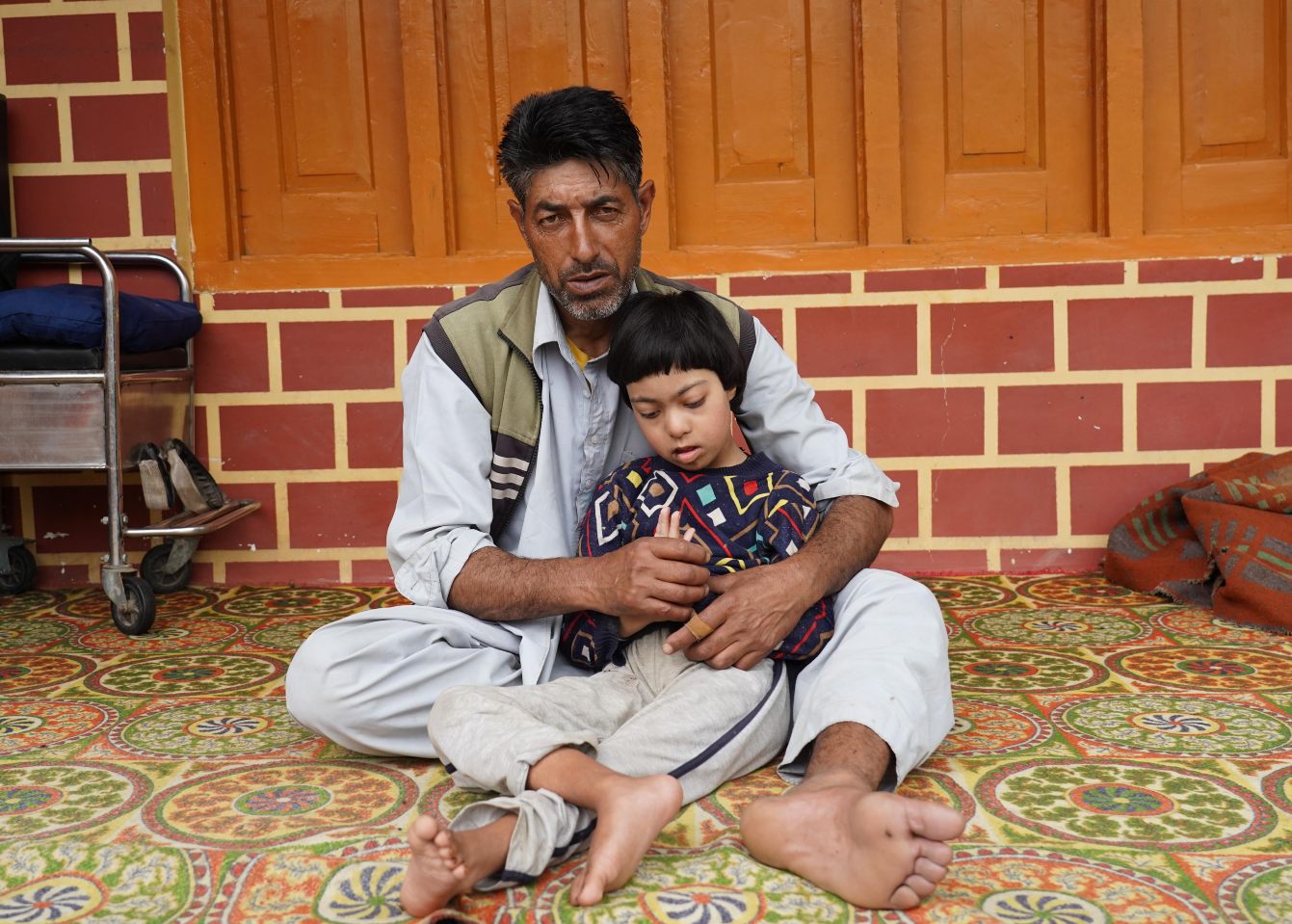
Insha, 12, rests in her father’s lap outside their home in Chill Brass, a remote village in Budgam district. [Sajad Hameed/FPK]
The hidden cost of healthcare
For Lone, a daily-wage labourer supporting a family of seven, every hospital visit comes with difficult choices.
Transport alone costs between ₹500 and ₹1,000. Added to that are consultation fees, medicines, diagnostic tests and meals during the journey.
For a household that depends entirely on daily wages, a single trip to the hospital can consume several days’ income.
“There were many times doctors advised CT scans and other tests,” Lone recalls. “We simply couldn’t afford everything.”
Some treatments had to be postponed. Some medical journeys had to wait. Yet the struggle did not end once the family reached the hospital.
Lone says they made repeated visits before finally securing Insha’s disability certificate.
“Even correcting errors in her Aadhaar card required another journey,” he says, adding that every visit meant carrying his daughter, arranging transport and sacrificing another day’s wages.
During the harsh winter months, when heavy snowfall cuts off roads, families in remote villages often have little choice but to rely on traditional methods.
They carry patients on wooden cots across snow-covered terrain until they reach a point where vehicles can finally take over, Lone says.

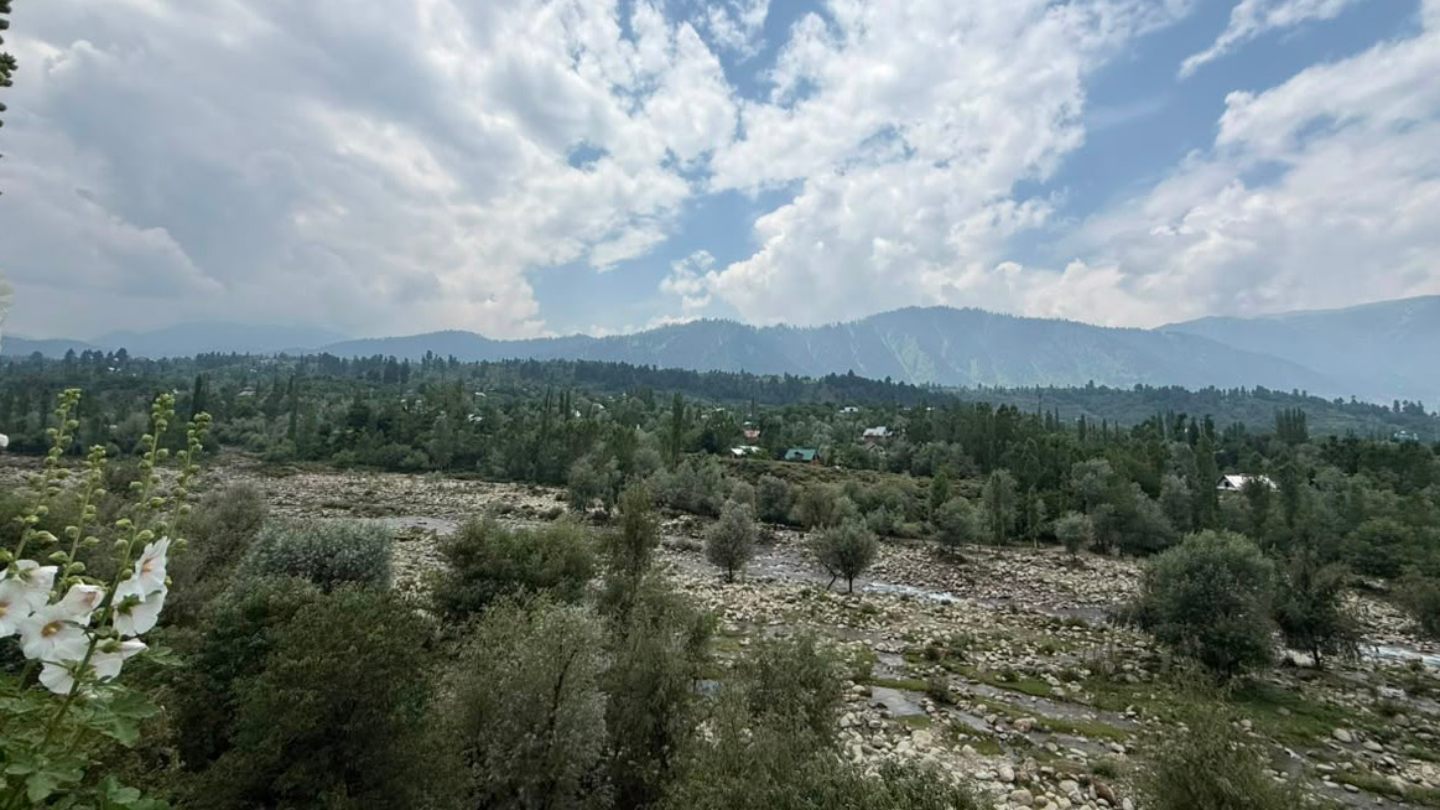
A general view of the remote village of Chill Brass in Budgam district. [Sajad Hameed/FPK]
Bridging the gap
The struggles faced by families like those of Ghulam Nabi Lone and Mohammad Rafiq Tali unfold despite a range of welfare measures intended to support persons with disabilities.
The Jammu and Kashmir Social Welfare Department is the nodal agency responsible for implementing disability welfare programmes across the Union Territory.
Under the Jammu and Kashmir Integrated Social Security Scheme (ISSS), eligible persons with benchmark disabilities are entitled to a monthly disability pension.
The department also facilitates disability certification, issuance of Unique Disability ID (UDID) cards and access to welfare schemes.
In coordination with the Department of Empowerment of Persons with Disabilities, it supports the distribution of assistive devices and mobility aids under the Assistance to Disabled Persons (ADIP) Scheme, which aims to improve mobility, independence and inclusion.
An official familiar with the implementation of disability welfare programmes, speaking on condition of anonymity because they were not authorised to speak publicly, said the government has been working to expand access to disability pensions, mobility aids, UDID cards and other support schemes across Jammu and Kashmir.
“We recognise that reaching beneficiaries in remote and mountainous areas remains a continuing challenge,” the official said.
“Efforts are being made to strengthen outreach and improve access so that eligible persons can benefit from these schemes.”
Health officials said rehabilitation services for persons with disabilities are available through district hospitals and referral healthcare facilities, while patients requiring specialised treatment are referred to tertiary care institutions.
“We acknowledge that difficult terrain, long travel distances and limited transport remain significant challenges for families living in remote areas,” a health official said.
“We are working to strengthen outreach and improve access to rehabilitation and healthcare services.”
District administration officials said expanding road connectivity and improving access to essential public services in remote villages remain ongoing priorities.
An Executive Engineer with the Roads and Buildings (R&B) Department in Budgam said a Detailed Project Report (DPR) has been submitted for road connectivity to Chill Brass and several other areas.
“Once the proposal is approved and the necessary clearances are received, work will be taken up in accordance with the approved plan,” the engineer said.
Another father, another journey
Nearly 30 kilometres from Insha’s village, another father tells a story that echoes with painful familiarity.
Mohammad Rafiq Tali’s son, Mehraj Ahmad Tali, developed a disability when he was about a year old.
Fifteen years later, Rafiq’s life continues to revolve around hospitals, medical treatment and the unrelenting demands of caregiving.
When no transport is available, the family improvises. They carry Mehraj on their shoulders.
At times, they lay him on a ‘charpoy’ and carefully navigate the uneven village paths. On other occasions, neighbours step in to help shoulder the burden.

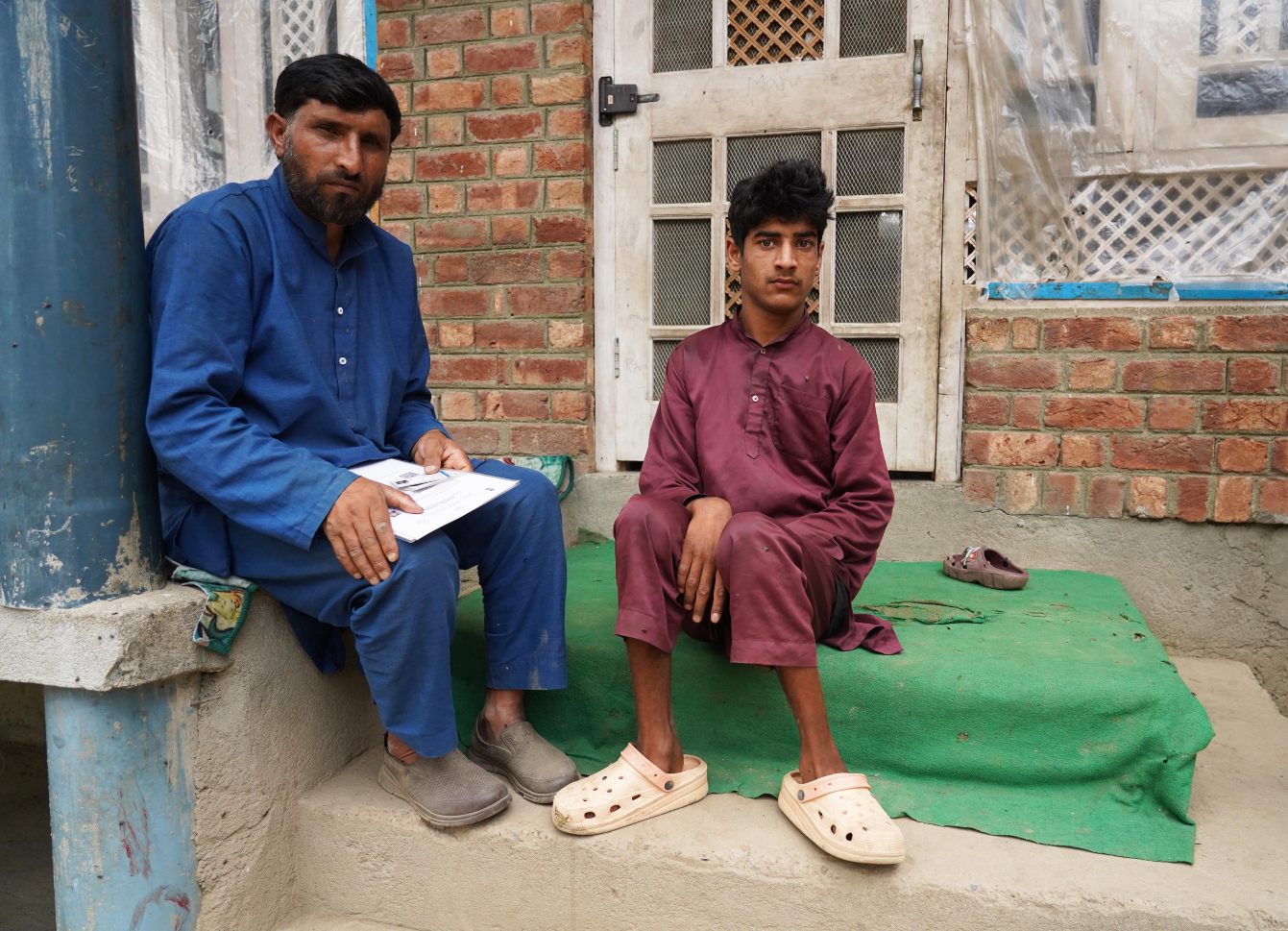
Mehraj, a young boy with a disability, sits with his father outside their home in the remote village of Chill Brass, Budgam district. [Sajad Hameed/FPK]
Recently, after Mehraj suffered injuries in a fall, the family once again carried him across rugged terrain before they were able to find transport to Srinagar.
“Reaching a hospital is often as exhausting as the treatment itself,” Rafiq says, adding that a single trip to Srinagar costs between ₹1,000 and ₹1,500.
For Rafiq, a daily-wage labourer who earns around ₹400 a day when work is available, every hospital visit places yet another strain on the family’s already fragile finances.
“I only get work for ten or fifteen days in some months,” he says.
“Whatever income I earn is quickly consumed by medicines, transport and treatment. I receive a monthly disability pension, but accessing additional assistance has remained difficult.”
He had applied for a scooter that would have made hospital visits easier, but says it never reached the family.
A wheelchair was eventually provided, yet using it independently remains difficult because the surrounding infrastructure offers little support for people with disabilities.
Although Mehraj is enrolled in Class Five, attending school regularly remains a challenge because of the distance, limited accessibility and the difficulties of travelling from the village.
For Rafiq, as for many parents raising children with disabilities in Kashmir’s remote villages, caregiving extends far beyond the walls of home.
Every journey becomes a test of physical endurance, financial resilience and unwavering determination.
The emotional weight of caregiving
Rafiq pauses often as he speaks. At one point, he falls silent, staring at the floor before reaching for a glass of water. When he begins again, his voice is noticeably softer.
Years of caregiving have reshaped every aspect of his family’s life.
Watching other children walk to school, run through village lanes or simply accompany their parents serves as a constant reminder of what his son has been unable to experience.
His wife now takes medication for heart-related ailments and anxiety, which Rafiq believes are the result of years of emotional and physical strain. “I have not visited relatives for years,” he says. “We cannot leave him alone.”
Every hospital visit requires time, money and physical effort. Every trip to a government office means arranging transport, carrying Mehraj and sacrificing another day’s income.
For Rafiq, caring for his son has become a full-time responsibility, leaving little room for work, family visits or any semblance of a normal routine.
Even before treatment begins, he says, the journey itself has already taken a heavy toll on the family.
Rights on paper, struggles on the ground
For Ghulam Nabi Lone and Mohammad Rafiq Tali, caring for their children with disabilities involves repeated journeys to hospitals, government offices and schools, often requiring them to carry their children from their homes to the nearest motorable road before arranging transport.
According to the 2011 Census of India, thousands of people across Jammu and Kashmir live with disabilities, including movement, visual, hearing, speech and multiple disabilities.
India’s Rights of Persons with Disabilities Act, 2016, guarantees equal rights, accessibility, education, healthcare and opportunities for persons with disabilities.
The Jammu and Kashmir Rights of Persons with Disabilities Rules, 2021, provide the framework for implementing these protections across the Union Territory.
In neighbouring Ganderbal district, Mohammad Amin Sofi’s experience reflects another challenge faced by persons with disabilities.
Amin, who lives with a post-polio disability, does not always face the long journeys to healthcare that families like Insha’s and Mehraj’s endure.
His challenge often begins after he reaches his destination.
Banks, schools, government offices and other public buildings can be difficult to access because of inadequate infrastructure.
Amin says that even when essential services are nearby, inaccessible entrances and the absence of basic accessibility features can make it difficult to enter or use public buildings independently.
His experience points to accessibility challenges beyond healthcare, particularly in accessing public institutions and essential services.
The road home
As evening settles over Chill Brass, the village grows quiet. Inside their home, Insha sits beside her father, who gently adjusts the blanket around her before helping her settle down for the night.
Tomorrow may bring another hospital appointment, or it may bring another difficult decision about whether the family can afford the journey.
For Ghulam Nabi Lone, that uncertainty has become part of everyday life. He does not know how long he will be able to carry his daughter.
He only knows that whenever she needs medical care, he will lift her into his arms and begin walking.
Some days, the journey is for treatment. On others, it is for a disability certificate, a government office or another appointment. For Insha, however, every journey begins the same way.
This story was supported by the International Foundation for Disability Inclusion’s Journalism Fellowship on Disability Inclusion.
Sajad Hameed is a visual journalist, covering human rights, politics and technology in South Asia.