Climate Change
Kashmir’s Wular is sick, and its women know it



On Asia’s largest freshwater lake, generations of women wade into darkening water each dawn, pulling a shrinking harvest from a home that raised them and now struggles to hold on to itself
Mist still hangs over the hills above Bandipora when the first oars touch Wular Lake. Wooden boats leave the banks in the early morning light, transporting women wrapped against the cold as they head out to work, just as their mothers and grandmothers did before them.
Naseema is already among the reeds, feeling beneath the water for the spiny green pods called geeir, or water chestnuts. They have helped feed her family through many winters.

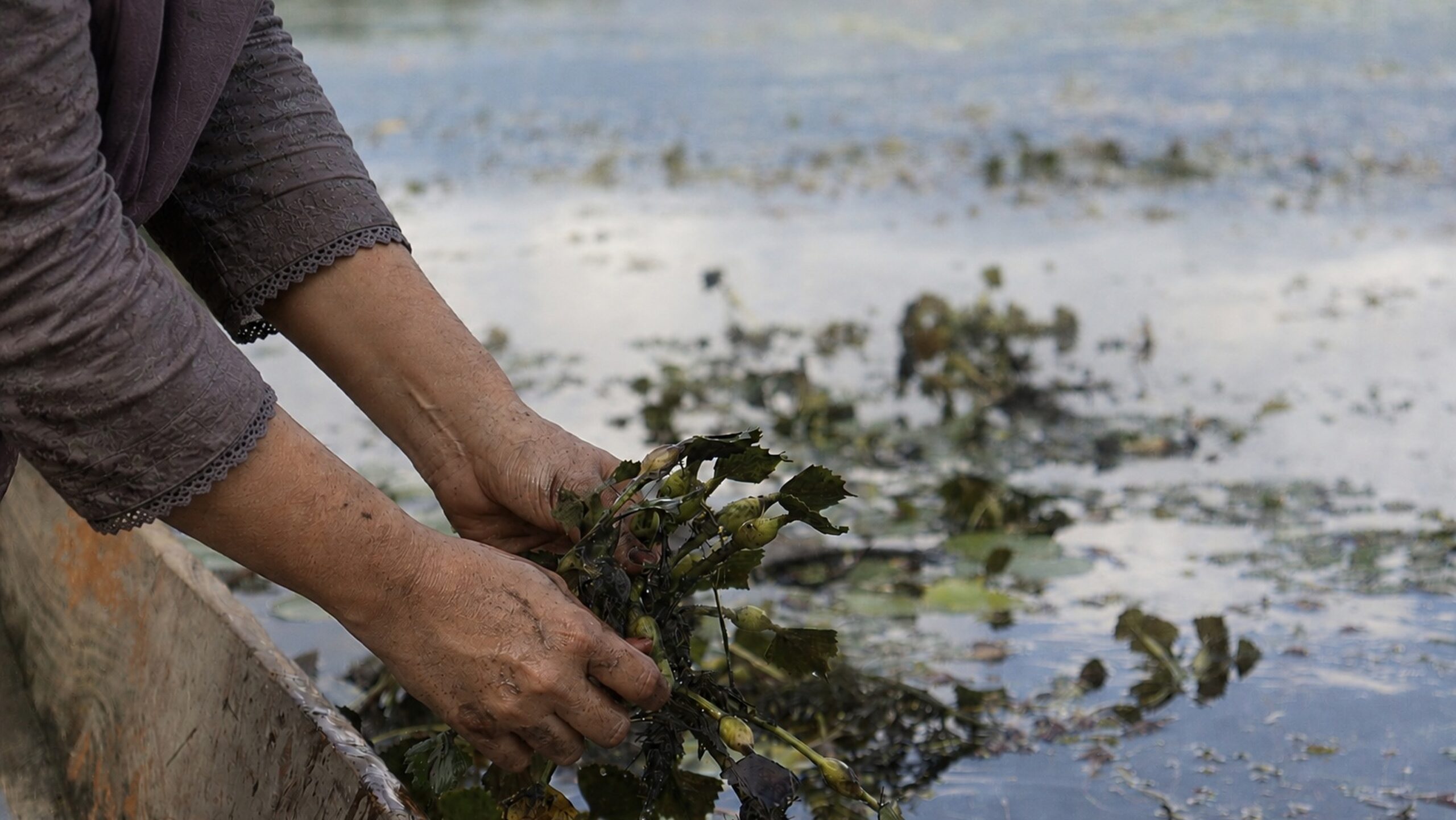
A woman pulls water chestnuts from Wular Lake while standing in a boat. [FPK Photo/Shaizan Nadaf]
“This lake has fed our families for generations,” she says, stifling a yawn. “Today, we fear it may no longer feed our children.”
Her words drift over villages that have grown up along the shoreline of Asia’s largest freshwater lake: Lankreshipora, Lahwarlpora, Saderkoot, Banyari, Zurimanz, Kanbathi.
Here, the harvest season has always come like a promise, filling boats and pockets alike, paying for school fees and flour and the small comforts that keep a household whole.
This year, the promise feels thinner as women row out with hope and return with less, sensing that something in the water itself has changed beneath their palms.
Naseema remembers when the lake gave generously.
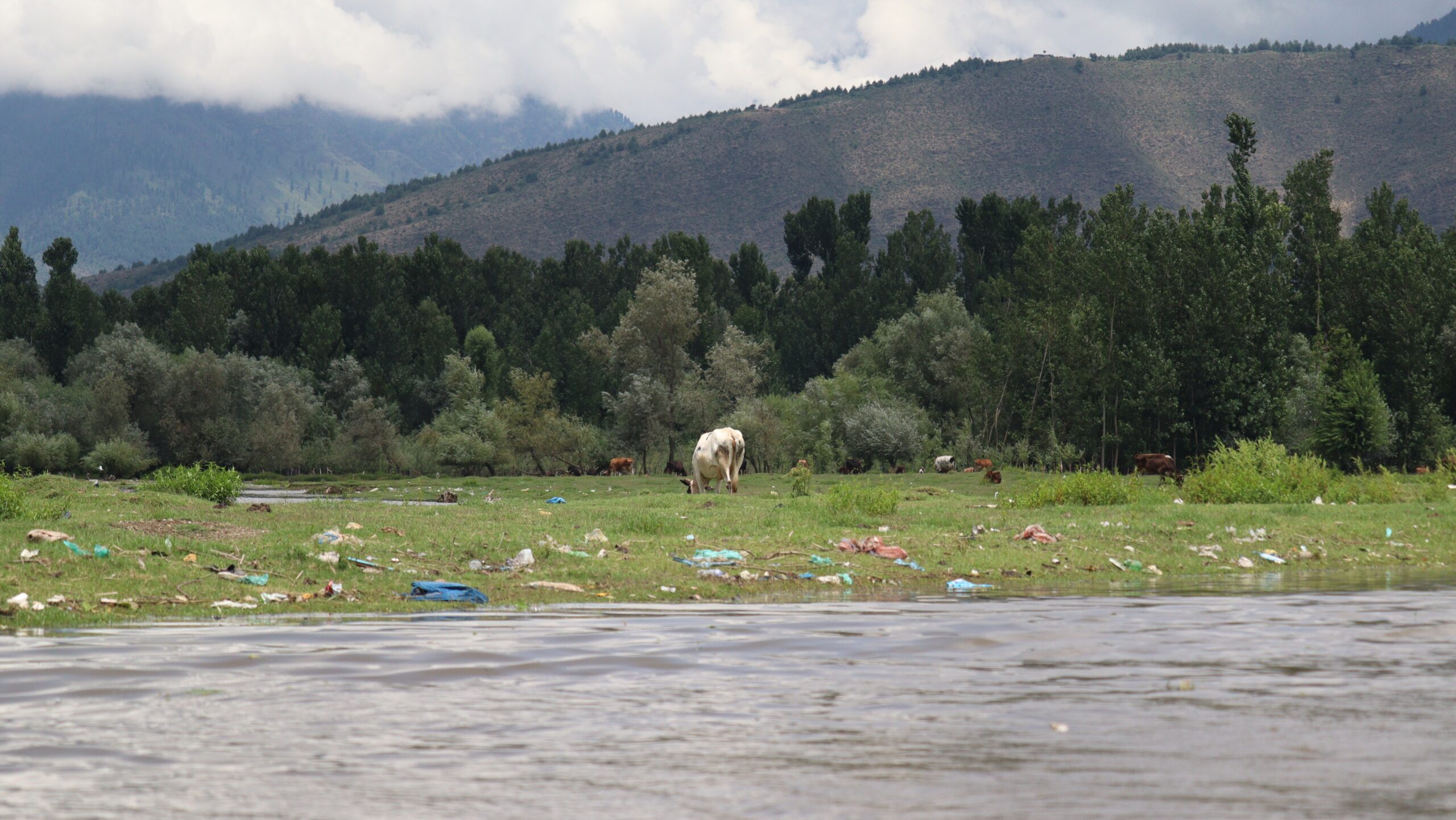
Large quantities of garbage are seen floating in Wular Lake. [FPK Photo/Shaizan Nadaf]
“Earlier, one day of hard work was enough to fill our boat,” she says, rowing through ripples and rubbish strewn across the surface. “Today, we spend the entire day in the water and return with far less.”
Her apparent morning monologue comes slowly, almost like a mourning song, timed to the movement of her hands pulling chestnuts from the mud below.
“It breaks our hearts because this is the only income many of us have during this season.”
A second sorrow has spread through the lake alongside the thinning harvest.
The women describe a sharp, unfamiliar smell rising from certain stretches of water, along with skin irritation that can last for hours after they return home.
“After spending hours in the lake, many of us suffer from itching and skin irritation,” Naseema says, her words recreating the reflection of Sounaullah Aftab’s iconic commentary: Khazir Sonchta Hai Wular Ke Kinare.
“Sometimes our hands and legs burn for hours after we return home. We still come because our families depend on this work.”
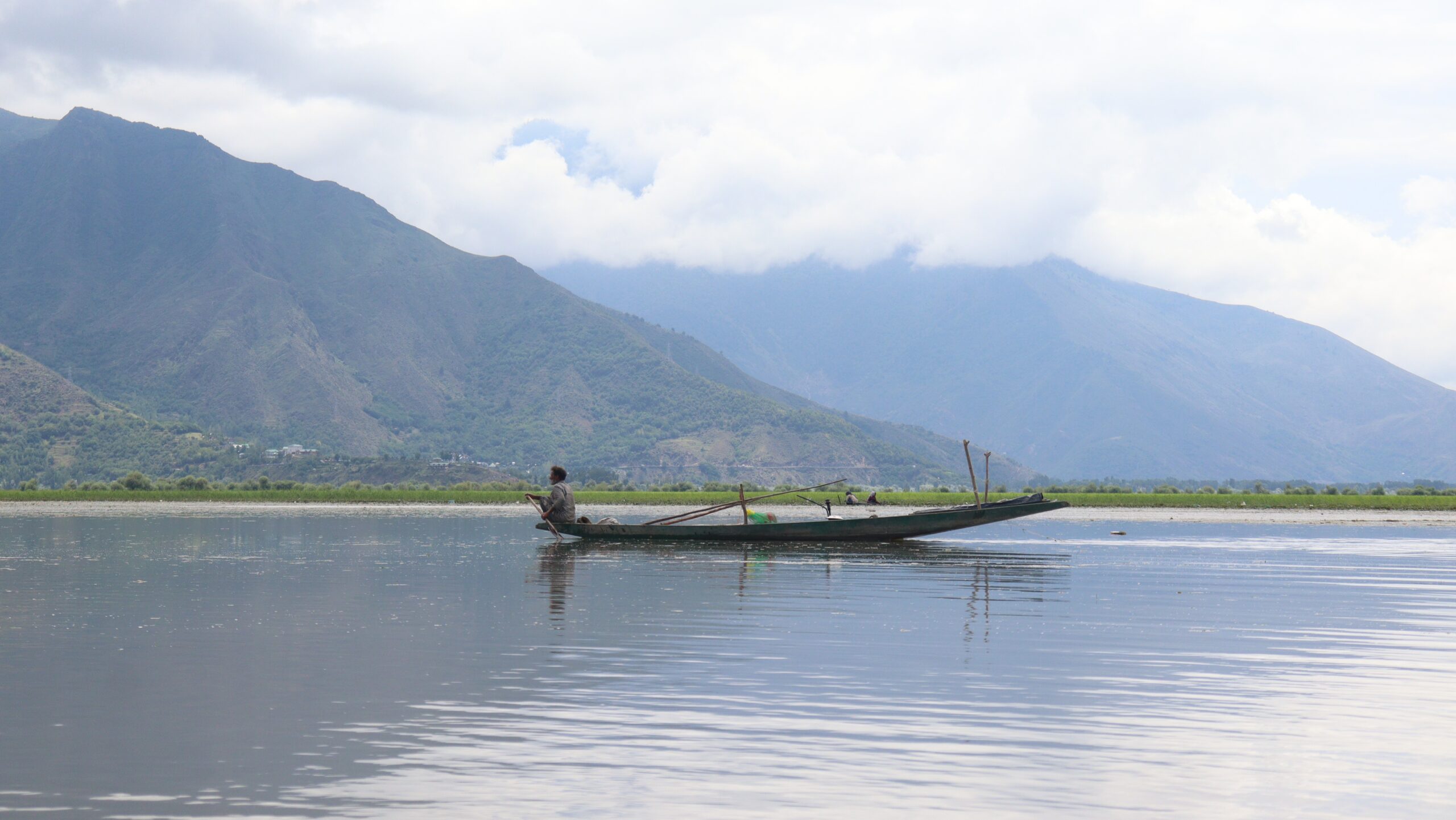
Large quantities of garbage are seen floating in Wular Lake. [FPK Photo/Shaizan Nadaf]
Nearby, Zareefa lifts a dripping handful of chestnuts and speaks plainly about what she wants from the lake that raised her.
“We only want a healthy lake,” she says. “If the lake survives, our families survive.”
Out past the reed beds, fishermen read the same story in different water.
Ishfaq Ahmed has spent years learning the moods of Wular, and he senses a lake growing weaker beneath its surface calm.
“Whether it is fish or water chestnuts, everything depends on the health of the lake,” he says. “If Wular becomes weak, everyone living around it suffers.”
His words carry past his own nets, describing an entire local economy tethered to one vulnerable body of water now bending under pollution, silt, and construction pressing in from every side.
That pressure follows the harvest all the way into town.
At the market in Bandipora, vendors once built towering piles of fresh green chestnuts that lasted from sunrise until dusk. The piles have grown smaller now, and the prices climb to match the scarcity.
Shahzada has sold water chestnuts long enough to feel every fluctuation in her bones.

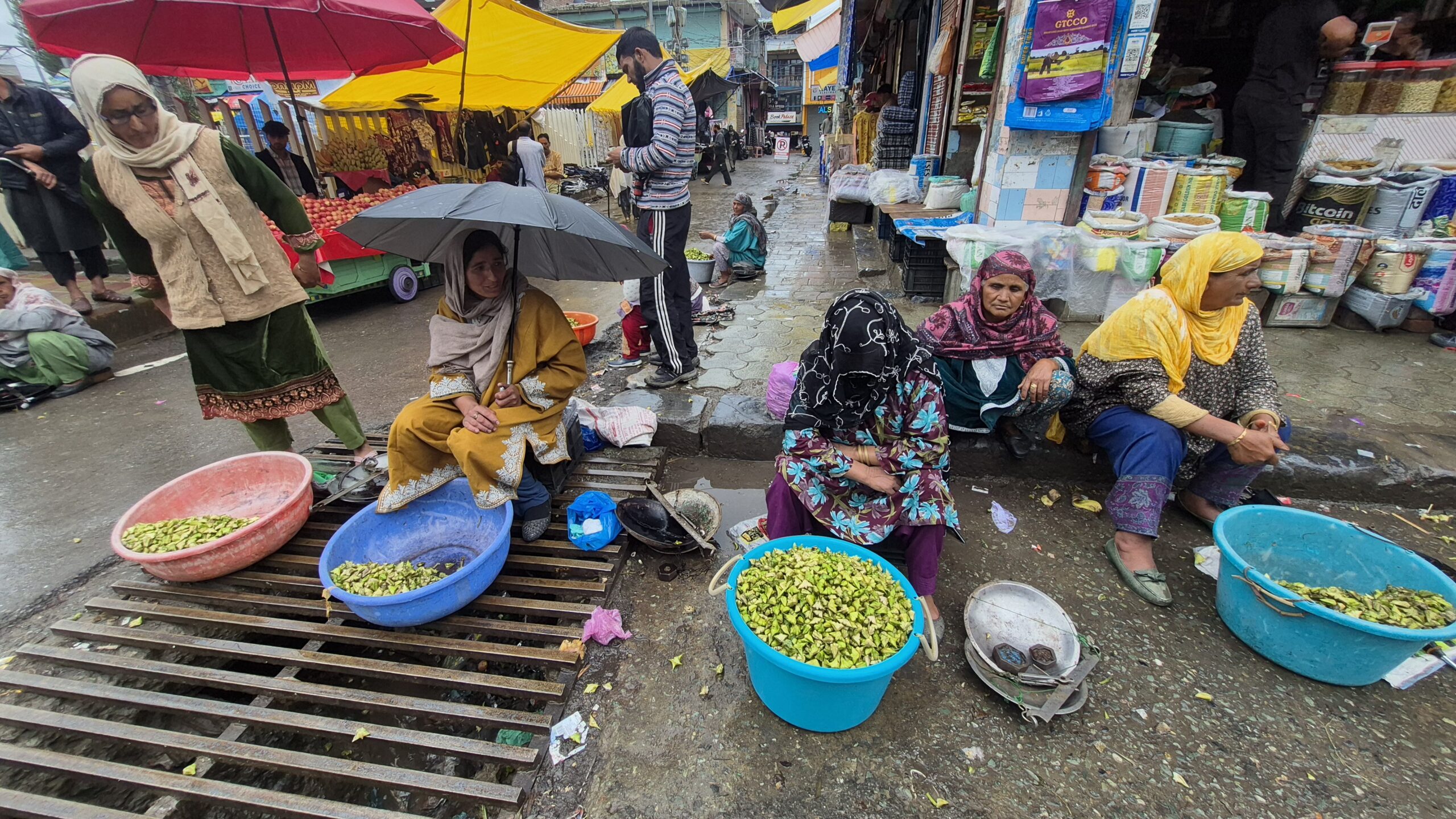
Women sell water chestnuts at a market in Bandipora. [FPK Photo/Shaizan Nadaf]
“There was a time when we had enough supply to sell throughout the day,” she says. “Now the supply is smaller and prices are higher. Customers complain, but they don’t know that we are also struggling.”
A brief season is supposed to sustain her family for months, so a poor one leaves her counting coins with dread and distress.
Rafiqa, arranging her own basket beside Shahzada’s, speaks of the crop with something close to reverence.
“Beyond fruit, it is our livelihood,” she says. “Every basket we sell helps our families to sustain. We pray now every year that the lake gives us a good harvest.”
Beneath these small, human losses runs a larger current, one that scholars and scribes alike have traced for years.
Altaf Rasool Mathanji, an author and columnist raised on Wular’s shore, calls the lake the ecological heartbeat of Kashmir, a living system that tempers floods, sustains fish, and holds together a web of life stretching far beyond its banks.
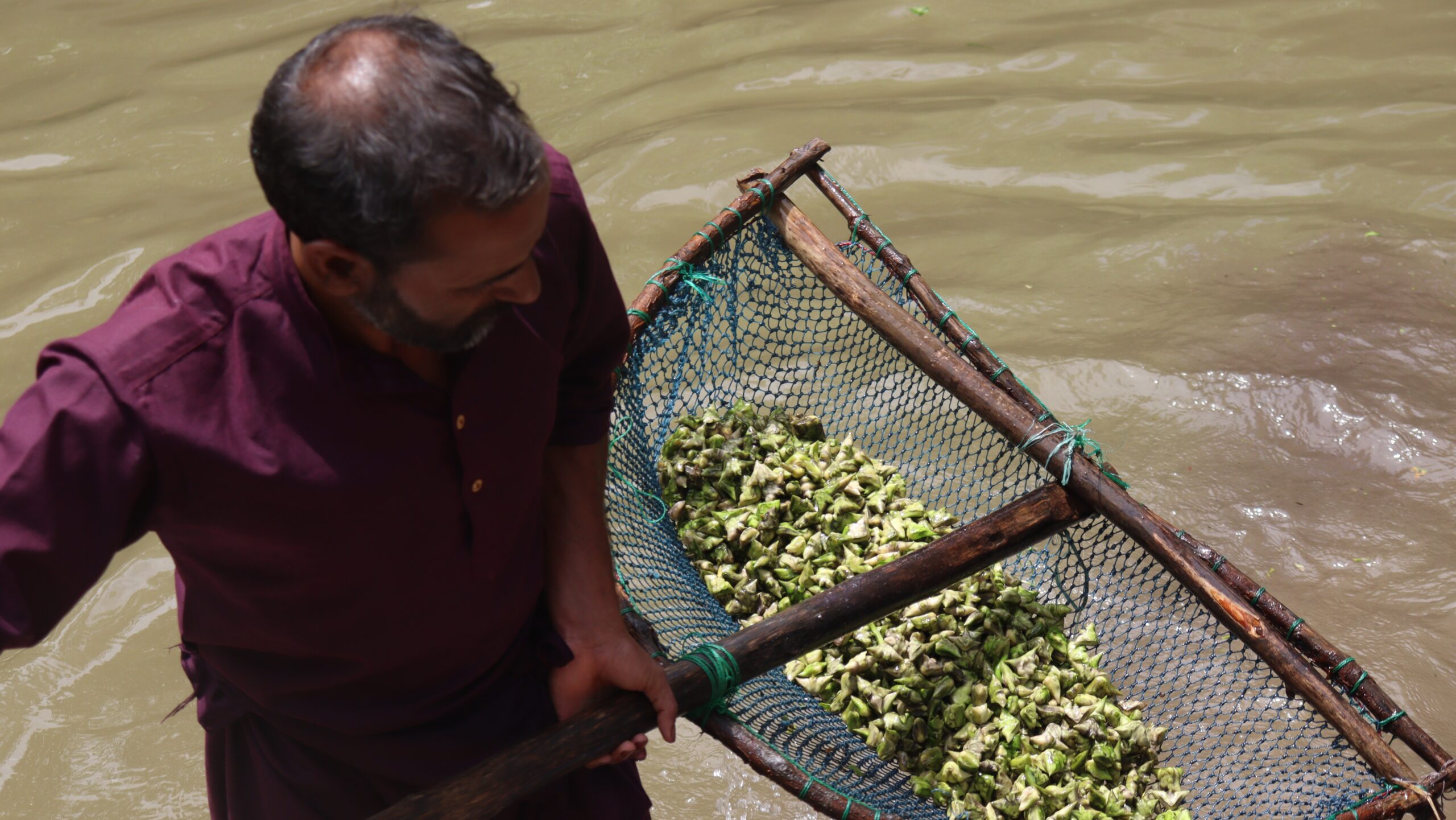
Harvested Chestnuts are cleaned before being sent for sale. [FPK Photo/Shaizan Nadaf]
Pollution, encroachment, silt, and the mounting weight of climate change have worn down that system season after season, he says. “Untreated sewage, farm runoff, plastic waste, and unplanned construction along the shoreline have poisoned the water slowly, degrading both the ecology and the health of the people who depend on it.”
Losing the lake’s balance, this Wular-native warns, would mean losing a piece of what keeps the entire valley whole.
Government officials describe an effort already underway to turn the tide.
The Wular Conservation and Management Authority has dredged 78.43 lakh cubic metres of silt, clearing 5 square kilometres of the most severely choked lakebed and restoring the lake’s capacity to hold water.
Crews have cut back invasive willow growth to reopen floodplains long buried beneath it, and planted vegetation across the catchment to strengthen habitat for migratory birds returning each winter.
The lake’s boundary now bears 1,159 geo-referenced concrete pillars, marking a revenue area of 130 square kilometres through GPS and remote sensing.
Along Baniyari and S.K. Payeen, a 2.5-kilometre walkway with cycling paths, lookout points, and jetties is taking shape, a ₹18.73 crore project meant to build fresh income for residents through tourism.
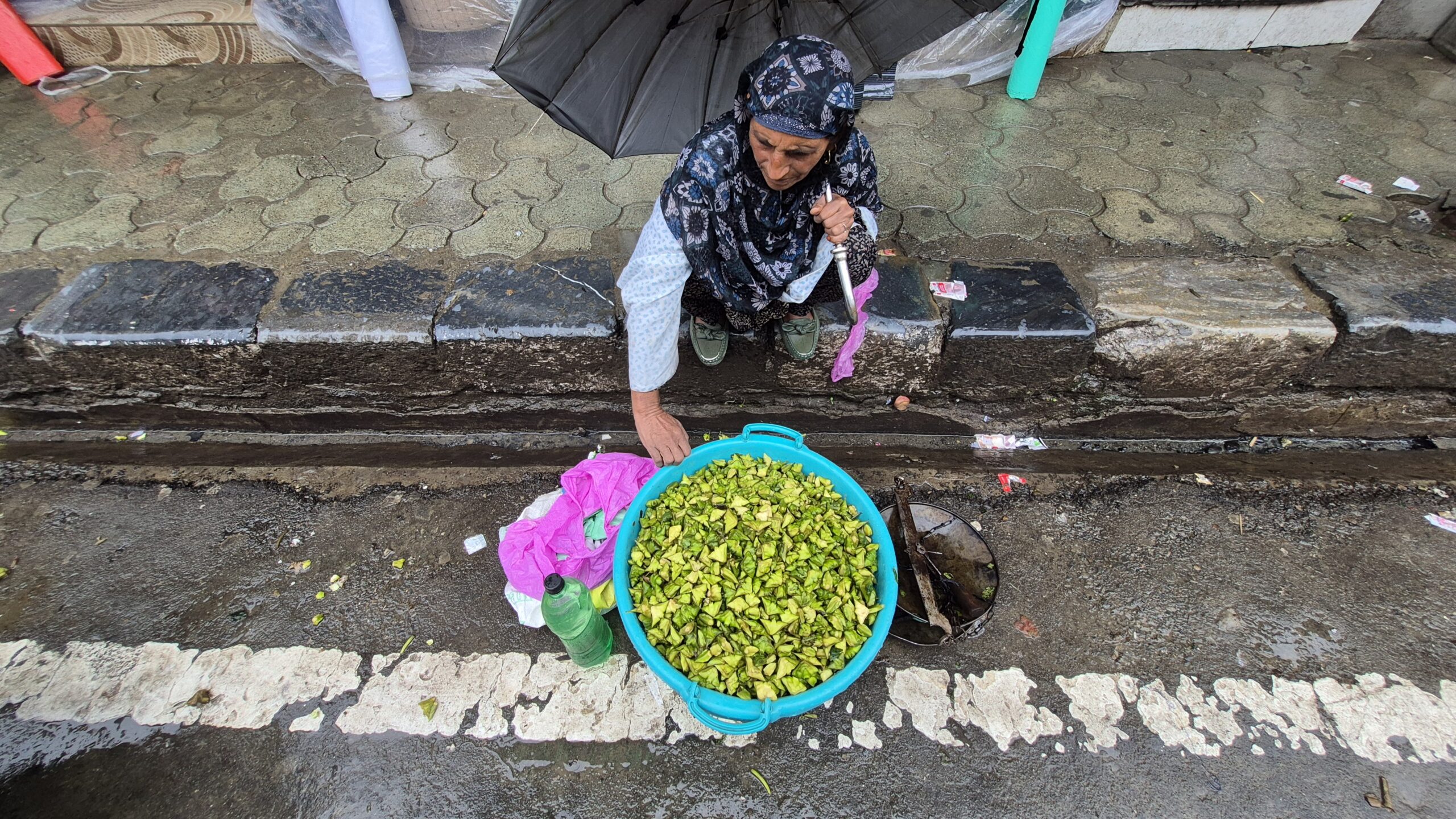
A woman selling fresh chestnuts outside a shop in the main market in Bandipora. [FPK Photo/Shaizan Nadaf]
A second phase, budgeted at ₹9.99 crore, with cycling tracks and eco-tourism parks planned for Baniyari, Garoora, and Ninglee, waits in the coming financial year.
Officials have also pressed to keep harvesting and fishing licenses with local families instead of outsiders, insisting that those who depend on the lake most deeply should be the ones who benefit as it heals.
Small proof of that healing has already begun to surface.
Lotus flowers have bloomed across parts of Wular for the first time in decades, delicate and unmistakable against the water’s surface.
Officials point to the blooms as a sign that patient restoration can still revamp the lake’s future.
Healing, though, remains a slow and unfinished thing, and the women who wade into Wular each morning hold no illusions about waiting for symbols alone.
They return because the water is what they have always known, tracing their mothers’ movements through the same cold currents, hauling in smaller yields, and nursing skin that stings after they reach shore.
These women hope the lake that once raised generation after generation still holds enough within it to raise the ones still coming.
Whether Wular finds its way back may decide whether that inheritance survives, or fades silently into a story told only around fires, remembered by those who once knew the lake when it gave without asking anything in return.