Health
Kashmir’s cancer care: chapter 2 — the waiting ward


Families describe delayed scans, shifting surgery dates and chemotherapy that never came as they struggled to understand how their loved ones’ treatment had changed.
Sabia’s father looked healthy again. His liver, once riddled with tumours, had healed. His blood counts sat comfortably within normal ranges.
Eighteen rounds of intravenous chemotherapy, followed by two years of oral treatment with scheduled breaks, had done what doctors at Srinagar’s Sher-i-Kashmir Institute of Medical Sciences hoped they would do: beat back a stomach cancer that had spread through his body since his diagnosis in January 2020.
“Everything was good,” Sabia said. “I couldn’t understand what went wrong.”
What went wrong began with a delay.
When Javaid’s second medication holiday ended in June 2022, doctors told him to schedule a CT scan for August.
The hospital’s staffing shortage pushed the scan back. Results finally came in showing his disease had progressed, but his oncologist kept postponing the next round of chemotherapy until October.
By then, months had passed since anyone had a clear picture of what was happening inside him.
The new regimen brought a crisis fast.
After his third infusion, Javaid began bleeding heavily from his rectum, and his red blood cell count fell by half.
Sabia rushed him to the SKIMS emergency room, where nurses and doctors moved around him amid the constant beeping of monitors.
She repeated her father’s medical history to physician after physician, asking what had caused the bleeding. Doctors suspected the tumour in his stomach was responsible, a possible reaction to the new chemotherapy, but they held off on confirming it.
“They never started any treatments except for blood transfusion,” Sabia said. “He was actively bleeding all this time.”
Three days passed this way. Doctors told Sabia her father was stable and would soon be discharged.
On the third day, she pushed back, insisting someone examine him properly.
Only then did staff order tests and refer the family to gastroenterology and oncology.
A relative who worked as a gastroenterologist performed an endoscopy that same day and confirmed the tumour was the source of the bleeding.
Confirmation brought no relief.
Javaid’s oncologist told Sabia to seek admission through medical oncology, and separately, to schedule radiation therapy through the radiology department to stop the bleeding. Neither department would take him.

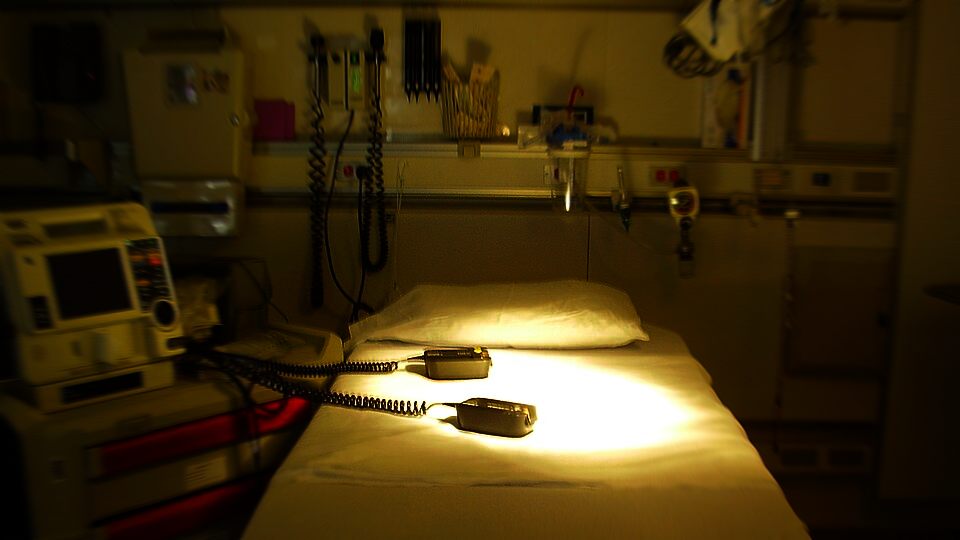
Emergency room after the treatment of a trauma patient. [Wikimedia/Jacob Windham]
A doctor who had previously worked at SKIMS later explained the reluctance to her plainly: physicians feared the tumour could rupture and cause fatal bleeding at any moment, and nobody wanted to own that outcome.
“It was like he was a ticking time bomb, and no one wanted responsibility for a fatality,” she said.
Sabia took her father home with medicine a relative had prescribed to control the bleeding. It worked.
A CT scan a week later showed no active bleeding, and his oncologist told the family to continue the medicine and return in two months, assuring them he would recover in that window.
He did not.
“As his disease was in progression, his liver paid the price for this wait,” Sabia said. Treatment never resumed.
“I can understand that whatever happened was fate,” she said, “but how can I understand the anxiety and uncertainty we had to go through? We deserved honesty.”
Ruqaiya’s family understood that anguish, too, though her disease was different.
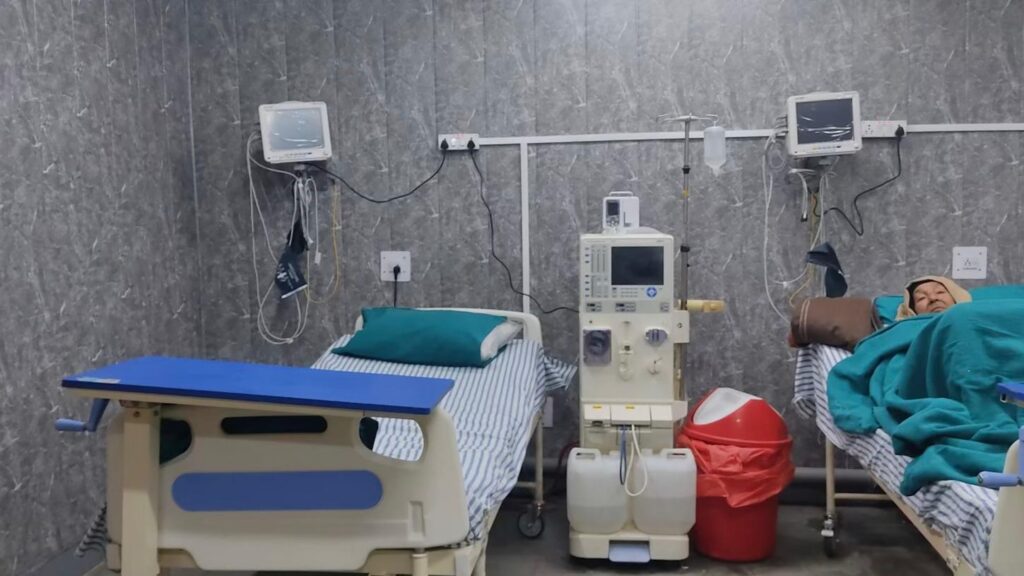

Diagnosed with first-stage breast cancer in January 2023, she waited so long for surgery that her cancer had advanced to the second stage by the time doctors operated, a delay that cost her 22 lymph nodes and accelerated the disease.
“We did all the tests and biopsy from private labs because we knew that government hospitals would take forever to reach a diagnosis,” her daughter, Masooma, said. “But they delayed her surgery, and kept changing the dates without giving any reason.”
Chemotherapy, radiation and hormone therapy followed, and Ruqaiya entered remission, returning for checkups on a three-month schedule.
A week before an appointment set for mid-May 2024, she developed pain on her right side.
Doctors had never recommended imaging between visits, only baseline blood work, so Masooma ordered an ultrasound herself.
It showed the cancer had spread to her mother’s liver.
Even Ruqaiya’s own doctors seemed unwilling to believe it. They asked for the scan to be repeated, then repeated again, three times in total, a process that consumed nearly a month while her condition worsened and her creatinine levels climbed.
A subsequent PET scan added another two weeks. And by the time results were confirmed, the cancer had advanced further still.
Ruqaiya spent her final three months hospitalised, her oncologist promising chemotherapy would begin the following week, a promise repeated without ever being kept.
A resident from another department told Masooma that curative treatment was no longer possible. But her mother’s own doctor kept reassuring her, and Masooma chose to trust him.
Then, one day, he told her there were only days left.
“There were so many questions which had no answers, because I was never given a chance to ask them,” Masooma said.
“I think, in desperate situations like these, all we deserve is transparency and clarity, but our healthcare robbed us of it.”
Like Masooma, many families in Kashmir’s crowded cancer wards never get a clear moment when treatment shifts from cure to comfort.
It comes through a delayed scan, a postponed surgery or another week of waiting. By the time the truth becomes clear, it is often too late to change the outcome.