

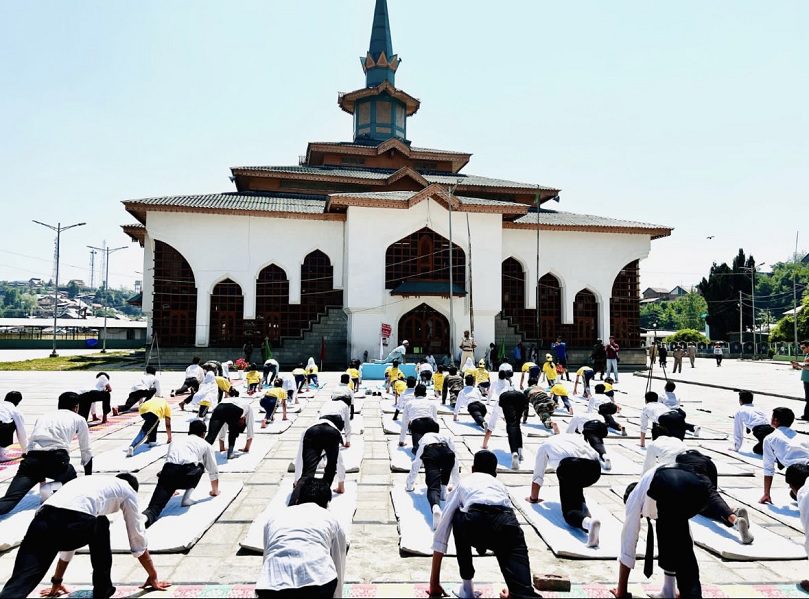

New Delhi: On Friday, the Muslim organization Jamiat Ulema-e-Hind condemned attempts to “saffronize the education system” and criticized forcing religious customs like “surya namaskar” on students of other faiths in schools as unconstitutional.
During its two-day governing council meeting, the Jamiat discussed issues such as Islamophobia, mob lynching, Muslim reservations, targeting of madrasas, the Uniform Civil Code (UCC), and the Israel-Palestine conflict, PTI reported.
The organisation strongly opposed efforts to “saffronise the educational system, enforce a uniform civil code, and target Islamic madrasas.”
Jamiat chief Maulana Mahmood Madani emphasized the need for love and unity for the country’s prosperity and condemned the rise in anti-Muslim propaganda and mob lynchings. The statement expressed concern over adverse actions and false statements against madrasas and Islamic scholars by certain BJP chief ministers and the NCPCR chief.
The governing council demanded immediate action from the government to stop the “ongoing misinformation campaign against madrasas” and urged madrasas to implement suggestions for their protection. A resolution criticized the government’s attempts to impose religious practices on students and saffronize the education system. The Jamiat stated that Islam is based on monotheism, and Muslims cannot participate in the worship of other deities or actions symbolic of other faiths.
The organization asserted that every citizen has the constitutional right to uphold their own religious practices and beliefs, and government mandates requiring schoolchildren to perform “Surya Namaskar,” “Saraswati Puja,” sing Hindu songs, recite ashlokas, or wear tilak infringe on religious freedom and violate the Constitution.
The Jamiat urged the government to refrain from such actions and expressed concerns about the UCC, describing it as a plan to restrict religious freedom and fundamental rights. Regarding Muslim reservations, the resolution noted that Article 16(4) of the Constitution mandates reservations for under-represented and marginalized groups and emphasized that religion should not justify discrimination. The Jamiat highlighted that several states have introduced special reservations for Muslims to address social and economic inequalities.
The council warned that any attempt to repeal the Waqf Act would undermine the rights of the Muslim minority and harm the country. The resolution also condemned war crimes committed by Israel in Gaza and its “aggression” against Palestinians.