

Srinagar: To safeguard Kashmir’s ancient Karewas from rampant clay excavation and mining, Dr Syed Bashir Veeri, MLA from Bijbehara, has introduced a Private Member’s Bill aimed at regulating and curbing their destruction. The bill seeks to protect these unique landforms, which are crucial for agriculture, environmental conservation, and heritage preservation.
Karewas are alluvial deposits of different soil and sediments such as sand, clay, silt, shale, mud, lignite and loess. Geologist Godwin-Austen first used the term karewas in the year 1859. The karewas of Kashmir occupy nearly an area of 2500 square kilometres, spread across the Valley.
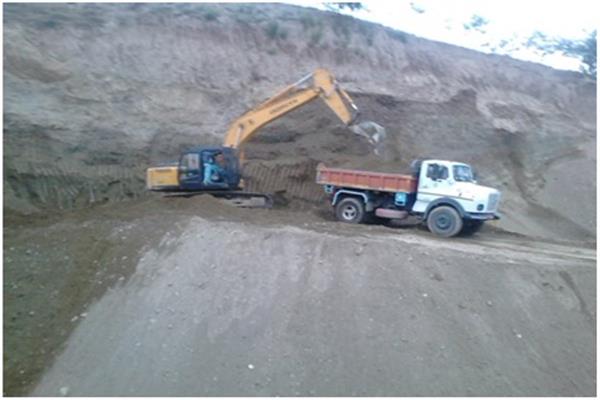
Karewas have been severely plundered over the years, especially in Pulwama, Budgam, Anantnag, and Baramulla districts. Unregulated clay excavation, primarily driven by highway construction and landfilling, has led to large-scale degradation of these highlands. Despite various laws protecting rivers and streams, there is no dedicated legislation to safeguard Karewas.
In recent decades, the mining of Karewas has increased dramatically. Thousands of hectares, particularly across Kashmir have been ravaged.
The proposed Karewa Protection Bill outlines strict regulations to prevent further exploitation. It prohibits mining in Karewa zones deemed ecologically, geologically, and archaeologically significant. Mining will only be allowed in areas already degraded, and even then, only with the approval of the
The bill also bans mining in Karewa lands containing fruit trees, saffron fields, or any vegetation, requiring clearance from the Karewa Protection Authority (KPA), the Pollution Control Committee, and the Agriculture & Horticulture Departments before any excavation. A comprehensive Environmental Impact Assessment (EIA) will be mandatory before issuing mining leases, ensuring sustainable practices with periodic ecological assessments.
To deter illegal mining, the bill proposes severe penalties, including a fine of up to Rs10 lakh per violation and imprisonment of up to five years for repeat offenders.