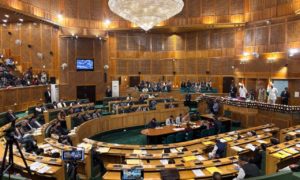



Ten bills passed twice by the Tamil Nadu Assembly but withheld by Governor RN Ravi since 2020 were finally enacted into law following a Supreme Court ruling on Saturday. The bills had been caught in a prolonged standoff between the Governor and Chief Minister MK Stalin’s DMK government.
The Supreme Court set specific time limits for action on state legislation: governors must act within a month, and the President must decide on bills sent for their consideration within three months.
A bench comprising Justices SB Pardiwala and R Mahadevan clarified that once a bill is passed again by the Assembly after being returned by the Governor, it cannot be reserved for the President unless the reintroduced version differs from the original. “As a general rule, it is not open for the Governor to reserve a Bill for the President after the bills have been re-presented by the Government,” said Justice Pardiwala, according to PTI.
Following the court’s ruling, the bills are now deemed to have become laws from November 18, 2023 — the date they were initially presented to the Governor — as per a gazette notification issued by the Tamil Nadu government. These include key legislation altering the rules for appointing vice chancellors to state universities, effectively limiting the Governor’s role in the process.
This development marks a notable shift in the balance of power between state governments and Governors, as the laws came into force without formal assent from either the Governor or the President — a rare occurrence in India’s legislative history.
Governor Ravi had earlier returned the bills twice, escalating tensions between the Raj Bhavan and the state legislature. In response, the Stalin-led government reconvened a special Assembly session and passed the bills again unanimously. When the Governor subsequently reserved them for Presidential consideration, the matter reached the Supreme Court.
Reacting to the verdict, Chief Minister MK Stalin hailed it as a “historic” moment, not just for Tamil Nadu but for all state governments. “The Constitution clearly says the Governor must give assent if the Assembly passes a bill again. Instead, he delayed and obstructed,” Stalin said. “This judgement is a win for federalism and democracy.”