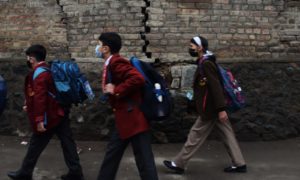

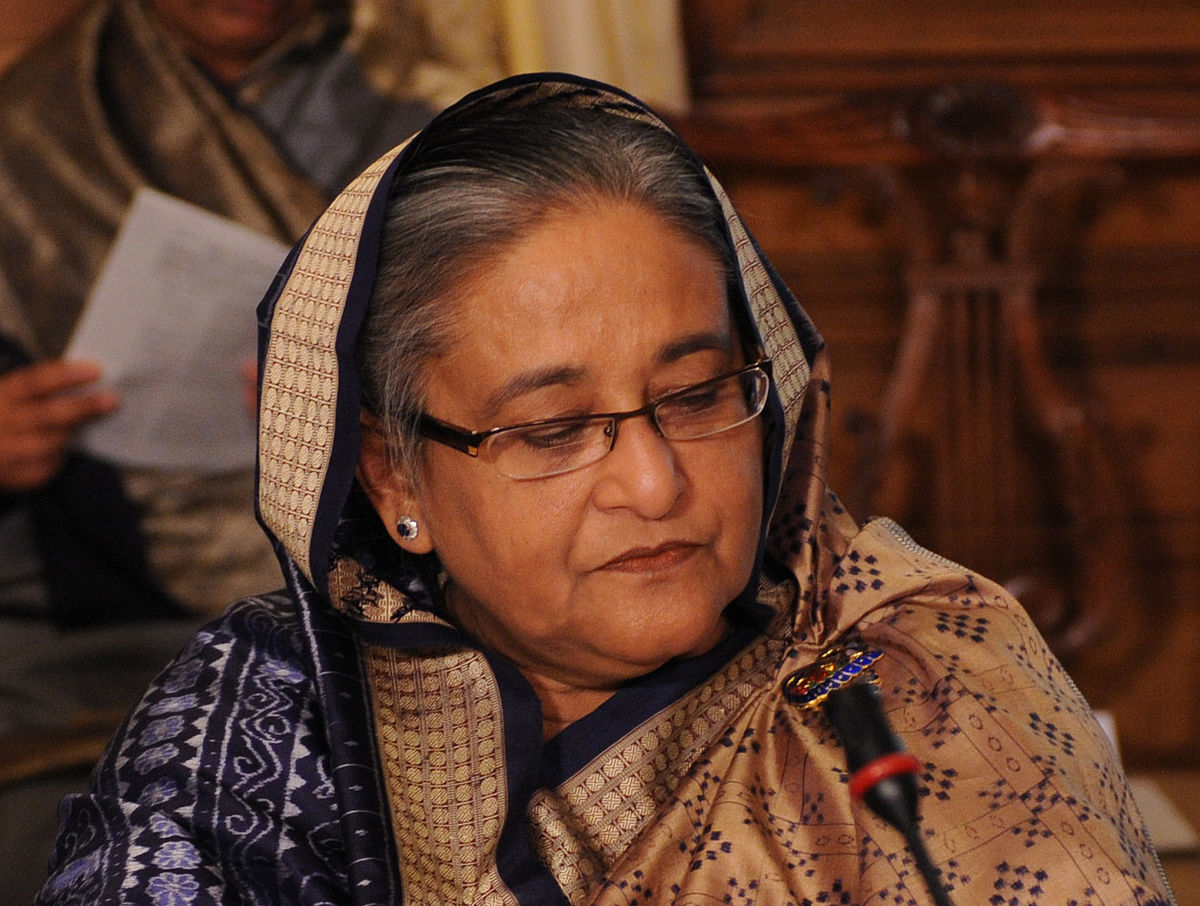

Bangladesh experienced an unusually subdued Monday, with deserted streets and a large security presence as the nation braced for the International Crimes Tribunal–Bangladesh (ICT-BD) verdict against ousted prime minister Sheikh Hasina in a case alleging crimes against humanity.
Dhaka, normally choked with traffic on weekday mornings, woke up to near-empty roads. Only a handful of cars and rickshaws moved through intersections guarded by heavy police deployment. The unnerving quiet followed a night marked by sporadic arson attacks and crude bomb explosions.
In one incident, unidentified attackers set fire to a vehicle-dumping section of a police station and detonated two improvised explosive devices outside the home of a member of the advisory council to the interim government, Chief Adviser Muhammad Yunus. Several blasts were also reported at major crossings throughout the capital, PTI reported.
Similar scenes played out in Rangpur, Chattogram and other cities, where streets remained thinly populated and security forces intensified patrols.
With the now-disbanded Awami League calling for a two-day shutdown, authorities moved swiftly to fortify the capital, enforcing strict military, paramilitary and police surveillance across sensitive zones. Security forces set up reinforced perimeters around the ICT-BD complex, the Secretariat, the Supreme Court, the Prime Minister’s Office and the diplomatic enclave.
Armoured vehicles, water cannons and riot-control teams from the Rapid Action Battalion (RAB) and police stood guard at major intersections, while checkpoints carefully monitored movement into and out of Dhaka.
The Dhaka Metropolitan Police (DMP) issued sweeping orders allowing personnel to open fire on violent demonstrators.
“Anyone who sets a bus on fire or throws crude bombs with the intent to kill should be shot,” DMP Commissioner SM Sazzat Ali said late Sunday.
Prosecutors have sought the death sentence for the 78-year-old Hasina.
Dhaka has been witnessing covert predawn attacks since November 10, including crude bomb blasts outside the Mirpur headquarters of Grameen Bank, established by interim leader Yunus. Several bank branches were targeted with petrol bombs and arson, and a bus driver was killed last week after attackers torched parked vehicles.
Hasina—currently in India—has been tried in absentia along with former home minister Asaduzzaman Khan Kamal. Former police chief Abdullah Al Mamun appeared in court and turned approver, reportedly in pursuit of leniency.
Prosecutor Gazi MH Tamim said the state has demanded the harshest punishment permissible under law and the seizure of the accused’s assets for compensation to the victims’ families.
Under ICT-BD procedures, Hasina cannot challenge the verdict in the Appellate Division unless she surrenders or is arrested within 30 days of the judgment.
In an audio message posted on the Awami League’s Facebook page, Hasina dismissed the allegations and urged supporters to remain calm, saying, “This is just a matter of time.”
The charges against Hasina and her aides relate to alleged crimes against humanity during last year’s July Uprising, including murder, attempted murder, torture, ordering lethal force against unarmed student protesters, and specific killings in Rangpur and Dhaka. Hasina has consistently rejected the accusations as “entirely fabricated.”