

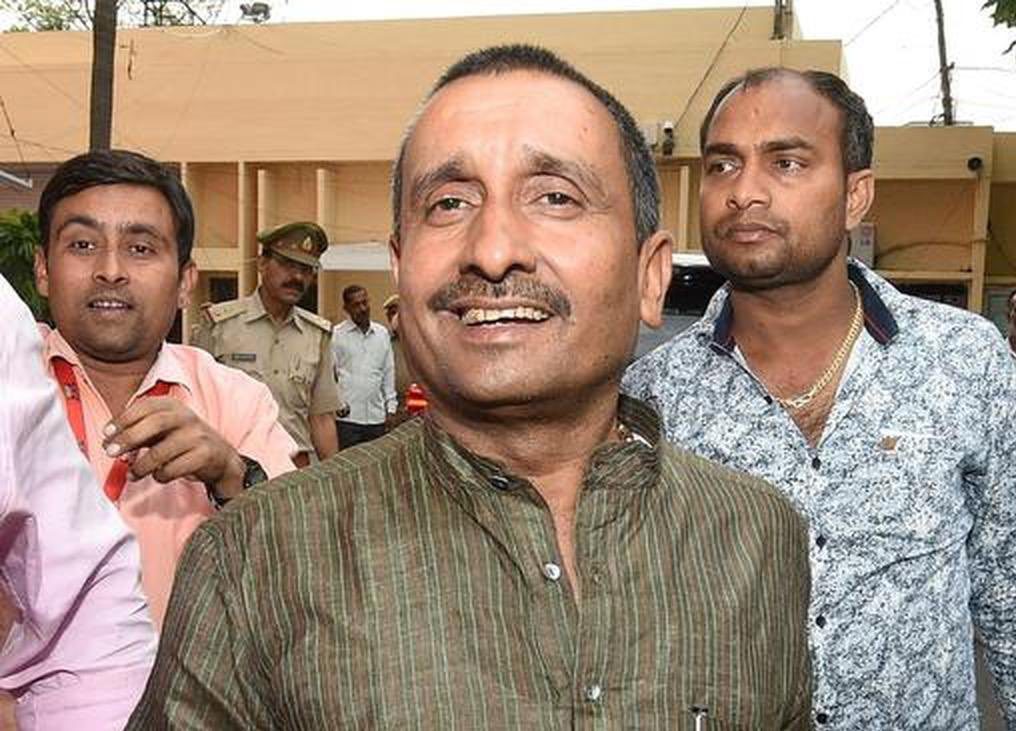

Unnao: The survivor of the 2017 Unnao rape case on Wednesday described the Delhi High Court’s decision to suspend the life sentence of expelled BJP leader Kuldeep Singh Sengar as “kaal” (death) for her family and said she would challenge the order in the Supreme Court.
The Delhi High Court on Tuesday suspended Sengar’s sentence and granted him bail pending the hearing of his appeal against his 2019 conviction. The court directed that Sengar must not enter within a 5-km radius of the survivor’s residence or threaten her or her mother, warning that any violation would lead to automatic cancellation of bail.
However, Sengar will remain in prison as he continues to serve a 10-year sentence in connection with the custodial death of the survivor’s father, in which he has not been granted bail.
Reacting to the ruling, the survivor told PTI that security for her family, lawyers and witnesses had already been withdrawn, and the court’s decision had intensified her fear.
“If a convict can get bail in such a case, how will the country’s daughters remain safe? For us, this decision is nothing short of ‘kaal’,” she said, alleging that justice favours those with money.
The survivor said she and her mother planned to protest near Mandi House and would move the Supreme Court against the order.
Women’s rights activist Yogita Bhayana, who protested with the survivor’s mother at India Gate, claimed the survivor faced resistance from security personnel while attempting to meet her lawyer. Police, however, said protesters were removed from the site and no further action was taken.
The survivor also alleged that her mother was pushed aside during the protest, a claim police denied.
The Unnao rape case and related matters were transferred from Uttar Pradesh to Delhi in August 2019 on the Supreme Court’s directions.
Meanwhile, Asha Devi, the mother of the 2012 Nirbhaya gang rape victim, expressed solidarity with the survivor, calling the high court’s decision “unfortunate” and warning that granting bail to a life convict in a rape case could weaken public faith in the justice system and embolden offenders.