
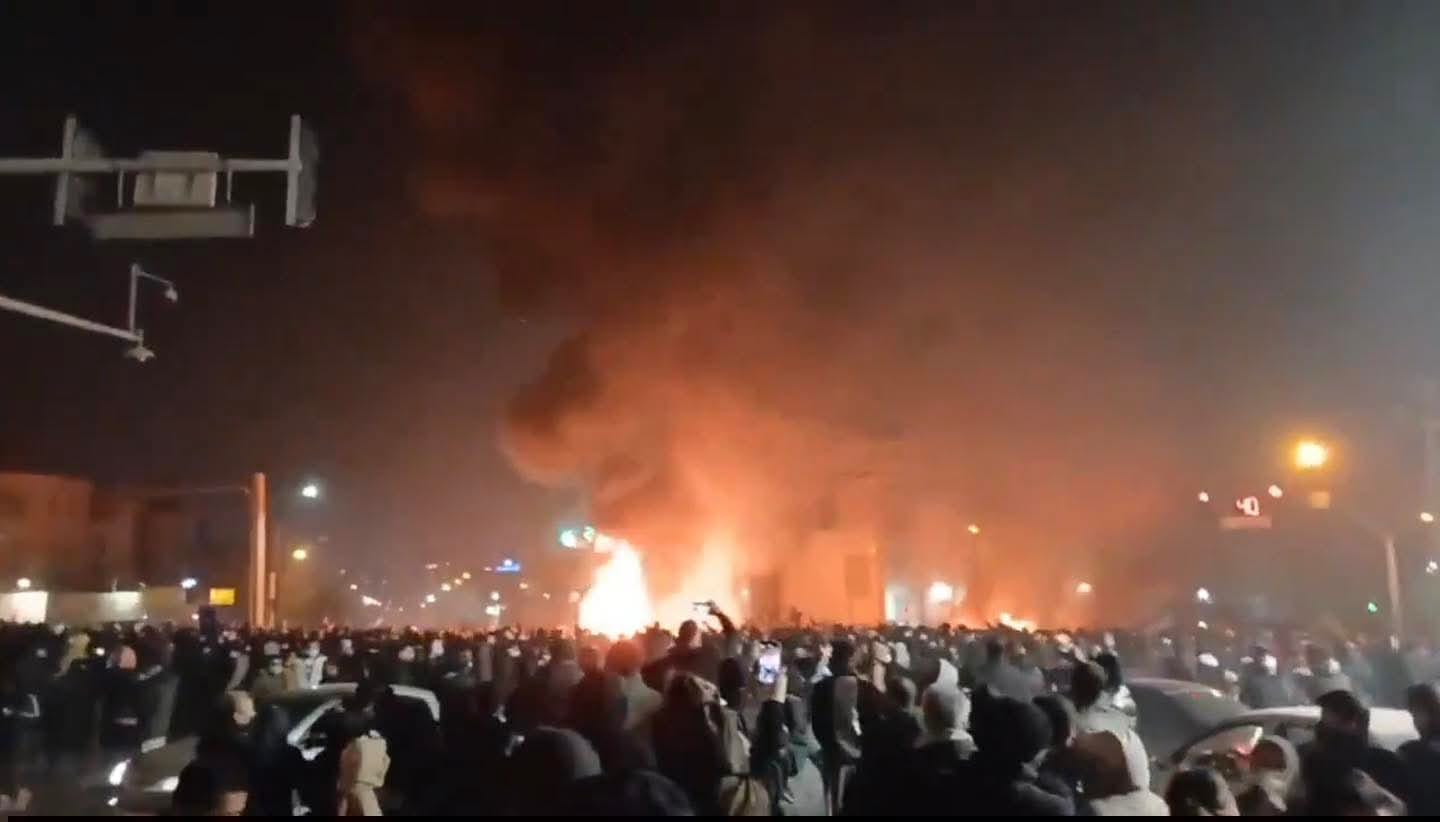

Tens of thousands of people have taken to the streets in Tehran and several other Iranian cities as protests driven by economic hardship intensify, piling pressure on the country’s leadership.
Internet monitoring group NetBlocks said authorities imposed a nationwide internet blackout, while state media blamed the unrest on “terrorist agents” backed by the United States and Israel.
State television made its first brief acknowledgement of the protests in a short report aired during a morning news bulletin, saying the unrest had led to private vehicles, motorcycles and public property — including metro facilities, fire engines and buses — being set ablaze, and that there were casualties.
Demonstrators flooded central Tehran on Thursday night, as protests that began last month over the sharp fall in the value of the rial continued to spread nationwide. The unrest is being described as the most serious challenge to the government in years.
According to the US-based Human Rights Activist News Agency, at least 34 protesters and four security personnel have been killed, while around 2,200 people have been arrested.
The large demonstrations followed a call by Iran’s exiled crown prince, Reza Pahlavi, for mass protests. In a statement, he urged Iranians to unite and voice their demands, warning Iran’s leadership and the Revolutionary Guard that the international community, including U.S. President Donald Trump, was closely watching developments.
After Thursday’s protests, Pahlavi said the authorities had responded by cutting off communications, including the internet, landlines and possibly satellite signals.
NetBlocks said the internet shutdown began late Thursday and continued into Friday, also affecting international phone calls. Analysts said the blackout was likely aimed at preventing images of the protests from reaching the outside world, while also shielding security forces from scrutiny.
The demonstrations began on December 28 in Tehran, sparked by anger among Grand Bazaar traders over the collapsing currency. Since then, protests have spread to more than 280 locations across 27 of Iran’s 31 provinces, according to reports. Independent verification by media outlets has confirmed protests in at least 19 provinces.
Iran’s economy has been severely weakened by US sanctions, compounded by mismanagement and corruption, with conditions worsening further after last year’s conflict with Israel. The rial has seen a dramatic collapse, falling from 32,000 to the dollar at the time of the 2015 nuclear deal to about 1.46 million to the dollar this week.