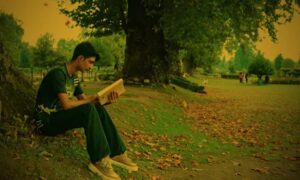



Imagination does not arrive loudly. It does not demand attention. It slips in when the mind is still, when the noise of the day has softened.
A thought forms. A picture appears. Something that was not there before begins to exist, briefly, in the private space of the mind.
Creativity comes later. Creativity takes that fragile beginning and tries to shape it into something real.
People often speak of creativity as if it were rare, as if it belonged only to a gifted few. They speak of it with admiration, sometimes even fear. But imagination is common. It belongs to everyone. It appears when someone wonders how a problem might be solved differently, or how a story might end another way, or how life might change if one small choice were made instead of another.
Imagination is not an escape from reality. It is how the mind prepares for it. When people imagine, they are not turning away from the world. They are testing it quietly. They are asking what could be possible before deciding what is practical. This moment of imagining is brief, but it matters. Without it, nothing new ever begins.
Creativity depends on that moment.
Creative thinking is often misunderstood. It is not a disorder. It is not uncontrolled dreaming. It follows a pattern, even when it feels spontaneous. First, something is imagined. Then it is questioned. Then it is reshaped, refined, and sometimes rejected. Creativity is work. But imagination is where the work begins.
Without imagination, creativity has no raw material. Without creativity, imagination remains unfinished and unseen.
This connection becomes clearer when we look closely at how people think. When given space to consider more than one possibility, people tend to find better solutions.
They approach problems with flexibility rather than force. When they are pushed too quickly toward one correct answer, thinking narrows. Options disappear. What disappears first is imagination.
This pattern is visible early in life. Children who are encouraged to ask open questions and explore possibilities tend to develop stronger problem-solving skills over time.
They learn that uncertainty is not a threat. It is an invitation. Children who are discouraged from imagining alternatives often become cautious thinkers. They aim for safety instead of insight.
The same pattern continues into adulthood. People who allow themselves to imagine different outcomes are often better at adapting to change.
They do not cling tightly to one path. They can picture another way forward when the first one fails. Creativity, in this sense, is not about producing something impressive. It is about staying open when circumstances shift.
Finished creative work often looks controlled and deliberate. A completed essay, a solved problem, a carefully designed object gives the impression of certainty.
But before that certainty, there was uncertainty. Before the structure, there was play. Imagination creates a space where ideas can move freely without consequences. Creativity steps in later and decides what stays.
There is a widespread belief that imagination is childish, something to be outgrown. Serious thinking, according to this belief, must be efficient and direct.
But imagination does not weaken seriousness. It supports it. People who imagine outcomes before acting often make better decisions. They anticipate consequences. They see connections others miss.
Imagination also allows people to step back from immediate pressure. It gives the mind room to breathe. In that space, new connections form. These connections are the foundation of creative thought. They do not appear when the mind is tense or hurried. They appear when the mind is allowed to wander with purpose.
Of course, not every imagined idea is useful. Many are not. This is where creativity requires judgment. Ideas must be tested against reality. Some survive. Many do not. This filtering process is essential. But when judgment arrives too early, imagination never gets a chance to speak.
The balance between imagination and creativity is delicate. Too much freedom and ideas remain vague. Too much control and ideas never form. Creative work happens in the middle, where imagination is welcomed but not worshipped.
The environment plays a powerful role in maintaining this balance. When people feel watched, rushed, or constantly evaluated, imagination becomes cautious. It shrinks. When mistakes are punished too quickly, people stop imagining alternatives.
Over time, this shapes how individuals think. They become efficient but repetitive. Accurate but predictable.
When people feel safe to explore ideas without immediate consequences, imagination becomes active again. Creativity follows naturally. This pattern appears across different kinds of work and learning. It is not tied to talent alone. It is tied to conditions.
Imagination also supports emotional resilience. People who can imagine different futures cope better with uncertainty. They are less likely to feel trapped by a single outcome. Even in difficult circumstances, they can picture another possibility. Creativity, here, is not about invention. It is about endurance.
Small acts of imagination matter more than we realise. Imagining how a difficult conversation might unfold before having it. Imagining a clearer way to explain something. Imagining how a space might feel if arranged differently. These acts are quiet. They often go unnoticed. But they shape how people respond to the world.
Creativity grows from these habits. It is not sudden. It develops slowly, through repeated acts of imagining and refining. Over time, the mind becomes more flexible. Connections form more easily. New ideas feel less threatening.
Modern life values speed, certainty, and measurable results. Imagination slows things down. It introduces uncertainty. It asks people to pause before deciding. This pause can feel uncomfortable, even wasteful. But without it, thinking becomes mechanical. Creativity fades into routine.
Imagination asks questions instead of offering answers. Creativity responds by shaping those questions into something that can be shared.
One without the other remains incomplete.
Nothing new enters the world fully formed. Every solution, every story, every improvement begins as something imagined briefly, privately.
That moment is easy to overlook. But it is essential. Without it, progress stalls.
Imagination is not separate from real life. It is how real life moves forward. It allows people to see beyond what is immediately present. Creativity brings that vision into the world, imperfect but real.
That is where new ideas come from.