

Gurez: The movement of traffic across Razdan Top in the middle of January is nothing short of a miracle. However, this unprecedented access raises haunting questions about climate change in the ecologically fragile Gurez Valley.
“Earlier, roads used to close around mid-November and traffic would only be restored in May of the following year,” says Feroze Khan, 47, a government employee in the Power Development Department travelling from Bandipore to Gurez. On this journey, the Sumo took only four hours from Bandipore Market to reach Dawar Gurez.
The vehicle first stopped at the Tragbal Checking Point for a mandatory entry.
There, travellers sipped hot tea at a nearby stall, staring at a landscape that felt foreign.
Tragbal had only a few centimetres of snow accumulation, a sight that leaves Qamar Ud Din, 37, of Barnai Tulail, in complete shock.
Qamar recalls his elders telling stories of a different world – one where the Razdan pass was buried under 8 to 10 meters of snow.
In those “modest” winters, people from Tulail would first reach Dawar and assemble in groups of 10, 20, or sometimes 100.
They would say, “Humaen Bandi jana ha” (We have to leave for Bandipore). Their survival depended on a gruelling foot journey through the white wilderness.
First stop either Zaedkhusi Nallah, where a Sarai (inn) was built for foot travellers, or the Booth Bangla at the foothills of Razdan pass. They would cross the pass by estimating the direction toward Tragbal, fighting low visibility and tons of snow.
In Dawar, Akhter Rasool, 39, who runs a homestay in Mastan, remembers the old reality vividly. He recalls his last on-foot journey to Bandipore in April 2012 to complete his admission formalities for college.
It took his group of five six nights and seven days to reach their destination.
Caught in a fierce snowstorm at Razdan Pass, they were forced to guess their direction by the distant sound of barking dogs.
After seven hours of walking through meters of snow, they realised they had covered only 1.5 kilometres.
While the open road brings convenience, the transition from the “dream” of accessible roads to the “brutal reality” that the quest for ease often comes at the cost of the ecological soul of the valley.
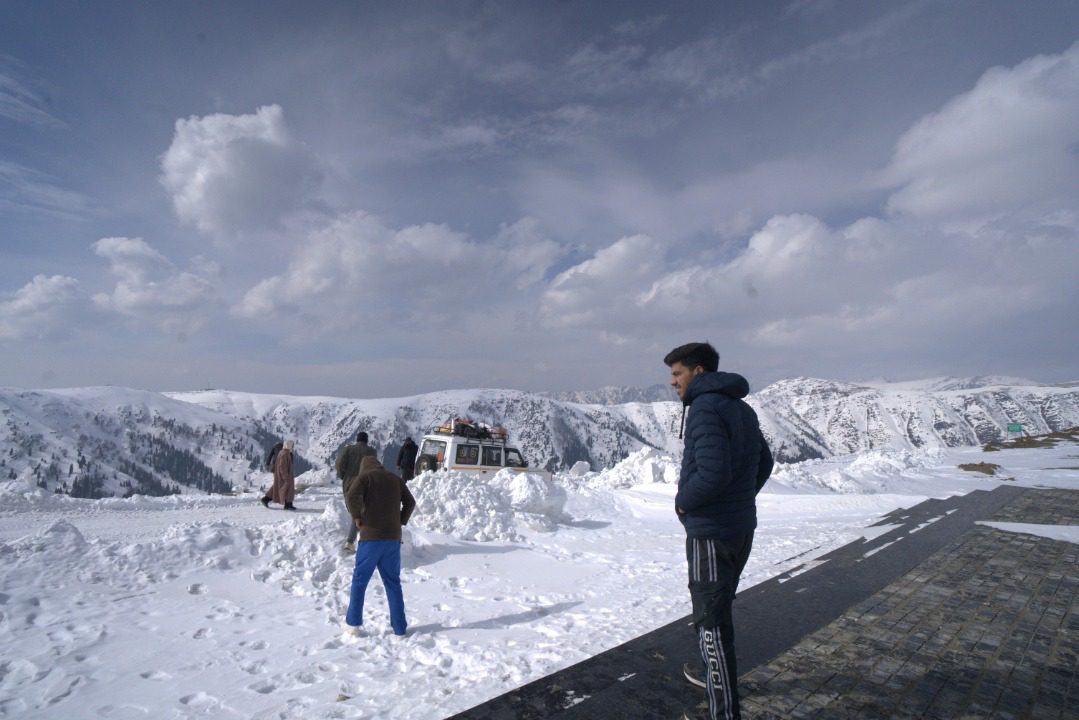
Tourists gather near their vehicle at Razdan Pass as snow-covered mountains stretch across the horizon on January 19, 2026. [FPK photo/ Usaid Rehmani]
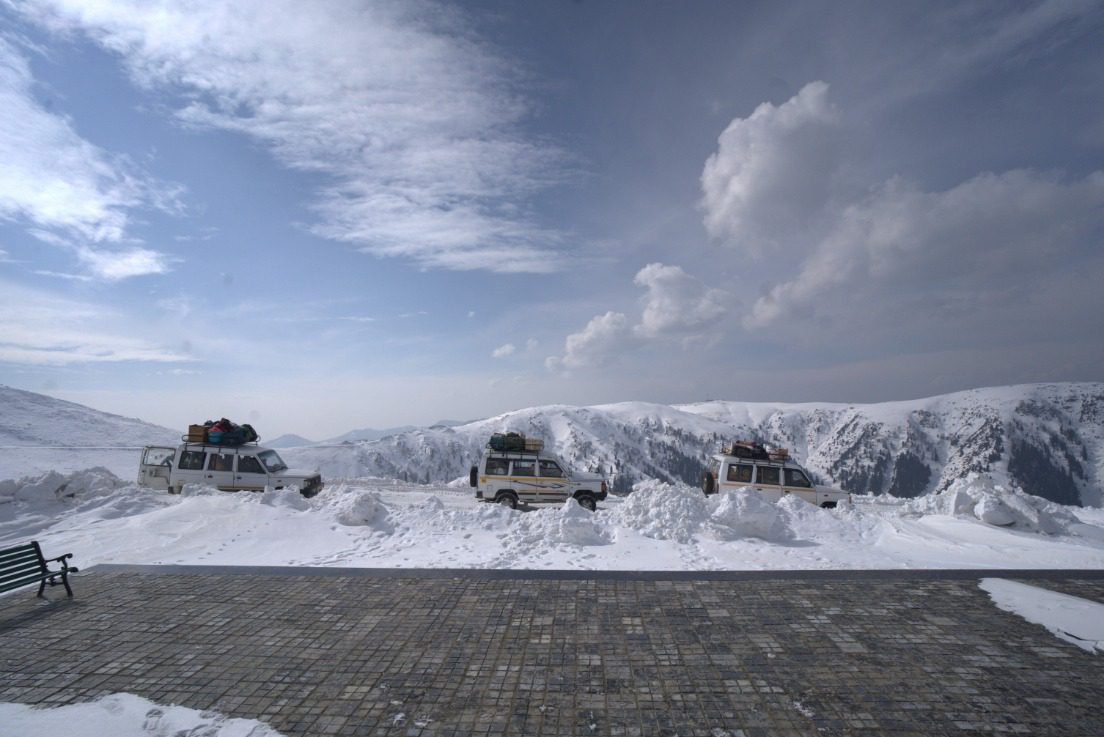
Tourist vehicles loaded with luggage halted at Razdan top, where there was at least 15 feet of snow in mid-January, January 19, 2025. [FPK photo / Usaid Rehmani]
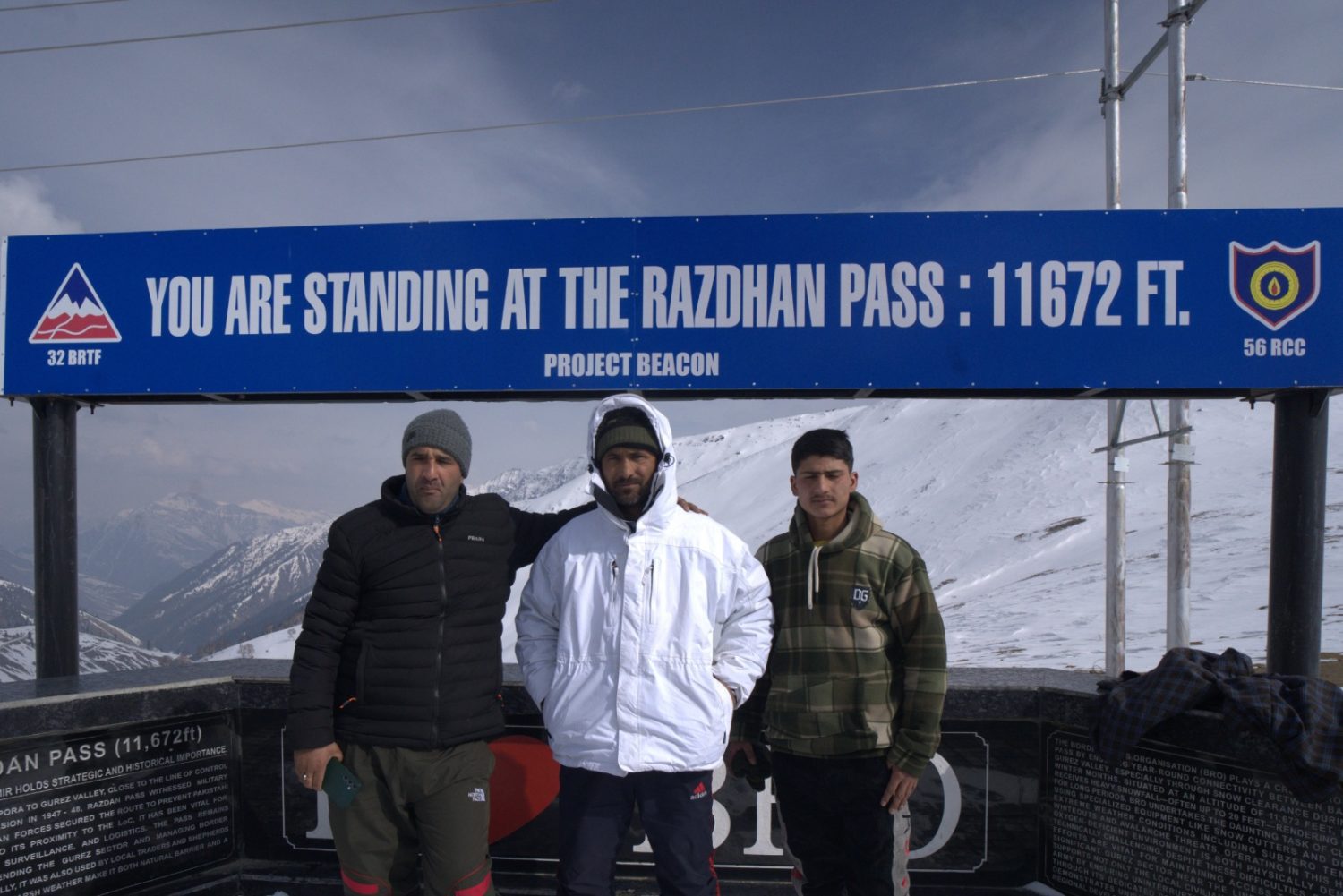
Qamar ud Din, left, and Feroze Khan, centre, pose for a photo with another man beneath a sign marking Razdan Pass at 11,672 feet in Razdan Pass on January 19, 2026. [FPK photo / Usaid Rehmani]
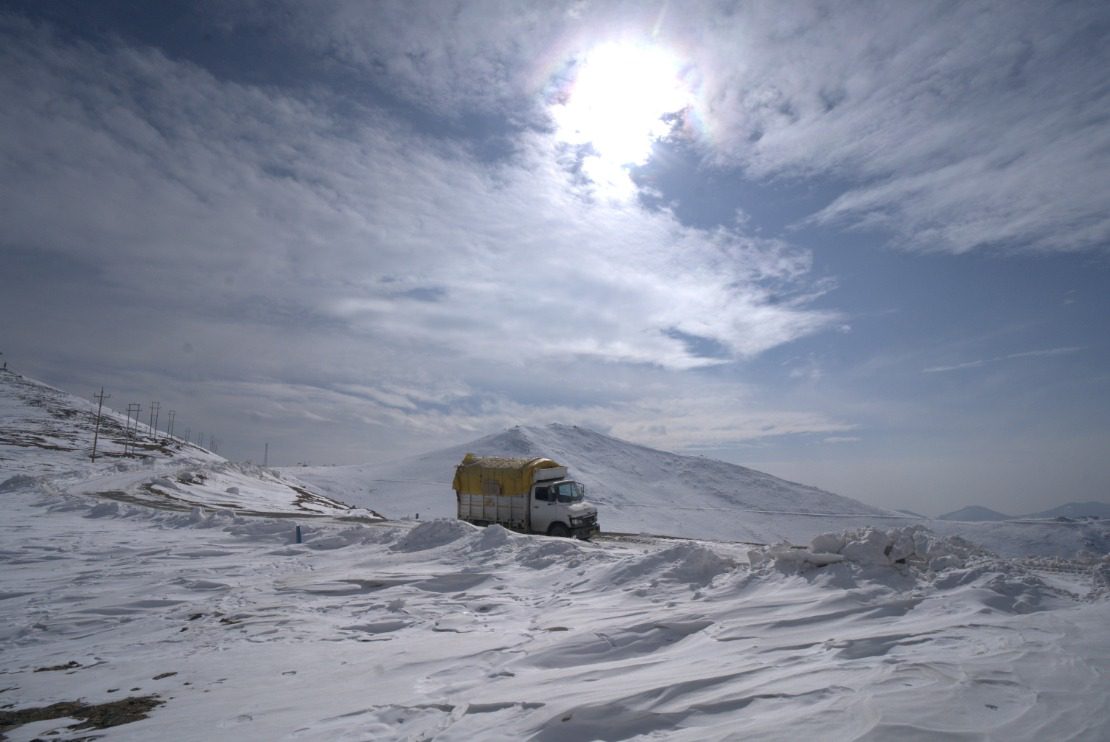
A loaded truck passes through Razdan Pass under winter skies in Gurez Valley on January 19, 2025. [FPK photo / Usaid Rehmani]
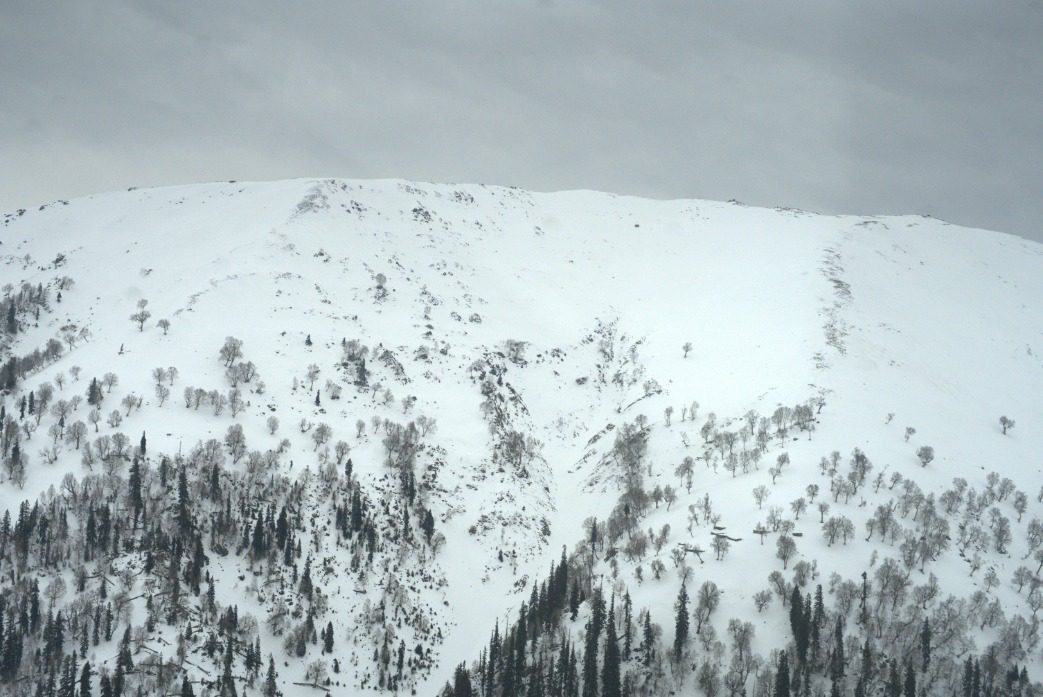
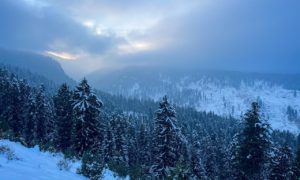
Snow blankets a mountainside with scattered evergreen trees, which were buried beneath snow in mid-January on January 19, 2026, at Razdan Pass in Gurez Valley. [FPK photo / Usaid Rehmani]
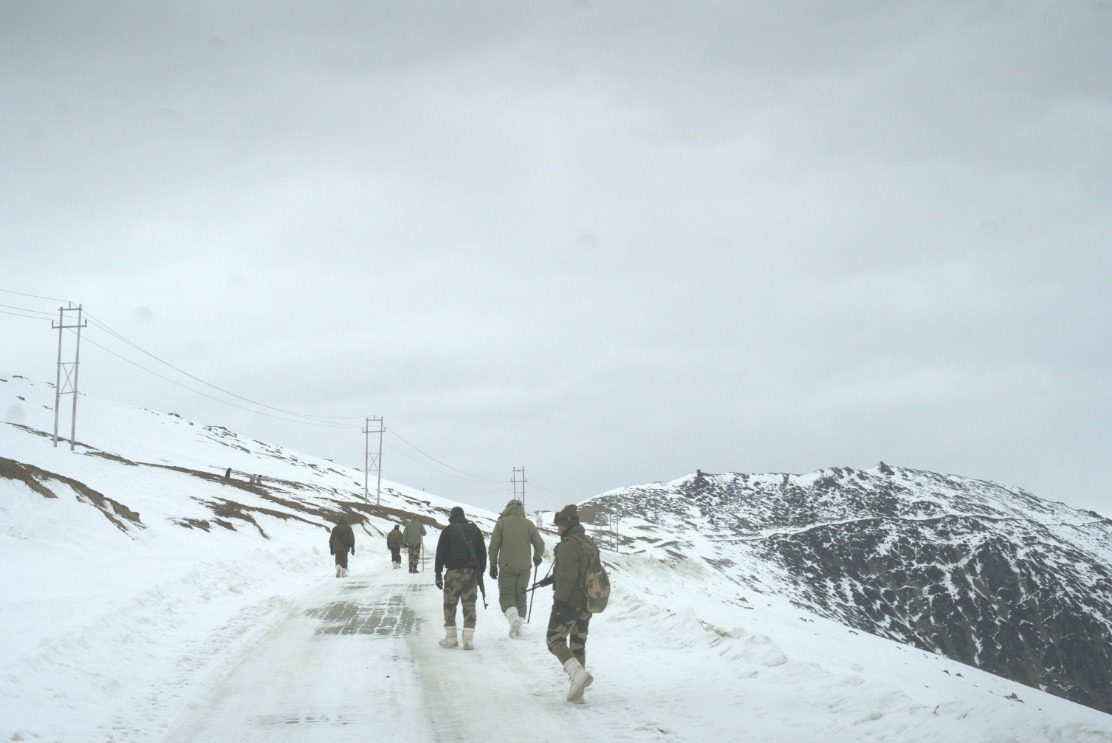
BSF personnel patrol the Razdan top on January 21, 2026. [FPK photo / Usaid Rehmani]
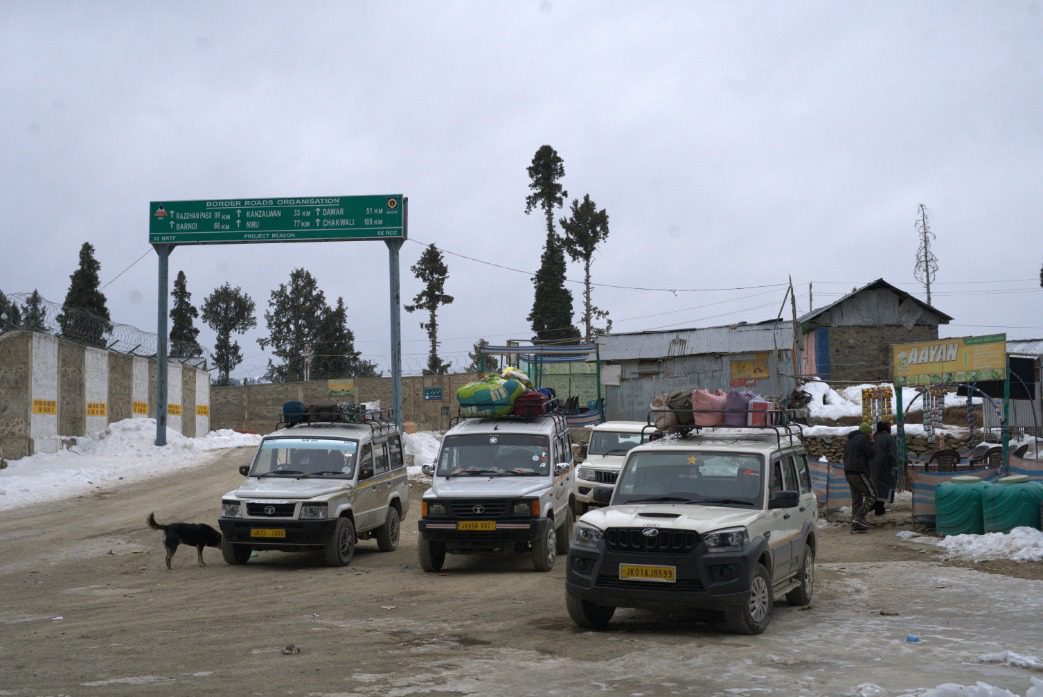
Tourist vehicles loaded with luggage halt near a tea stall at a checkpoint in Tragbal, Bandipora, on January 19, 2025. [FPK photo / Usaid Rehmani]