

It is a peculiar kind of heartbreak to love a city that exists more in the past than in the present. You see it in the faces of elderly men.
You hear it in the conversations that begin, “You should have seen it before”.
Srinagar, the summer capital of Jammu and Kashmir, has long been marketed to the world as a place of serene lakes and Mughal gardens.
I was born in Srinagar in the early 1990s and only remember this city through bloodshed, chaos, betrayal and enforced silence.
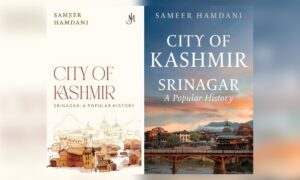
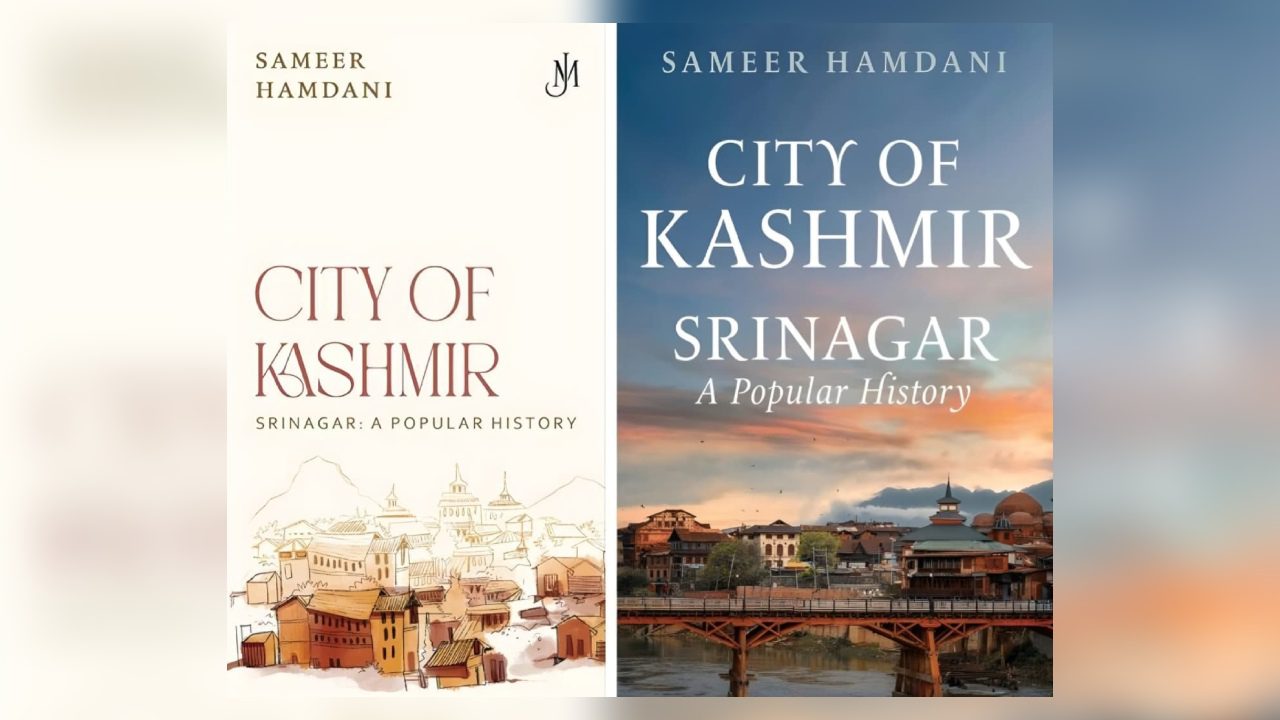
But for many of its own inhabitants, the historian Sameer Hamdani suggests in his rich, melancholic, and architecturally astute new book, City of Kashmir: Srinagar, A Popular History, it has become something else: a city of ghosts, a memory palace perpetually under renovation, where every cobblestone and crumbling brick is a palimpsest of what was, and a reproach to what is.
Hamdani’s book is a guide to this invisible city. This is not a conventional, chronological march from ancient times to the present.
Rather, it is a flânerie through epochs, a series of tragic questions of how a place accumulates, and is stripped of, its soul.
An architect and historian, Hamdani possesses the eye of a restorer, patiently scraping away the grime of political narrative and nostalgic kitsch to reveal some grain of Srinagar’s story.
This is a popular history in its democratic impulse to reclaim the city’s narrative from the strident monologues of nation-states and the exoticising clichés of travelogues, and return it to the lanes, the workshops, the gardens, and the samovar-side conversations where it truly lives, and dies.
He begins with memory itself. The opening pages offer a diagnosis of the city’s contemporary condition.
On social media, he notes, grainy black-and-white images of old Srinagar, its maze of streets, dimly lit artisan workshops, even its endemic poverty, generate an overwhelming response.
This curated, sepia-toned past is idyllic and picturesque, standing in stark contrast to today’s troubled and fractured reality.
But Hamdani is no mere nostalgist. He quickly punctures this romance: “Like a make-believe city, these carefully curated bits of images, tales and realities can serve as an alternative to the actual pulse of a living city: the sweaty and often grim, but mostly loud and spirited, throbbing, screeching cry of life that is a city”.
The challenge he sets for himself, then, is formidable: to write a history that acknowledges the powerful pull of memory while resisting its sanitising lure, to find that screeching cry across two millennia.
The structure of the book reflects this ambition. It is divided into two thematic sections, City in the Text and City and Life.
He moves from the mythical foundations and early medieval glory under kings like Lalitaditya Muktapida, a figure of Alexander-like ambition who briefly made Kashmir a Himalayan empire, through the Buddhist and Hindu flourishes, the transformative arrival of Islam via Sufis and traders, the glittering, garden-obsessed Mughal interlude, down to the often-brutal reigns of Afghans, Sikhs, and Dogras.
He stops, tellingly, before the cataclysms of the 20th century’s end. This is a history of becoming, though the seeds of later conflict are everywhere, like hairline cracks in an old fresco.
Hamdani’s strength is his ability to read the city as a text written in brick, wood, and stone.
He is an architectural historian. His descriptions of lost capitals like Parihaspur (the “Stone City” of the 8th century) or Pravarapur (the 6th-century “City of Pravara”) are evocations of political theatre. Lalitaditya, he writes, built Parihaspur on a plateau northwest of Srinagar to stage his “geopolitical fantasies.”
From its ruins, “on a clear spring day,” one still commands “a fine view of Srinagar, visually dominating this ancient, rival city”.
The king even, in a legendary drunken rage, ordered old Srinagar burned so his new capital could flourish, an order thwarted by clever courtiers who simulated the flames with torches in the night. This is history as urban psycho-drama, where cityscapes are projections of royal ego and anxiety.
He applies this same forensic, imaginative eye to surviving structures.
His chapter on the Khanqah-i Maula, the magnificent 14th-century wooden Sufi shrine on the Jhelum, is a masterpiece of cultural excavation.
He traces its contested origins, its successive rebuilding after fires, and its final, glorious Mughal-era reconstruction in 1733, which resulted in the building we see today, a pinnacle of Kashmiri woodwork, its interiors a splash of colour against the city’s drab greys.
Hamdani lingers on the details: the papier mâché work incorporating the paisley motif of the famed shawl, the 19th-century painting by William Carpenter that shows its walls draped in those very shawls during a festival.
He notes how the shrine’s aesthetic became the template for others, and how its fate is “intertwined with the religious and cultural landscape of Kashmir… an integral part of the political tapestry of the land, both in its celebrations and dissensions”.
One of the book’s passages involves a seemingly mundane artefact.
An online acquaintance sent him an image of a bilingual document, in illegible Persian scribal script, shikasta, and what seemed like Tibetan.
Dated 1218 AH (1803 CE), it bore multiple seals, one “in faded red” that “looked very official” (p. 12). Hamdani sent it to a scholar of Tibetan culture, who identified it as an official permit from the Dalai Lama granting Kashmiri merchants access to Tibet for the pashm trade.
In a single page, a scrap of paper opens a window onto a vast, forgotten geography of exchange, Kashmir as a node in a network stretching from the Punjab to Lhasa, its economy and culture sustained by these high-altitude connections that modern borders have violently severed.
He finds these syncretic fingerprints everywhere. In the 11th-century Alchi temples in Ladakh, built by Kashmiri artisans, the murals depict riders in Central Asian tunics performing the Parthian shot, their garments bordered in tiraz, inscribed textiles fashionable in the courts of Fatimid and Abbasid caliphs.
Was the iconography borrowed from the Muslim-influenced court of Kashmir’s Hindu kings, he wonders, or were the artisans themselves the “Tursukas” (Turks) mentioned in medieval texts?
Similarly, his discussion of the Dumath, the only surviving Muslim mausoleum of the Sultanate period, built by Zain-ul-Abidin for his mother, notes its Timurid influences but also a central dome with four cupolas of “distinctly Byzantine appearance”.
Could craftsmen fleeing the Ottoman conquest of Constantinople in 1453 have made it to Kashmir? “We have no way of knowing,” he writes, “but the design… does raise the possibility”.
Hamdani’s history is full of such “what ifs” and “maybes,” the tantalising loose threads that remind us the past is not a sealed archive but a field of speculation.
Of course, this rich history was woven with threads of exploitation and violence.
Hamdani never lets the glamour of empires obscure the suffering they required. He quotes the poet-philosopher Allama Iqbal’s bitter couplet on the exploitative khwaja merchants, whose fine robes were woven by our hands, while the weavers themselves were condemned to tatters.
He describes the casual brutality of medieval justice, severed heads of rebels impaled on pikes lining the streets, enemies drowned in the Jhelum with feet tied to boulders.
The Mongol raid of Zilchu in 1320 left Kashmir “almost like a region before creation, a vast field with few men, without food, and full of grass”.
The city, he writes, “was burned, rebuilt and burned again, repeatedly, conquered and humiliated into submission, despoiled of its wealth, mocked for its poverty”. This cyclical rhythm of grandeur and devastation is the bass note to Srinagar’s melody.
Hamdani is particularly insightful on the Mughal period, a double-edged legacy.
The emperors from Akbar to Aurangzeb were besotted with Kashmir’s beauty, but their love was possessive and transformative. They built the sublime gardens, Shalimar, Nishat, Chashma Shahi, that define the valley’s image to this day. But they also imposed their own aesthetic, often ignoring indigenous Kashmiri architecture as “too quaint”.
They turned Srinagar into a pleasure dome and a literary salon, attracting Persian poets like Saib Tabrizi and Kalim Kashani, who were buried in the poetic necropolis, Mazar-i Shoura.
Yet their accounts, Hamdani notes, are “simultaneously both celebratory and dismissive of Kashmir and the city”. Emperor Jahangir, enthralled by the landscape, could still dismiss the people as “animal-like Kashmiris”.
The subedar Zafar Khan, who petitioned for tax relief for Kashmiris, also composed verses complaining about the company of “inarticulate” natives. This tension, between the land as paradise and its people as primitive, is a colonial gaze that predates the British.
And then come the British themselves, and their Dogra puppets.
Hamdani’s treatment of the 19th and early 20th centuries is steeped in a quiet anger.
The Dogra rule, ushered in by the British East India Company’s sale of Kashmir for 7.5 million Nanakshahee rupees in 1846, is remembered as a time of oppressive taxation and famine.
He writes of the mass migration of Kashmiri artisans to Punjab, “some bribing and some stealing their way” out to survive.
The modernising projects, tap water, electricity, the Bund promenade, and the mapping of the city were largely directed by British Residents for the benefit of the European quarter.
The famed “shawl map” of Srinagar, woven in pashmina and presented to Queen Victoria, is a poignant artefact: a native craft co-opted to present a curated, picturesque vision of the city to its colonial master.
Civilisation arrived, but as an alien implant, widening the chasm between the native city and the new civil lines.
Stylistically, Hamdani’s prose is clear, precise, and often evocative. He has a knack for the telling anecdote and the resonant image.
He describes the 19th-century practice of Hafiz Nagma, where dancing girls recited Hafiz’s poetry in Mughal gardens, a tradition later debased by colonial officials into the nautch girl spectacle.
He writes of the city’s flora: the narcissus and iris, considered flowers of the graveyard; the coveted dachh-i husani grape; the damask rose used for gulab arak (rose water) and gul kand.
His personal recollections, sparingly used, are powerful. He remembers the Iranian widow, Zuhra Bibi, who visited his home for alms, speaking a sweet, melodic Persian, a fragile link to the city’s mercantile Persianate past, now lost to the turmoil of the late 1980s.
He recalls a childhood fire in his mohalla, where neighbours threw buckets of snow on the flames and women held Qurans out of attic windows, wailing for divine intervention.
These moments ground the grand historical sweep in an intimate, human scale.
There is a tactful omission. This volume draws a discreet veil before the traumas of Partition in 1947 and the subsequent decades of insurgency and militarisation.
The “fractured reality” of the present is the ghost at the feast, referenced but not directly engaged.
One understands the choice to plunge into that maelstrom might overwhelm the delicate work of historical reconstruction, and perhaps the second volume will address it. Yet, the absence is felt.
For a popular history, the book assumes a reader with considerable patience for the nuances of medieval dynasties and Persian poetic forms.
It is not a light read. Hamdani’s primary interlocutors seem to be the archives and the stones themselves, rather than a contemporary popular audience.
This is not a criticism of depth, but of pitch. The popular aspect lies more in its rescue of stories from scholarly journals than in narrative simplification.
There is a quiet irony embedded in the book’s very existence. This book appears under the Into The Marrow Of India’s Urban Memory: John Murray India’s ‘Cities In Time’ Series, a project conceivably dedicated to excavating the layered urban memory of the subcontinent.
By accepting this commission, Hamdani has, perhaps inadvertently, made a political statement.
As this is the first book published in the series, other books may frame the cities within the narrative arc of modern India, yet Hamdani’s own scholarship argues that Srinagar has always been something more porous, more elusive, a city whose identity refuses to be neatly enveloped by any nation-state agenda.
The book is a eulogy for a cosmopolitanism that predates borders, published within a framework that implicitly claims it as Indian heritage.
One wonders if the author felt this tension himself, writing a history that dismantles nationalist certainties while participating in a project that, however subtly, reinforces them.
Perhaps this is the inevitable compromise of writing about a contested city from within one of the contending nations.
I hope this sale was more generous than the 7.5 million Nanakshahee rupees the Dogras once paid for the valley itself.
In the end, City of Kashmir is an act of preservation. In an era where the political status of Kashmir is violently contested, and its history often reduced to a weaponised slogan, Hamdani offers something radical: complexity.
He restores to Srinagar its “messy, unheroic, unromantic, day-to-day past,” as he puts it in the introduction.
He shows us a city that was never a monolithic Hindu or Muslim or Buddhist space, but a perpetual work-in-progress, absorbing and adapting influences from Gandhara, Persia, Tibet, and the Gangetic plains.
Its identity was, and perhaps still is, hybrid, a fact that sits uncomfortably with the purist ideologies that have torn the region apart.
It is a history of arrivals and encounters, of brilliance and brutality, of making and unmaking.
In telling this story, Hamdani does more than document a vanishing urban landscape; he offers a powerful antidote to the amnesia of conflict.
He rebuilds, in words, the city of memory as what it truly was: a living, breathing, screeching cosmopolis.
Whether that city can ever be more than a memory again is a question for politics and for fate. But thanks to this book, it will not be forgotten.
Compared to Ananya Roy’s work on postcolonial cities, Hamdani’s is more celebratory than interrogative, but that’s part of its charm as a “popular” history.