
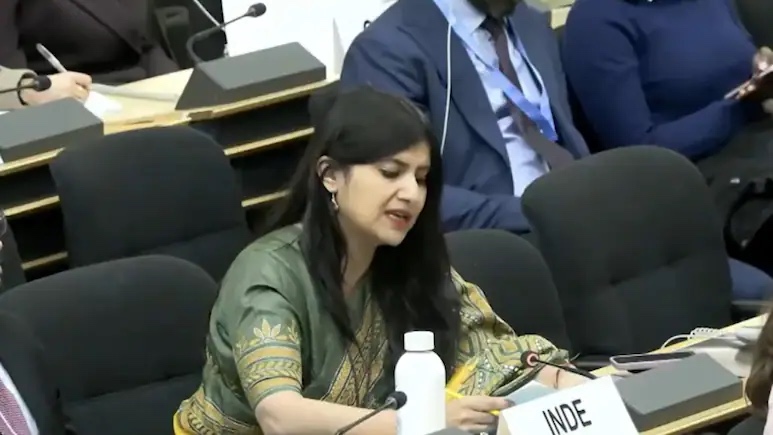

At the 61st session of the UN Human Rights Council, India rebuked Pakistan for what it called misinformation about development in Jammu and Kashmir.
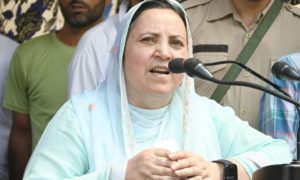
India’s representative, Anupama Singh, said Islamabad must be “hallucinating” or living in “La-La land” if it doubts progress in the region, pointing out that Jammu and Kashmir’s development budget exceeds twice the bailout package Pakistan recently sought from the International Monetary Fund.
Rejecting allegations raised by Pakistan and the Organisation of Islamic Cooperation, Singh accused the OIC of acting as an “echo chamber” for Islamabad. She dismissed the claims outright and said Pakistan’s “incessant propaganda” stemmed from envy.
Referring to infrastructure projects, she cited the Chenab Rail Bridge — inaugurated last year and billed as the world’s highest railway bridge — as evidence of tangible development. If such achievements are being questioned, she said, Pakistan must be detached from reality.
Singh reiterated New Delhi’s position that Jammu and Kashmir “was, is, and will always remain an integral and inalienable part of India.” She described the region’s 1947 accession as legal and irreversible under the Indian Independence Act and international law, adding that the only unresolved issue is Pakistan’s “illegal occupation” of Indian territory.
Drawing a contrast between governance in Jammu and Kashmir and Pakistan’s economic troubles, she highlighted the Union Territory’s budgetary allocations. She also pushed back against criticism of India’s democratic record, remarking that lessons on democracy ring hollow from a country where civilian governments seldom complete full terms.
Singh accused Pakistan of continuing “state-sponsored terrorism” to destabilise the region, while asserting that Jammu and Kashmir is advancing politically, socially and economically. She urged Islamabad to address its own internal crises instead of “grandstanding” on international platforms, adding that the global community can see through what she called its “charade.”