
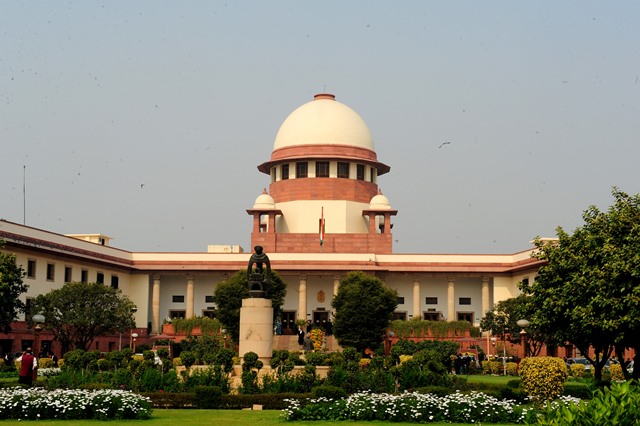

The Supreme Court has banned a school textbook after one of its chapters referred to corruption in the judiciary. The revised social science book was published by the National Council of Educational Research and Training (NCERT), which is responsible for designing the syllabus and textbooks for millions of schoolchildren in the country.
On Wednesday, after Chief Justice Surya Kant criticised the book, saying it could damage the reputation of the judiciary, NCERT apologised and withdrew it from distribution. The court later ordered a complete halt to the book’s publication, saying its contents were “extremely contemptuous” and “reckless”.
“A complete blanket ban is hereby imposed on any further publication, reprinting or digital dissemination of the book,” the court said Thursday. The judges also issued show-cause notices to the Secretary of School Education, Ministry of Education and the NCERT Director, among other officials, asking them to explain why they should not be held in contempt of court for including the “offending chapter”.
The controversy centres on a chapter, titled “The Role of the Judiciary in Our Society”, in a revised version of the textbook meant for the eighth standard students – usually 13 to 14-year-olds. According to reports, the text refers to “corruption at various levels of the judiciary” and also highlights a “massive backlog” of cases.
According to government data, more than 53 million cases are pending in Indian courts. The textbook attributes delays in dispensing justice to factors such as an insufficient number of judges, tangled legal procedures and defective infrastructure.
The chapter invited strong reactions from lawyers, who described its content as “scandalous” and disrespectful. Senior lawyer Kapil Sibal said it was deeply disturbing that schoolchildren were being taught that the judiciary was corrupt and inefficient. Another senior lawyer, Abhishek Manu Singhvi, said the text was one-sided and did not address corruption in politics or bureaucracy.
While initiating proceedings against NCERT, the chief justice said, “I will not allow anyone on Earth to taint the integrity and defame the entire institution.”
Hours later, NCERT issued a statement expressing “regret” over what it called an “error in judgement” that had “inadvertently crept” into the chapter.
NCERT is an autonomous organisation under the federal education ministry that oversees syllabus changes and textbook content for students taking exams under the government-run Central Board of Secondary Education (CBSE). Its textbooks receive a lot of scrutiny as millions of students across the country study them. State education boards, as well as private schools, also use their course material to teach students.