

Ask a young person in the Valley today what the Kashmiri word for “glacier” is, and you will likely get a puzzled look.
The English term comes easily – glacier – learnt from textbooks and diagrams.
But the word that once belonged to the mountains themselves, Handur, now survives quietly, almost shyly, in fading memory.
The word is neither lost nor secret, yet it quietly slips through the fingers of the new generation.
Like many delicate strands in the fabric of the Kashmiri language, it survives — but faintly, unfamiliar to those who now grow up speaking a different vocabulary of the world.
The Word Itself: Handur
In Kashmiri, a glacier is called Handur (also pronounced Hander; transliteration: hạnduru, hāndr).
Other Kashmiri expressions that may refer to glaciers include Shinmaal and Shin Sodur.
In Kashir Kitab by Mohammad Yousuf Taing, the term Shin Pather is also used for a glacier.
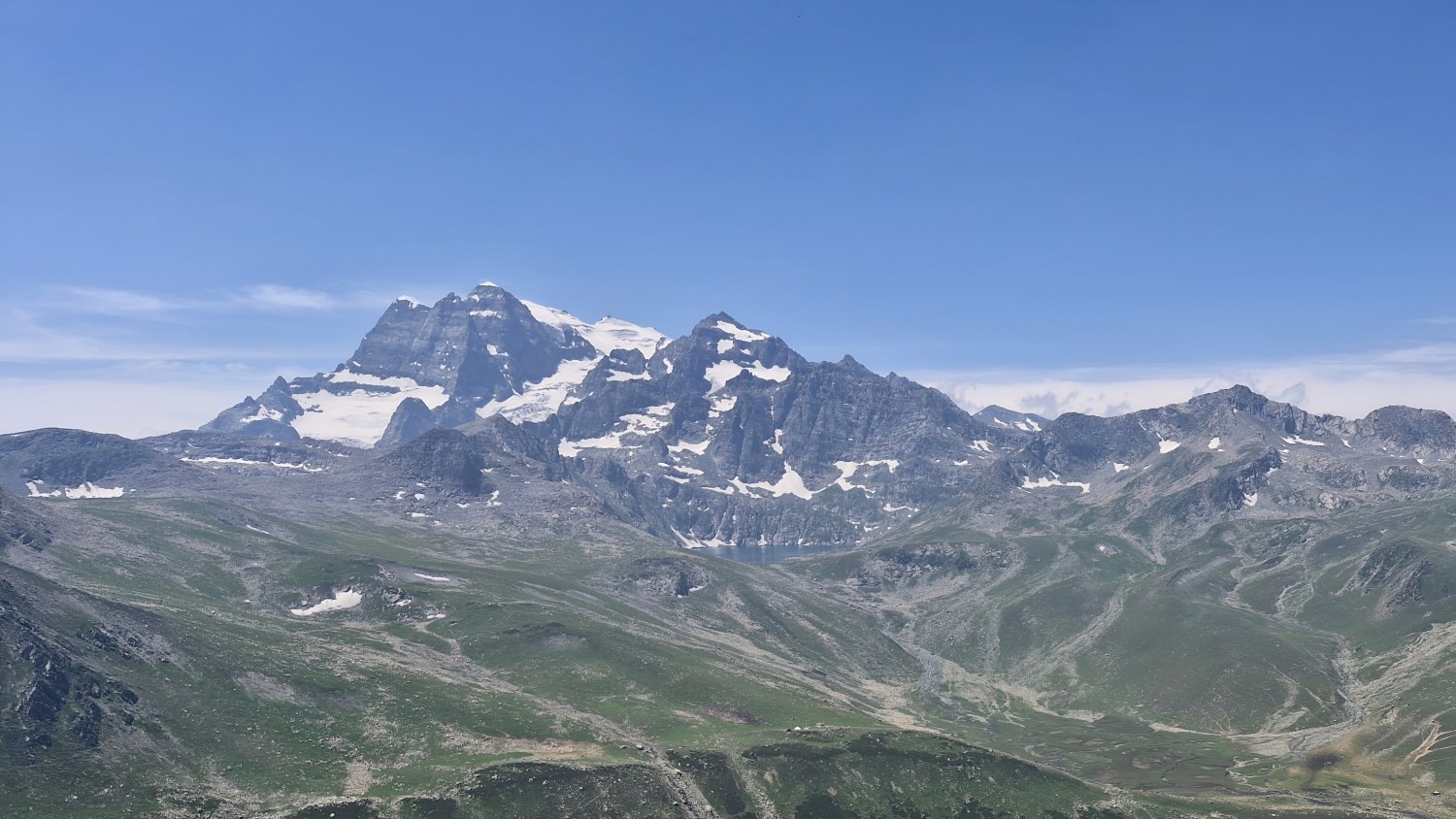
A glacier is a large, persistent body of dense ice that forms on land over centuries, constantly moving downhill under its own weight and gravity.
In Geography of Jammu and Kashmir, A. N. Raina documents the terminology for snow, ice, glaciers, and snow avalanches across multiple regional languages, including Kashmiri, Pahadi, Shina, and Ladakhi.
However, confusion sometimes arises. Some people mistakenly use shin māñě for glacier, but this is not accurate.
In Kashmiri:
Shin = snow
Yakh = ice
Shin māñě = snow avalanche
Shin Pahad = snow-capped mountain
These words are still very much alive in everyday speech.
For instance, to describe someone who is very fair, one may say: “Su chei yahay shin hish” (She is as fair as snow).
Even extreme coldness is compared to ice.
For example: “Yakh hish tresh” (ice-cold drinking water).
The word Handur is also used in various ways in daily conversation.
For instance, “handurun” means “to become cold.”
Cold rice is sometimes referred to as “handur batt”.
Interestingly, in Kashmiri poetry, even the beloved has been compared to a shin mani — a cascading avalanche of snow, symbolising brilliance and overwhelming beauty.
In a verse by Prem Nath Premi, we read:
Grezawuni chhak shina ma’ni
Obar key yim jaame chani
You roar like a snow avalanche;
your dress appears to be fashioned from clouds.
The younger generation has become familiar with the English word “glacier” through formal education.
Children encounter it in textbooks as part of a standardised global curriculum, often detached from the lived geography of Kashmir itself.
This linguistic shift reflects a broader pattern: local ecological vocabulary gradually yielding to global academic terminology.
Historically, our people were deeply acquainted with this word and its meaning. Shepherds, poets, travellers, and villagers interacted directly with glaciers.
Their knowledge was not theoretical — it was practical, experiential, and passed down orally across generations.
The glacier was not merely a scientific concept; it was part of life, landscape, and livelihood.
Interestingly, in Gurez, the term Handur remains relatively common among Shina speakers.
In Shina, however, the standard word for glacier is Kamuk/Gamuk.
The borrowed term Handur, or Hander, in Shina has developed a slightly different meaning: it refers to accumulated snow that falls from rooftops and gathers around houses.
This semantic shift illustrates how words travel across languages and evolve in meaning depending on local usage.
The great Kashmiri Rishi and poet Sheikh ul Alam has also used the word Handur in his spiritual poetry:
Haade zesakh haa shina hạnduru
Maeni zan waglekh taap kraye
Paano san to azh to andaro
Wunih haa sul chhe sar, gar panei no
Meaning: O heedless being, deluded by the gains of this world, you have grown arrogant. Remember — before the terrifying heat of Hell, you will melt like a glacier or a snow avalanche. Reflect upon yourself and recognise your true self. It is not too late to begin constructing your true home, meaning your Hereafter.
(Translation adapted from the Urdu text in Kalam-e-Sheikhul Aalam (ed. & trans. Prof. Ghulam Mohammad Shaad)
Sheikh ul Alam mentions mani (avalanche) and glacier (Handur) separately, employing each in a different metaphorical context.
Other Sufi poets of Kashmir have also employed the imagery of handur (glacier), shin mani (snow avalanche), and melting snow in their poetry.
The glaciers of Kashmir are retreating slowly, silently, year by year.
The word for them is retreating, too. One is melting from the mountains. The other is melting from the memory.
The fading familiarity of hạnduru is not merely about vocabulary. It signals a subtle distancing from land-based knowledge, from the mountains, glaciers, and lived ecology that shaped Kashmiri civilisation.
When a word disappears from common speech, it takes with it a way of seeing the world.
Reviving such words is not an act of nostalgia. It is an act of cultural continuity.