

The concept of Untouchability does not only stand for making differences within the social classes of people based on caste, but it is a lived experience of several lower castes. It has led to prejudices and inequality for several decades. The idea of highness and lowness had conquered Indians even when Britishers left the subcontinent. A story of suffering, misery and sorrow…
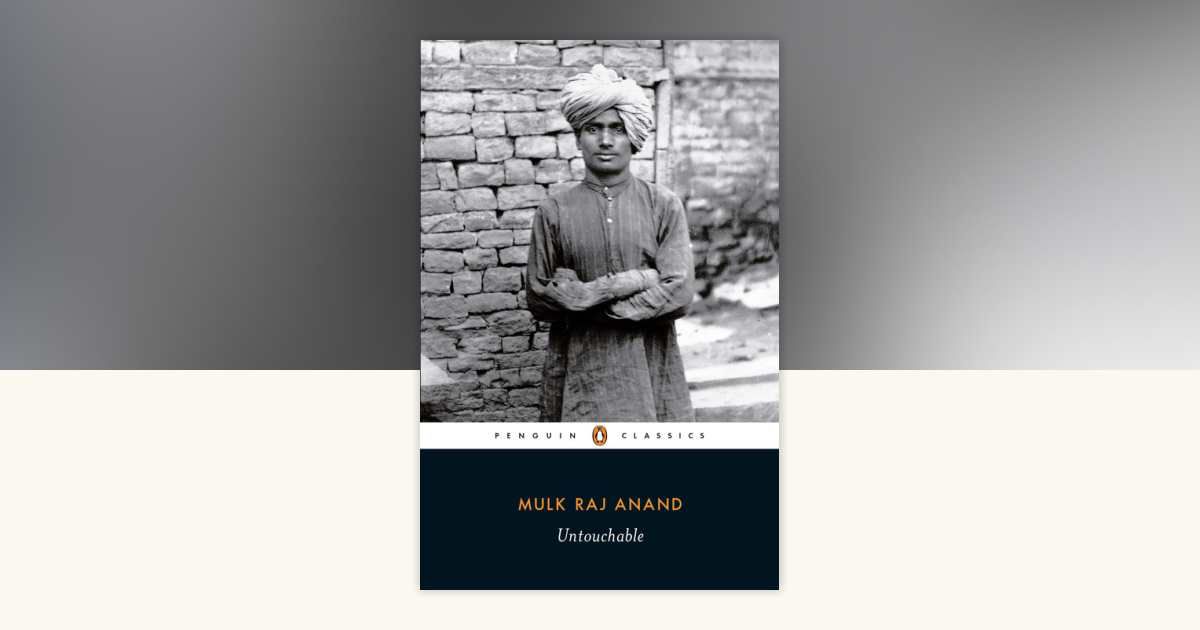
Similarly, a book by Mulk Raj Anand, a credible Indian novelist, Untouchable, gives a sorrowful yet hopeful account of an individual belonging to the low caste, a marginalised individual having been compromised with his look, taste, and gratification. The author’s account spotlights a day in the life of an untouchable in Indian society.
It was a day of an untouchable, son of a Jemadar of the sweepers of the town, Bakha. He was a “young man of eighteen strong and able-bodied.” He had a family of two more siblings and a father.
Bakha, being a worker at the British barracks, was fond of Englishmen and their lifestyle and had adopted a kind of English look, which was opposed by his father in the family. However, he was aware of the facts of the time, having been told that they were “sahibs, superior people.”
The outcasts had to work at the latrines of the upper-castes and were not allowed to touch anyone, even if they made a mistake. It was a forced linkage of a particular class of people to a particular work–hereditary caste labour–irrespective of their own will. The same had happened to Bakha, who was “ a bit superior to his job.” The way the social fabric was woven was deep-rooted, as those who worked in the latrines were not to be touched by the remaining sects of society, and had to compromise their facilities before upper-caste people.
The everyday life and chores of an untouchable were not as easy as they seem: Bakha’s sister, Sohini, who went to fetch water from the well, had to wait–along with other women and their angry glances–until an upper-caste man came and poured the water from the well into her utensil. It was like an act of generosity, despite them having the same human abilities, but belonging to a family engaged in cleaning others’ waste. This experience reflects the suffering of several untouchables, who struggled for basic facilities, even for water.
For several instances, Bakha himself was targeted by the upper-castes, and their actions are reflected in his lament that “they always abuse me.”
However, several upper-castes did not believe in the defilement caused by a low-caste’s touch. One day, a havildar with a kind heart, Charat Singh, took the assistance of Bakha to call off his cook and fetch “two pieces of coal” for making the firepot of his hookah smoky.
Furthermore, the British missionaries were mobilising to ensure the conversion of low-caste Indians, who were fed up with social exclusion. It had an edge in using the misery of suppression, followed by a new idea of social freedom and religion. There was a similar encounter of Bakha with the “padre,” who was a follower of “Yessuh Messih,” and who emphasised his omnipotent God as solver of all the troubles, but Bakha had to go to a girja ghar.
However, Bakha was not getting the core of the missionaries’ religion and was becoming “baffled and bored,” and due to several contradictions with the faith of the new religion, he was left in total vagueness with newly born questions: Where did he (Yessuh Messih) come from? And what is the concept of the Day of Judgment?
All this discussion ended by leaving Bakha “full of sort of a sort of tired restlessness.”
Subsequently, a gathering of people leading towards Golbag made Bakha feel energetic and hopeful, with the cry of the slogan: “Mahatma Gandhi ki-jai,” followed by similar ones: “The mahatma has come!”
With the passage of minutes, the Mahatma delivered a speech on the prolonged social class system of India, describing it as “the greatest blot on Hinduism.”
It was the speech of Mahatma Gandhi which made Bakha hopeful of ending such social exclusion. The Mahatma “seemed to have touched the most intimate corner of his soul.” Bakha concluded his persona as “a good man,” a ray which had enlightened his heart of Bakha with the notice of his community.
Moreover, a poet present in the gathering discussed the idea of the “flush system,” which grabbed the attention of Bakha. The suppression for being a latrine cleaner and belonging to a low-caste was ruthless, leading him to find an option for getting rid of the work. The whole journey of the Bakha ended in restlessness, humility, and hope, for which the Mahatma had stepped forth and for the idea which the poet had disclosed.
(Ayaan Saroori is a freelance writer covering politics, environment, society, and law, and reviews books)