
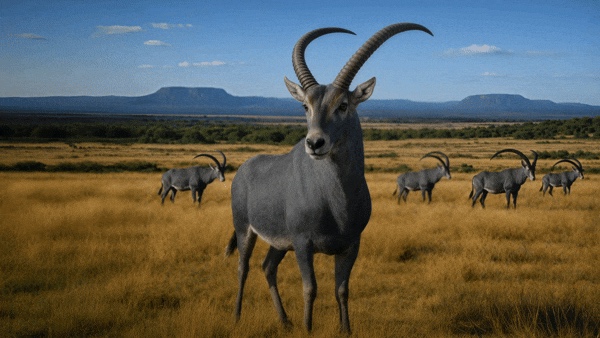

A genetic engineering company based in Dallas, Colossal Biosciences has announced plans to bring back the extinct bluebuck. This antelope, known for its distinct silvery slate-blue coat and curved black horns that grew up to 22 inches (56.5 cm), once lived in the coastal grasslands of South Africa’s southwestern Cape. It was slightly smaller than its close relatives, the roan and sable antelopes. Unfortunately, European colonisers drove the bluebuck to extinction around 1800, a mere 34 years after scientists first catalogued the species.
Colossal’s CEO and co-founder, Ben Lamm, emphasised the human role in the animal’s demise.
“Humans did this. European settlers shot the bluebuck out of the Cape in under 34 years. There’s no ambiguity about the cause and there’s no ambiguity about the responsibility. If we have the capability to right that wrong, I think we have an obligation to,” Lamm said.
The bluebuck is now the sixth animal in Colossal’s de-extinction line-up, joining two birds — the dodo and moa — and three other mammals: the woolly mammoth, the thylacine (Tasmanian tiger) and the dire wolf.
Outlining their progress to Reuters, Lamm said: “We’re two years into the bluebuck project and have already completed several foundational steps.”
He added, “We are equally excited about how our technology can help living antelopes today. About a third of the world’s roughly 90 antelope species are threatened or near-threatened.”
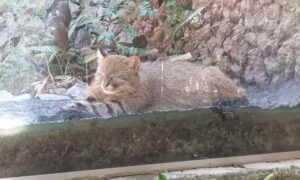
To acquire the extinct antelope’s DNA, the scientific team used a preserved young male bluebuck skin housed at the Swedish Museum of Natural History in Stockholm. By comparing this DNA with the genome of the roan antelope — the bluebuck’s closest living relative, sharing more than 98 per cent genetic similarity — scientists identified the specific traits that made the bluebuck unique. The team has already successfully generated roan antelope pluripotent stem cells, which Lamm described as “essentially versatile ‘starter cells’ that can become many different cell types”.
“We are now in the genome-editing phase, where we introduce key bluebuck edits and genes into roan antelope cells,” Lamm said.
He detailed the subsequent phases of the project, explaining: “After finishing the various edits, the next step will be to use the edited cells to create an embryo and move towards implantation. From there, gestation would take about nine months.”
The resulting embryo is planned to be carried by a surrogate roan mother. This step relies on other recent advancements by the team.
“We have also made breakthroughs in reproductive methods, including successfully collecting eggs from antelope species using advanced techniques,” Lamm said.
This reproductive approach closely mirrors Colossal’s ongoing work with the dire wolf, an Ice Age predator that has been extinct for about 13,000 years. In April 2025, the company announced the birth of three wolf pups, created by editing the genes of grey wolves — their closest living relative — to include ancient dire wolf traits, and then using domestic dogs as surrogate mothers for the cloned embryos. While Colossal refers to these wolves as the world’s first successfully “de-extincted” animals, some outside experts classify them instead as genetically modified grey wolves.
Regarding the status of the pups, Lamm was quoted as saying: “The dire wolves are doing great.”