
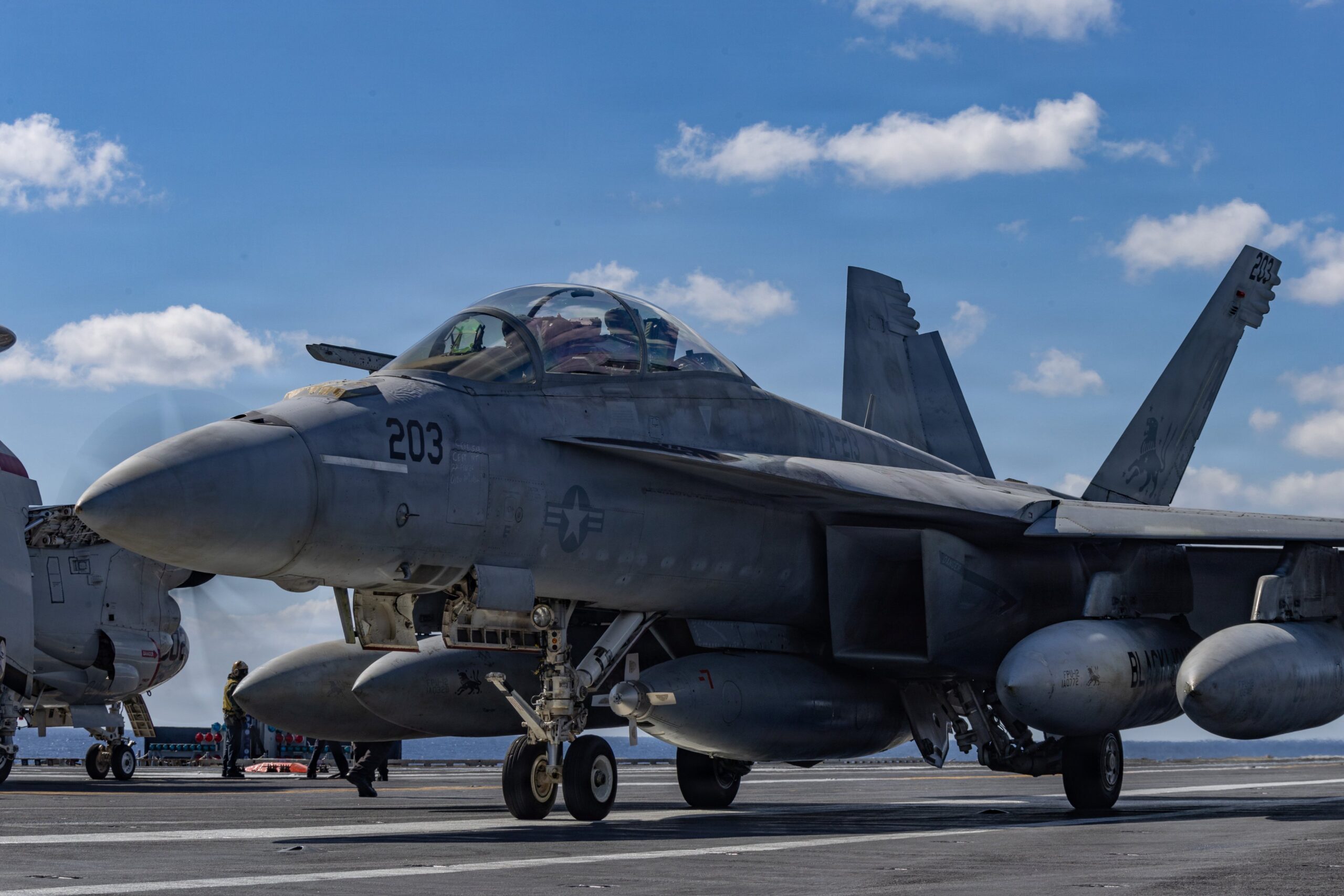

The US military said recently it had successfully repelled a series of Iranian missile and drone attacks targeting regional neighbours and civilian shipping in the Gulf, while carrying out retaliatory strikes on Iran’s Qeshm Island.
In a statement, US Central Command (CENTCOM) said Iran launched several ballistic missiles toward countries in the region, but none reached their intended targets.
“Two Iranian missiles fired at Kuwait fell short or broke apart en route, and three missiles launched at Bahrain were immediately intercepted by U.S. and Bahrain air defence forces,” CENTCOM said.
The US military also said it shot down three Iranian attack drones that were headed toward civilian vessels transiting regional waters.
CENTCOM said American forces subsequently conducted self-defence strikes against what it described as an Iranian military ground control station on Qeshm Island, located near the strategic Strait of Hormuz. No US personnel were injured, it added.
The statement rejected claims by Iran’s Islamic Revolutionary Guard Corps (IRGC) that it had struck the headquarters of the U.S. Navy’s Fifth Fleet in Bahrain and another air base in the region.
“All Iranian attacks on American forces failed,” CENTCOM said.
Iranian state media reported that the IRGC had targeted US military installations in response to what it described as an American attack on a communications facility south of Qeshm Island. The IRGC also claimed responsibility for missile and drone strikes against regional targets.
Kuwait’s military said its air defence systems were responding to “hostile” missile and drone attacks, while state-run news agency KUNA reported that air raid sirens were heard across parts of the country.
“Any sounds of explosions heard are the result of air defence systems intercepting these hostile attacks,” Kuwait’s military said in a statement posted on X.
The latest exchange comes despite a ceasefire that has formally remained in place between the United States and Iran since April 8. Efforts to negotiate a more permanent settlement have so far failed to produce an agreement.
Tensions have remained high across the Gulf since the conflict began in late February following US and Israeli strikes on Iran that killed several senior military leaders.
The Strait of Hormuz, one of the world’s most important energy transit routes, has been effectively disrupted since the outbreak of hostilities. Iran has maintained restrictions in the area, raising concerns over global oil and gas supplies.
Tehran warned earlier this week that Israel’s expanding military operations in Lebanon could jeopardise the ceasefire arrangement between Iran and the United States.
Meanwhile, Washington said it had intercepted multiple vessels attempting to breach a maritime blockade imposed in the region since mid-April.
The renewed missile and drone attacks underscore the fragility of the current ceasefire and highlight the continuing risk of escalation across the Gulf despite ongoing diplomatic efforts.