Culture
In Leh, the old Silk Route still lives



The caravans are gone, but Leh remains a crossroads where cultures, cuisines, languages and travellers from across the world converge.
This is my fourth journey to Ladakh, and I still cannot explain what draws me back. Every time I arrive, the rest of the world fades away.
Ladakh has always felt less like a destination and more like another planet—a landscape that resembles the worlds imagined in science-fiction films.
Until Drass, even after crossing Zoji La, one still senses the shadow of Kashmir.
Kargil, too, carries familiar echoes of home. But beyond Kargil, as the road climbs through Wakha and Mulbekh, crosses Namika La, and descends towards Bodh Kharbu, the transformation is sudden and complete.
The mountains change colour, vegetation becomes scarce, the sky appears impossibly clear, distant streams shimmer across the valleys, and Buddhist chortens, stupas, and prayer flags begin to dominate the landscape.
It is at that moment one realises that Ladakh is not merely another region—it is another world.
One of my most unforgettable memories is spending a night at Lamayuru.
Under one of the darkest skies I have ever witnessed, the Milky Way stretched across the heavens like sand scattered over black velvet.
In a single night, I saw more shooting stars than I had seen throughout the rest of my life.
Following the Indus River towards Leh, the landscape gradually unfolds into one of the Himalayas’ most extraordinary urban settlements.
My affection for Leh goes beyond its scenery. Historically, it was perhaps the first truly cosmopolitan town of the wider Jammu, Kashmir, and Ladakh region.
Situated along the Silk Route, it welcomed merchants, pilgrims, scholars, and travellers from Kashmir, Baltistan, Tibet, Central Asia, and the Indian plains.
People of different ethnicities, languages, and faiths met here, leaving lasting impressions on its architecture, cuisine, customs, and way of life.
Walking through Leh Bazaar, my eyes are always drawn first to the Jama Masjid.

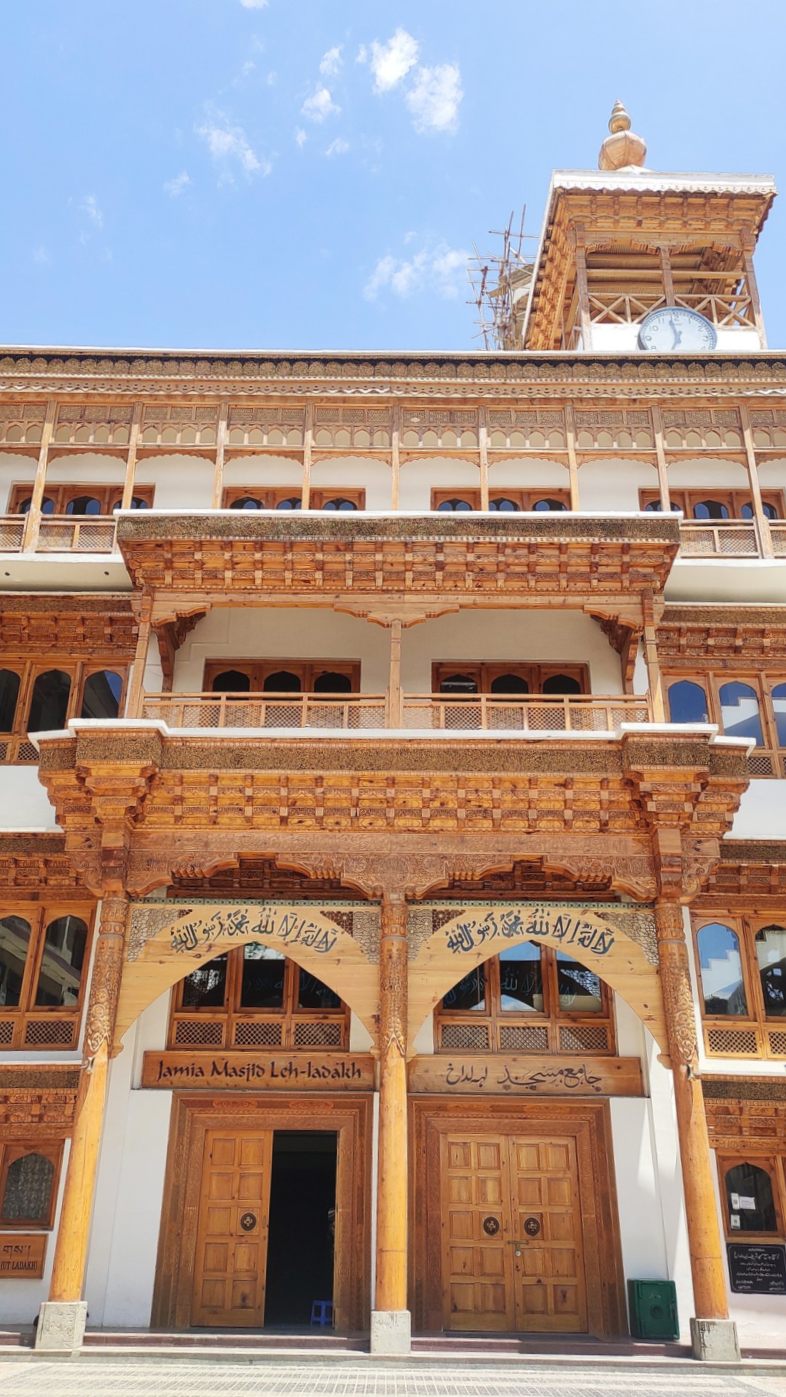
Jamia Masjid Leh. [FPK Photo/Firdous Ahmad Lone]
Its architecture beautifully blends Tibetan and Islamic traditions, reflecting centuries of cultural interaction.
Just beside it lies a lane leading to Datun Sahib Gurdwara, while nearby stands the Central Asian Museum, a reminder of Leh’s historic role as a crossroads of civilisations.
Close to the museum is the city’s oldest mosque, traditionally associated with Gyal Khatun, a Balti Muslim princess whose marriage into the Namgyal royal family symbolises the cultural exchanges that shaped Ladakh.
Leh’s heritage is also reflected in its bakeries, many of which preserve Kashmiri and Balti traditions.
Conversations with local bakers reveal how deeply these culinary influences have become woven into Ladakhi life.

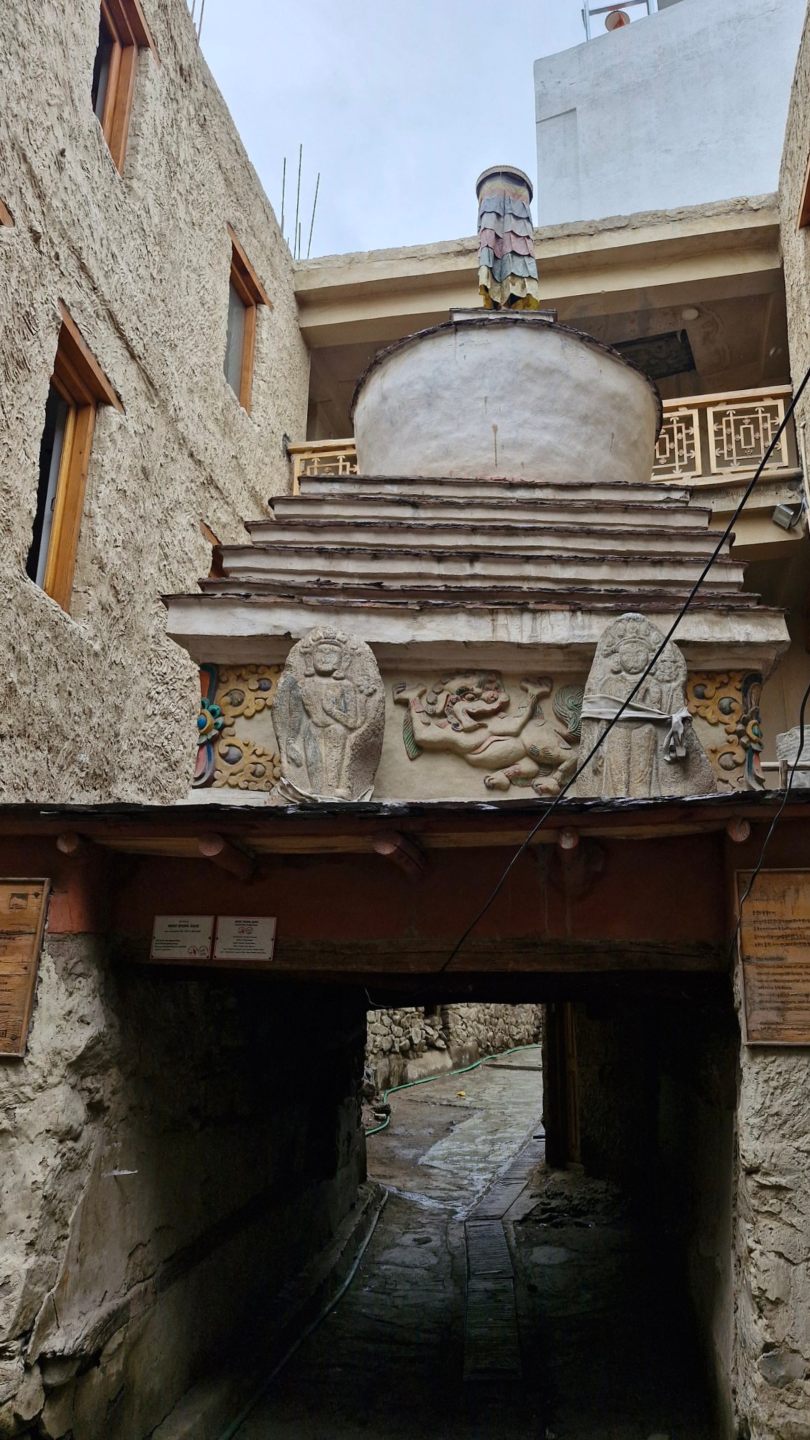
West stupa gate, Leh. [FPK Photo/Firdous Ahmad Lone]
Kashmiri traders, administrators, and artisans were active in Leh for centuries, while Balti communities introduced new culinary traditions, music, and even polo, enriching the region’s cultural fabric.
One of the things I love most about Leh is the extraordinary diversity of its people.
During my stay, I experienced this diversity in the most ordinary yet memorable ways.
The owner of the hotel where I stayed was from Kashmir. The restaurant where I had dinner was run by a local Ladakhi family.
The Tibetan cuisine I enjoyed was prepared by Tibetan refugees. The bakery where I bought fresh bread belonged to a Balti family.
Last year, I stayed at another hotel where the cook was from Jharkhand.
At another restaurant, most of the staff were from Nepal.
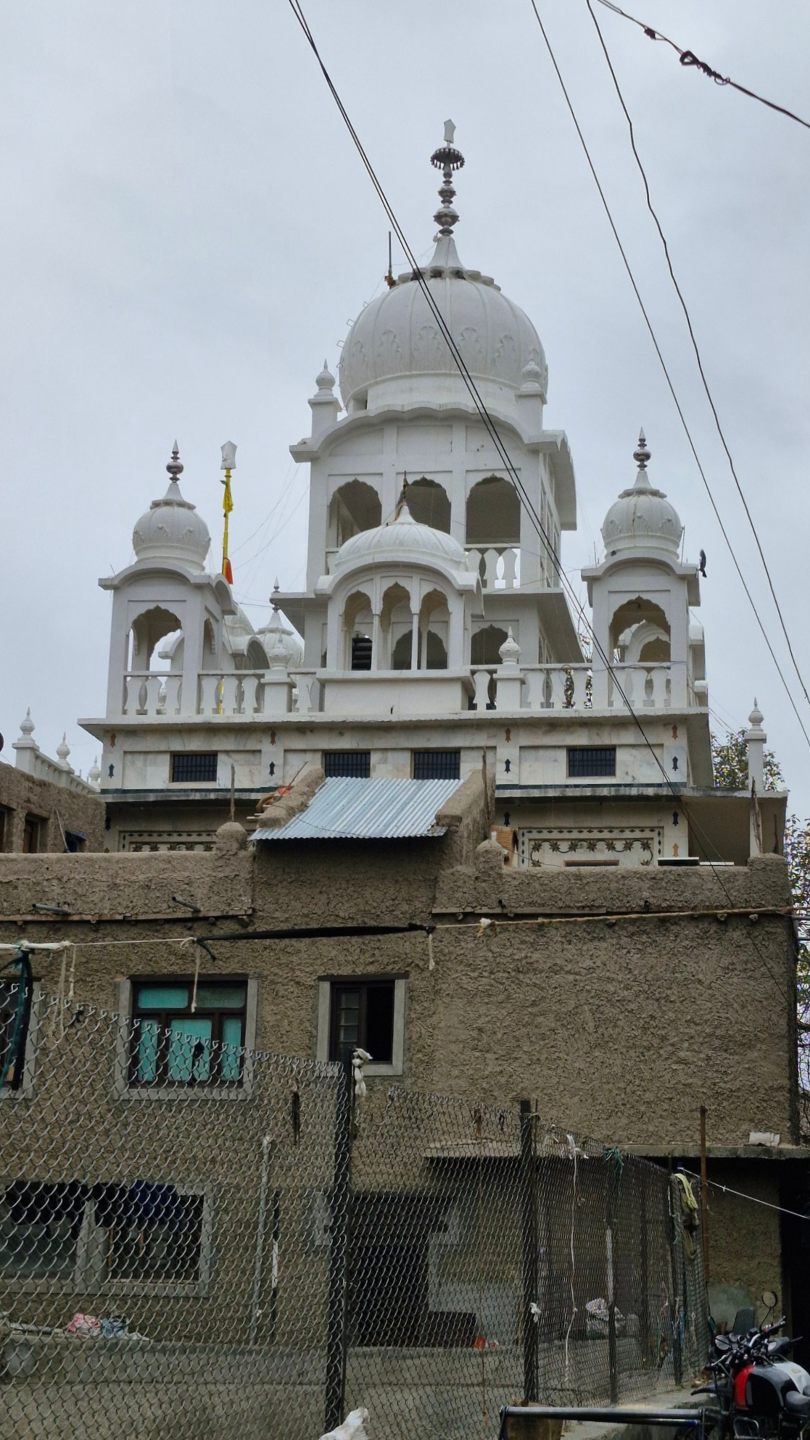
Gurduwara Datun Sahib. [FPK Photo/Firdous Ahmad Lone]
Over the years, I have also met travellers from Japan, Singapore, the United States, the United Kingdom, Spain, and New Zealand.
At one restaurant, I counted nearly thirty national flags displayed on its walls—a quiet reminder of how international Leh has become.
While posting a review of another café on Google, I noticed that one of the previous reviewers had travelled all the way from Australia.
Whenever I read old travel accounts and historical records, I find descriptions of Leh as a meeting point for people from Tibet, Kashmir, Banaras, Nepal, Baltistan, Afghanistan, Central Asia, China, and many other regions connected by the Silk Route.
What fascinates me is that this spirit has not disappeared.
The caravans have been replaced by roads and aircraft, but the people continue to arrive from every corner of the world.
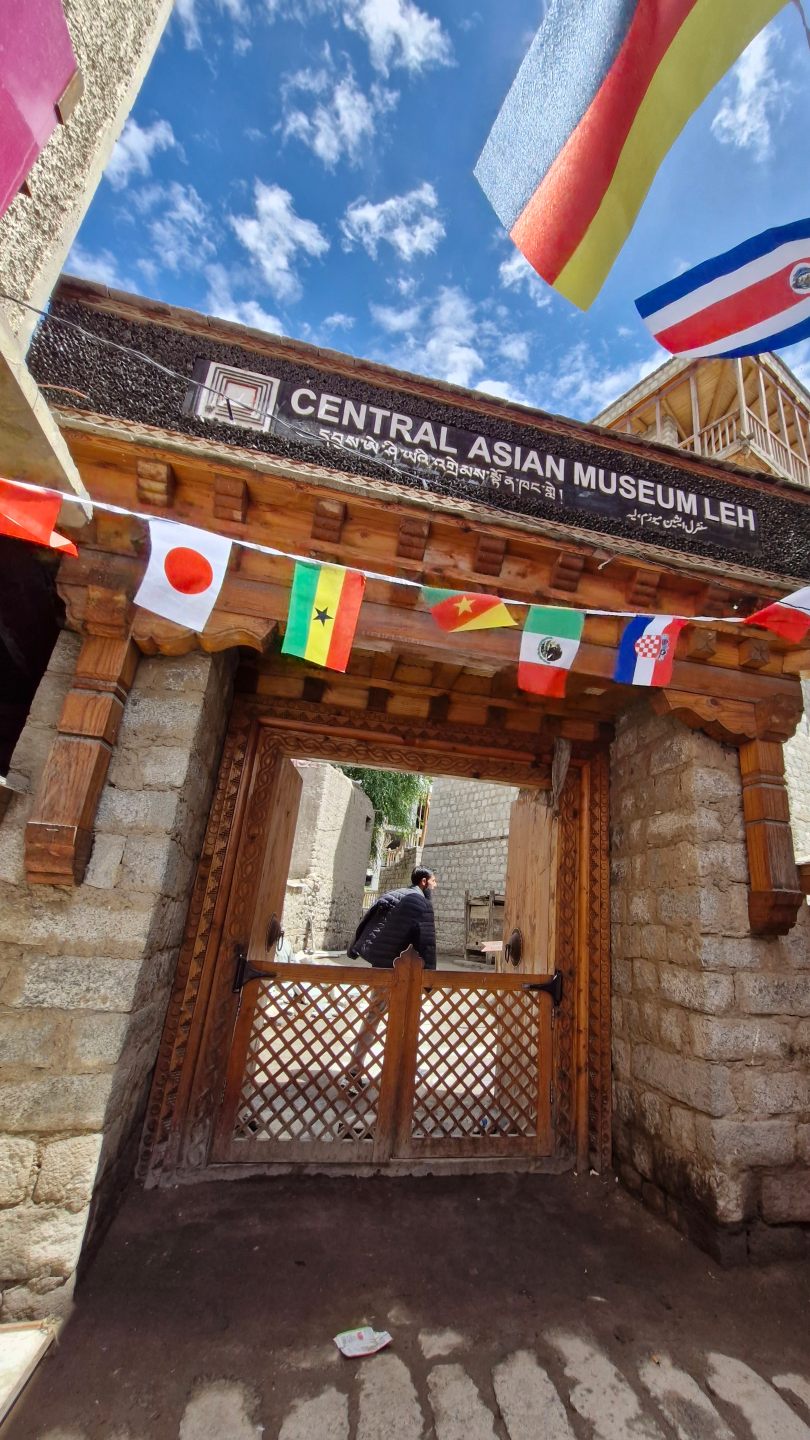
Central Asian Museum. [FPK Photo/Firdous Ahmad Lone]
That is what makes Leh so special. It is not merely a town in the high Himalayas; it is a place where cultures, languages, cuisines, and histories continue to meet, just as they have for centuries.
The Old Town, nestled beneath the Leh Palace, still preserves its narrow lanes and traditional mud-brick houses.
Though many residents have moved elsewhere, significant efforts have been made to conserve this remarkable historic quarter.
Beyond it lies the vibrant New Town, where Tibetan cafés, Kashmiri restaurants, German bakeries, French cuisine, and traditional Ladakhi food coexist within a few streets.
The cosmopolitan spirit that once flourished along the Silk Route continues to thrive today, now sustained by visitors from across the world.
The Tibetan refugee settlement at Choglamsar, the lively Tibetan market, the panoramic views from Shanti Stupa, and the lively evening atmosphere of Leh all add new layers to the city’s character.
Despite rapid change, Leh continues to evolve without losing the essence that has made it unique for centuries.
Perhaps that is why I find myself returning again and again. Every visit feels familiar, yet every journey reveals something new.
Leh is not simply a place I have travelled to; it is a place that continues to reshape the way I see the Himalayas—and perhaps the world itself.