

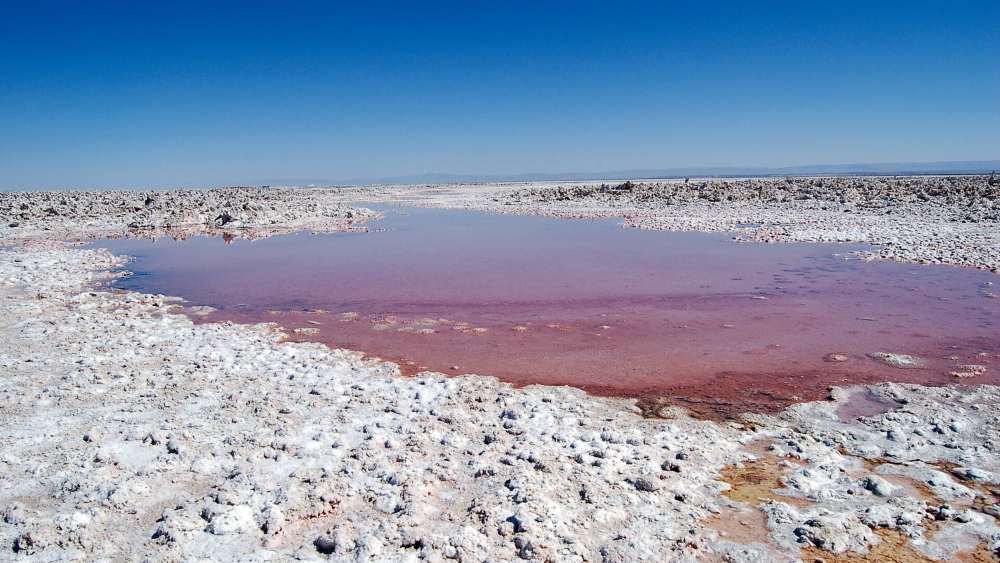

India scientists have discovered geological locations in Tamil Nadu and Chile that are similar to Mars’s environment, which could allow scientists to learn about water processing on Mars and evaluate conditions that may have previously supported life.
A team of researchers from the University of Kerala found the presence of two water-containing sulphate minerals, namely melanterite and gypsum, at the locations as reported in a statement from the Ministry of Science and Technology on Oct. 16.
Researchers discovered melanterite from Neyveli, Tamil Nadu and gypsum from Atacama Desert, Chile and Tiruchirappalli Badlands, Tamil Nadu. These minerals can show evidence of water rock interaction on Mars and lead to an understanding of the planet’s geological history.
The minerals were analysed using a laser Raman spectrometre that was funded by the Department of Science and Technology (DST) through the Fund for Improvement of Science and Technology Infrastructure in Universities and Higher Educational Institutions (FIIST) programme.
The discoveries were documented in two articles published in the Journal of Geophysical Research: Planets. The articles underscore the importance of studying Earth analogues when studying other planets, since what can be seen from orbit on Mars may not always indicate how the minerals there originated.
These locations might allow researchers to improve conclusions about the ancient conditions on Mars and could inform other planetary research.