

Petitioner seeks standardised disability assessment guidelines, regulation of private referrals
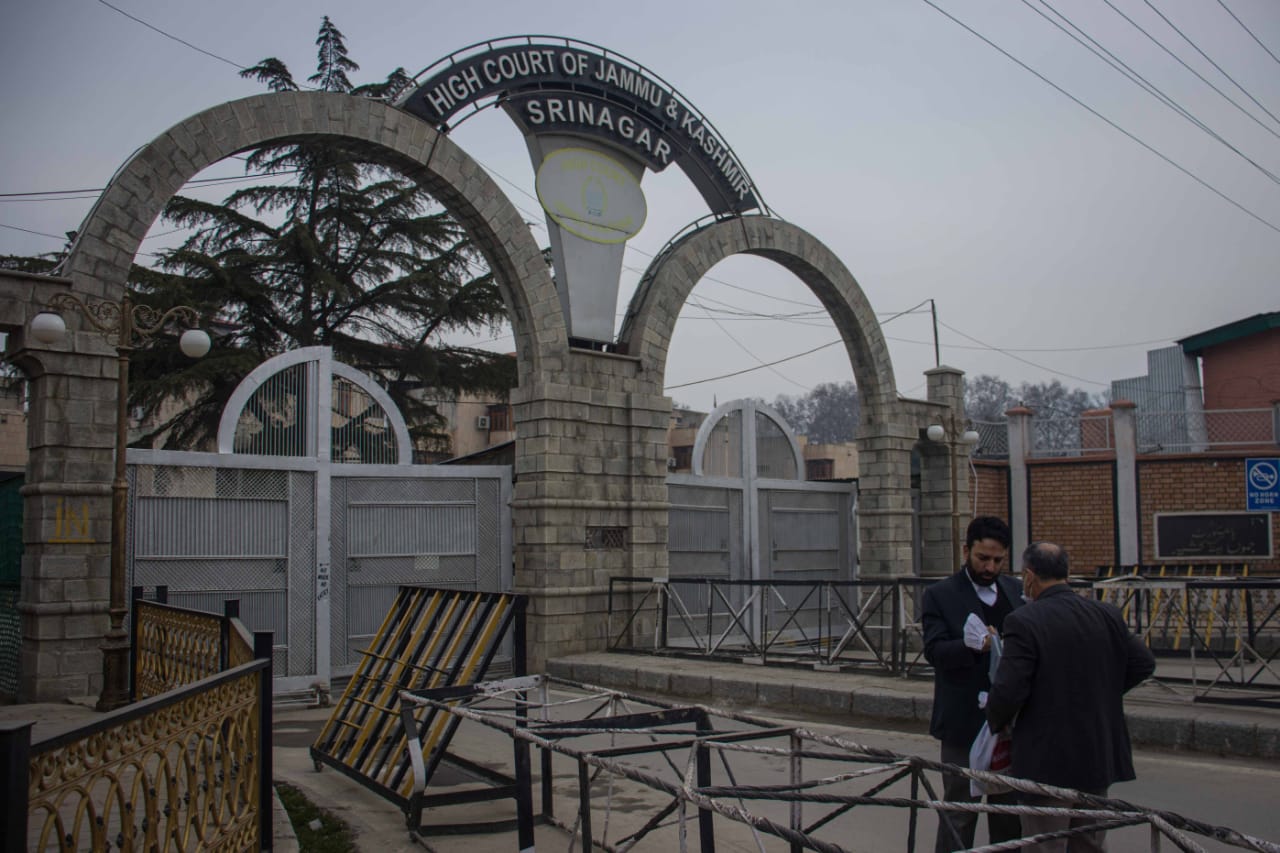
Srinagar: A Public Interest Litigation (PIL) has been moved before the High Court of Jammu and Kashmir and Ladakh, seeking a time-bound institutional framework to strengthen early intervention, child development and rehabilitation services for children with disabilities across the Union Territory.
The petition, filed by Zaheer Abbas Jan, a social worker and child and disability rights activist, as per GNS, raises concerns over alleged gaps in the availability, accessibility and continuity of essential therapeutic services, including Occupational Therapy, Speech and Language Therapy, physiotherapy and psychological interventions.
Invoking the High Court’s jurisdiction under Article 226 of the Constitution, the petitioner has sought directions to the Jammu and Kashmir Government and other concerned authorities to prepare a time-bound roadmap for establishing district-level Early Intervention, Child Development and Rehabilitation Units across all 20 districts, while strengthening existing facilities at Government Medical Colleges and Composite Regional Centres (CRCs) in Srinagar and Jammu.
The petition traces the issue to representations submitted to government departments and healthcare institutions since August 2023, highlighting concerns regarding inadequate therapeutic infrastructure, shortage of qualified professionals, irregular therapy sessions, limited assessment facilities and dependence on private rehabilitation services.
It also refers to difficulties reportedly faced by families from Kupwara, Handwara, Budgam, Anantnag and other areas, who have to travel considerable distances to access specialised services, adding to their financial and logistical burden.
Citing official communications annexed to the petition, the petitioner has referred to a response from the Department of Orthopaedics at GMC Jammu, which acknowledged space constraints affecting the Occupational Therapy section and referred to the provision of such services at the newly created District Early Intervention Centre at SMGS Hospital.
The plea also cites an official communication concerning CRC Srinagar, which recorded that Speech Therapy could not be provided in a particular case due to the non-availability of a Speech Therapist. The institution advised improved counselling and timely facilitation of services.
Further, a detailed report from the Child Guidance and Well-being Centre at the Institute of Mental Health and Neurosciences (IMHANS), Kashmir, acknowledged constraints including prolonged human-resource shortages, unfilled posts, reduced programme funding and manpower, and the absence of adequate dedicated space for expanding services.
The PIL also draws attention to alleged discrepancies between psychological assessment reports issued by Clinical Psychologists at CRC-CDEIC and disability assessments conducted by Medical Boards, which, according to the petitioner, have sometimes resulted in differing conclusions regarding disability certification.
It seeks clear and uniform guidelines for psychological assessment, disability evaluation and issuance of disability certificates to ensure consistency, transparency and fairness for children with disabilities and their families.
Another concern raised in the petition relates to the alleged referral of patients, particularly children with disabilities, by therapists and other professionals working in government hospitals to private rehabilitation and therapy centres. The petitioner has sought appropriate guidelines and regulatory mechanisms to ensure transparency, prevent potential conflicts of interest and safeguard the interests of children and their families.
The petitioner has argued that the concerns extend beyond individual service-related grievances and point to the need for a coordinated district-level public healthcare framework ensuring timely identification, assessment, intervention, referral and follow-up for children requiring developmental and rehabilitation support.
Among the principal reliefs sought are district-wise disclosure of existing facilities, sanctioned and vacant posts, availability of qualified professionals, equipment, waiting periods and referral pathways. The petition also seeks a time-bound plan for filling critical vacancies and deploying appropriately qualified multidisciplinary professionals.
It further seeks minimum functional standards for early intervention facilities, structured parent counselling, transparent referral mechanisms, accessible grievance redressal and periodic monitoring of service delivery.
Relying on provisions of the Rights of Persons with Disabilities Act, 2016, particularly Sections 25 and 27, the petitioner has contended that statutory obligations relating to healthcare, early identification and rehabilitation require meaningful implementation, including in rural and geographically remote areas.
The plea maintains that it does not seek judicial determination of individual clinical diagnoses or prescription of uniform treatment protocols, but rather administrative accountability, institutional strengthening and equitable access to existing statutory entitlements.
The petition also seeks priority consideration, citing the time-sensitive nature of early intervention and the potential consequences of prolonged delays in accessing appropriate services.
The petitioner was represented before the High Court by Supreme Court Advocates Junaid Mohd. Junaid and Fatesh Kumar Sahu. (GNS)