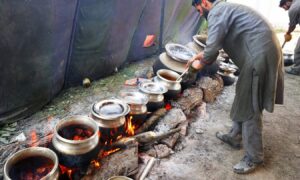

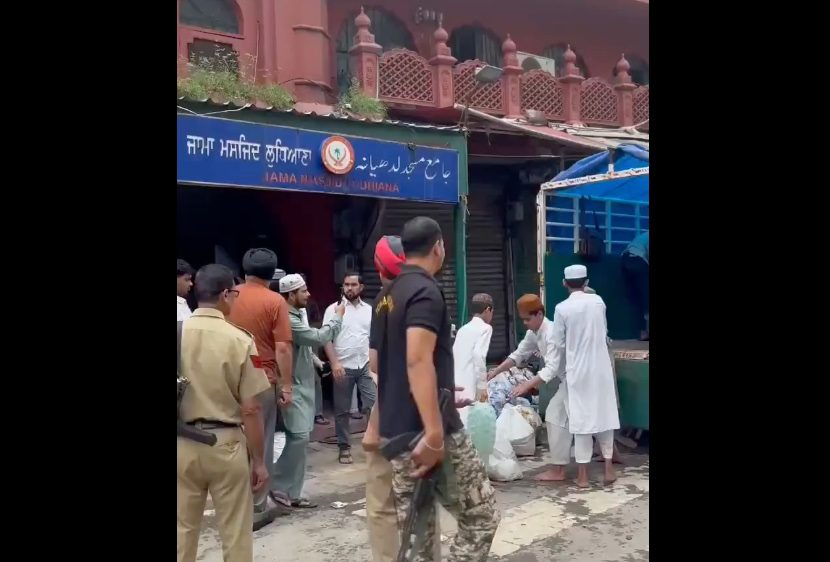

Amritsar: As Punjab faces its worst floods in years, the Muslim community from across Punjab and neighbouring Haryana has stepped forward with large-scale relief efforts. From mosques opening their doors to shelter lakhs of displaced people, to madrasas sending truckloads of food and supplies.
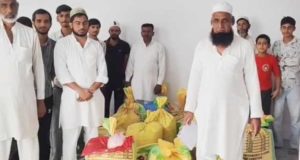
A group of Muslims gathers ration and other essentials to send to families affected by the floods in Punjab.
In Narayangarh, Ambala, Madrasa Zeenat Uloom has become a hub of relief activity, dispatching more than 2,500 food kits, 15 pickup vans and 10 trucks loaded with rations, medicines, and essentials to flood-hit districts of Punjab. “It is our duty to stand with the victims in this hour of crisis,” said Maulana Shaukat Ali.
From Jind district’s Ujana village, Muslim leaders mobilised 150 quintals of wheat flour, sent in tractor trolleys to Punjab. In Shikarpur, villagers raised Rs1.25 lakh in just 18 hours, along with 50 quintals of wheat and hundreds of clothes. Even children in Mewat have been donating their pocket money, with community members vowing they would “sell their land if needed” to ensure no family goes hungry.
Mosques across 23 districts of Punjab have opened their doors to nearly 3 lakh displaced people, providing shelter, food, and clean drinking water. The Jamiat Ulema-e-Hind and local committees have been running collection drives for rations, clothes, mosquito nets, animal fodder and medicines. Videos of madrasa students and ordinary villagers helping pack supplies have gone viral on social media.
Leaders like Shahi Imam Usman Ludhianvi and Jamiat officials have toured flood-ravaged villages in Kapurthala, distributing relief and assessing urgent needs. “We will not let Punjab suffer alone,” said a mosque committee head in Dayalpur.
The relief effort has drawn widespread support beyond the community. Punjabi and Bollywood celebrities have pitched in—Diljit Dosanjh has adopted 10 villages, Amrik Virk pledged help for 200 families, while Sonam Bajwa and Sanjay Dutt have donated to organisations working on the ground. Actor Sonu Sood made an emotional appeal for donations on X, recalling his Covid-19 relief work.
Punjab’s IPS officers have pledged one day’s salary to the Chief Minister’s relief fund, while volunteers on tractors are ferrying supplies to cut-off villages.
The calamity has so far claimed 46 lives, with more than 3.87 lakh people affected and 22,800 evacuated. Over 1,996 villages across all 23 districts are under water as swollen rivers Sutlej, Beas, Ravi and Ghaggar, fed by torrential rains in Himachal Pradesh and Jammu & Kashmir, continue to overflow.
The agricultural sector has been the hardest hit. Nearly 4 lakh hectares of paddy remain submerged, raising fears over Punjab’s role in the national Public Distribution System. Experts warn that prolonged waterlogging will destroy crops, reduce yields and push up prices.
While the AAP government in Punjab has set up 200 relief camps and deployed NDRF, SDRF and local teams for rescue operations, it has accused the BJP-led government of India of neglect. Finance Minister Harpal Singh Cheema said Punjab is still awaiting its “pending” Rs 60,000 crore dues from the government of India.
Government of India Agriculture Minister Shivraj Singh Chouhan, who visited affected areas, assured that short-, medium- and long-term plans will be drawn up, but faced criticism for not announcing financial assistance.