
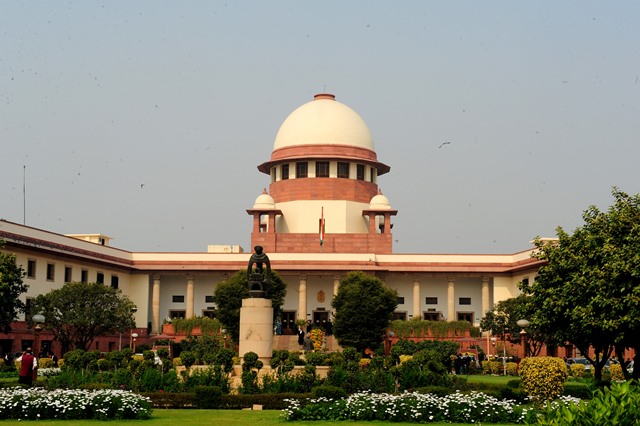

New Delhi: The Supreme Court has called custodial violence and deaths a “blot on the system” and said the country would no longer tolerate such incidents.
A bench of Justices Vikram Nath and Sandeep Mehta made the observation while hearing a suo motu case on the lack of functional CCTV cameras in police stations, noting that 11 custodial deaths were reported in Rajasthan in the first eight months of 2025.
“You can’t have deaths in custody. This country will not tolerate this,” the bench said. Solicitor General Tushar Mehta told the court that no one can justify custodial deaths.
The bench also questioned the Centre for failing to file its compliance affidavit in the matter. “The Union is taking this court very lightly. Why?” Justice Nath asked. Mehta said he was not appearing in the suo motu case but stressed that no authority could take the court lightly. He assured the bench that the affidavit would be filed within three weeks.
The Supreme Court had taken suo motu cognisance in September after a media report highlighted 11 custodial deaths in Rajasthan, seven of them in the Udaipur division. The court had earlier, in 2018, directed installation of CCTV cameras in police stations to curb rights violations.
The court also heard submissions from senior advocate Siddhartha Dave, assisting as amicus curiae in a related matter. Dave said he had filed a report on the December 2020 order directing CCTV installation in central probe agencies including the CBI, ED and NIA. The bench was told that only 11 states had submitted compliance affidavits in the suo motu case, while several others had yet to respond.
The bench noted that Madhya Pradesh had fully connected all police stations and outposts to a district-level centralised workstation, calling the progress “remarkable.” Dave added that although three central agencies had installed CCTV systems, three others had not complied due to lack of budgetary allocation.
Mehta said the court’s direction had to be followed, though installing cameras inside police stations could sometimes hinder investigations. The bench remarked that countries like the U.S. have live-streaming mechanisms and even private jails. Mehta noted that one earlier suggestion involved encouraging industrialists to fund private jails through CSR.
The bench said it was already considering an open-air prison model, calling it an effective way to tackle overcrowding, reduce violence and lower costs.
In its order, the court recorded that 11 states had filed compliance affidavits and gave three more weeks to the remaining states and Union territories, as well as the Centre, to file theirs. It warned that home department principal secretaries of defaulting states would have to appear before the court on December 16 with explanations. For central agencies, their directors may be summoned if affidavits are not filed.
Dave was also appointed to assist the court in the suo motu matter. The bench recalled its December 2020 direction that CCTV cameras be installed at all entry and exit points, lock-ups, corridors, lobbies and reception areas of police stations so no area remains uncovered.