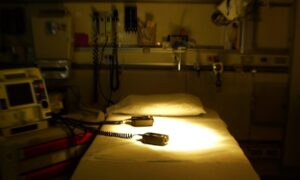

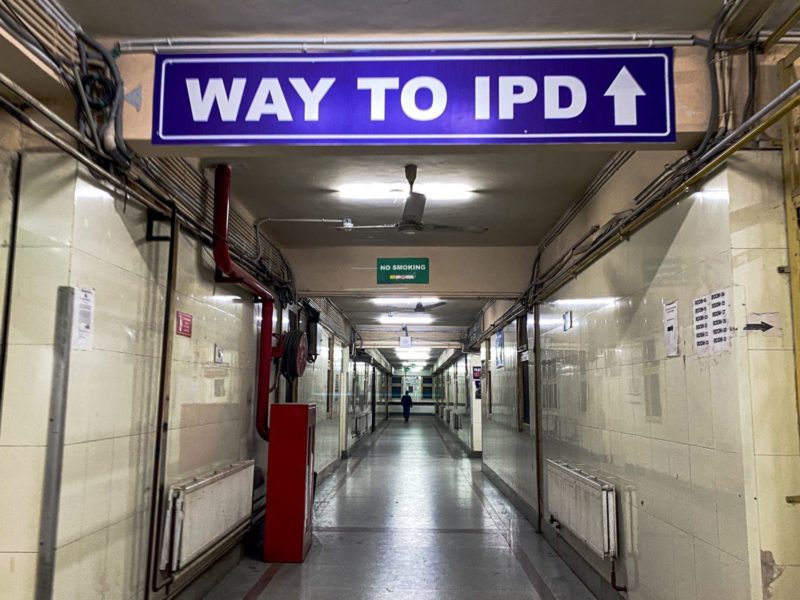

Srinagar: The cold tile of a hospital floor, the hurried scuff of rubber soles, the muffled cry of a family — these are the sounds of a life ending not in the quiet of a home, but in the glaring light of a place meant for salvation.
“You can’t live twice.” The stark, unforgiving truth of this Kashmiri proverb hangs in the air of our emergency departments, a silent rebuke to every preventable death. It is a reminder that there are no second chances, no rewinds, for the patient who walks through those doors in crisis.
Their life is a single, irreplicable thread. When our systems fail, that thread is severed not by fate, but by a cascade of broken protocols, casual negligence, and a dangerous culture of “casualty” that has forgotten its true name: Emergency.
Consider the story that is, tragically, not unique. A 54-year-old man — in the prime of his responsibilities, a father, a partner, a provider— arrives at the emergency department of a reputed hospital with upper abdominal pain.
He carries the innate trust that the structure, the processes, and the protocols are in place to safeguard him.
He is assessed by a junior, overburdened and undersupervised. A few preliminary tests are done. The complex, terrifying puzzle of his pain is reduced to a simple prescription for pantoprazole and anti-anxiety drugs. He is discharged with a label of “acidity” and “stress.” He returns home, but the pain, a relentless warning signal, worsens.
He comes back, and within minutes, in the very belly of the institution that first sent him away, his heart stops. A fatal myocardial infarction, a “missed heart attack,” becomes his final diagnosis. The proverb echoes: You can’t live twice.
Why do such scenes play out, not as rare, shocking anomalies, but as daily tragedies in some of our very own referral and teaching hospitals? The answer lies in the chasm between the theoretical sophistication of modern medicine and the chaotic, often archaic, reality of its practice in our emergency spaces.
The term “casualty” itself is a revealing anachronism, suggesting a passive acceptance of mishap rather than an active, algorithmic pursuit of stabilization and cure. When this “casuality” attitude permeates, protocol becomes paperwork, triage becomes a cursory glance, and the junior resident is left adrift in a sea of critical decisions without a lifeline to senior expertise.
The contrast with functional emergency systems is glaring. In standardised emergency medicine practice, the pathway is clear, measured, and relentless: from Door to Doctor, Doctor to Decision, and Decision to Destination. This is not abstract theory; it is a concrete, timed workflow governed by internationally recognised acuity scales like CTAS (Canadian Triage and Acuity Scale) or India’s own AIIMS-based scales.
These are not meant to gather dust in manuals. They are designed to be displayed — on walls, on screens, on charts — as constant visual reminders of the stepwise logic that separates life from death.
They force the question: Is this chest pain indigestion, or is it an aortic dissection? Does this abdominal pain require an urgent ultrasound, or is it a ticking time bomb of a ruptured aneurysm? The algorithm does not guess; it guides, it prods, it protects both patient and physician.
In the case of our 54-year-old man, a strict triage algorithm would have flagged an adult male with upper abdominal pain as a potential cardiac case until proven otherwise. It would have mandated an immediate ECG, pointed troponin tests, and continuous monitoring. It would have demanded senior review before discharge. But in the absence of this enforced discipline, cognitive shortcuts — “young man,” “stress,” “acidity”— prevail.
The junior resident, lacking both experience and a mandatory safety net, makes a call that feels right in the moment but is catastrophically wrong. The system offers no corrective check.
The causes of this breakdown are multifaceted but not mysterious. First is the abdication of senior responsibility.
When emergency departments are left to be run entirely by the most junior doctors, with consultants operating on a distant, on-call basis, failure is inevitable.
Emergency medicine is a specialty of pattern recognition under pressure, a skill honed by years of experience. Expecting a fresh resident to reliably distinguish between benign pain and a lethal condition is not just unfair; it is a gross dereliction of duty by the institution.
The mantra must be: When in doubt, call. Have a low threshold for escalation. A senior’s missed sleep is preferable to a patient’s missed diagnosis.
Second is the culture of protocol non-compliance. We have brilliant minds crafting evidence-based SOPs (Standard Operating Procedures) in air-conditioned offices, but these documents often fail to translate to the bustling, chaotic ED floor.
There is no accountability for skipping steps, no audit trail for deviations from the algorithm. The protocol becomes a suggestion rather than the law of the land. Without strict auditing and real-time oversight, these vital roadmaps are rendered useless.
Third is the tyranny of volume and infrastructure deficit. Overwhelming patient influx, coupled with a lack of monitoring beds, rapid labs, and point-of-care tests, creates an environment where shortcuts are not just taken but are necessary for survival.
Triage becomes rushed, assessments are truncated, and the goal subtly shifts from “correct diagnosis” to “moving the queue.”
The remedies, however, are within our grasp. They require not just investment, but a fundamental shift in mindset.
Algorithmic Enforcement: Every teaching and referral hospital must visibly adopt and enforce a triage acuity scale.
Large, clear flex prints outlining chief complaint-specific pathways (for chest pain, abdominal pain, stroke, trauma) must be displayed at nursing stations, triage areas, and resident workrooms.
These algorithms should dictate mandatory investigations and senior review thresholds before discharge for moderate and high-acuity cases.
Structured Senior Presence: The emergency department must have dedicated, in-house senior resident and consultant coverage 24/7. Their primary role must be supervisory—to review every admitted patient, every borderline discharge, and to be the immediate “soundboard” for juniors. Rounds must be frequent, and the culture must actively encourage, not stigmatize, escalation of care.
Simulation and Drills: Medical education must move beyond textbook learning of emergencies. Regular, high-fidelity simulation drills on common deadly presentations (like the missed heart attack) must be mandatory for all ED staff. This builds muscle memory for the protocol, making it the default response under pressure.
Closed-loop Auditing: Every death, every unexpected readmission within 48 hours of discharge from the ED, must trigger a mandatory case review against the established protocol. Was the algorithm followed? If not, why? Was senior help sought? This is not for blame, but for systemic correction. Data from these audits must be used to refine protocols and target training.
Reclaiming the “Emergency”: We must banish the term “casualty” from our vocabulary and our mindset. It is an Emergency Department, a place for active, protocol-driven, high-stakes intervention. This shift in language must be accompanied by a shift in resource allocation and institutional prestige.
The man who died of a missed heart attack did not have to die. His death was not destiny; it was a system failure. He came with hope, and with a problem that modern emergency medicine is fully equipped to diagnose and manage. Yet, he fell through the gaping cracks of our complacency.
“You can’t live twice.” This proverb is not a sigh of resignation to fate. It should be a blistering call to action for every hospital administrator, every senior consultant, and every health bureaucrat in Kashmir and beyond. It is a charge to build systems so robust, so disciplined, and so relentlessly focused on the first and only life a patient has, that such tragedies become statistically impossible.
We owe it to that 54-year-old man, and to the countless others like him, to ensure that the emergency department is not the place where their only chance at life is lost, but where it is fiercely, algorithmically, and competently protected.
(The author is a healthcare policy analyst. Can be reached at [email protected])