


WHO says cases reach 11; US monitors 41 people, risk to public remains low
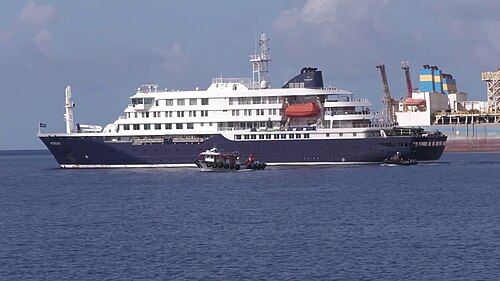
Just weeks ago, hantavirus was a little-known disease for most people outside medical circles. But a deadly outbreak aboard the Dutch expedition cruise ship MV Hondius has pushed the rare infection into global focus.
So far, 11 cases linked to the ship have been identified, including three deaths and several passengers under intensive medical monitoring across different countries.
Health authorities believe the outbreak may have started with a passenger infected before boarding the vessel, likely in Argentina or Chile, where the Andes strain of hantavirus is commonly found.
The virus has triggered an international health response, with countries including the United States, France, Germany, Australia and the Netherlands tracing passengers and monitoring close contacts.
The outbreak has been linked to the Andes strain of hantavirus, the only known hantavirus capable of limited person-to-person transmission. Hantaviruses are usually spread through contact with infected rodents or exposure to their urine, droppings or saliva. However, the World Health Organisation (WHO) says the Andes strain can also spread between humans through close and prolonged contact with an infected symptomatic person.
WHO Director-General Tedros Adhanom Ghebreyesus said on May 12 that 11 cases had been identified among passengers and crew from the MV Hondius. Of those, eight were laboratory-confirmed, two were considered probable and one case remained inconclusive pending further testing. Three people have died — a Dutch couple and a German passenger.
The MV Hondius, operated by Oceanwide Expeditions, departed from Ushuaia in Argentina on April 1 for a polar expedition to Antarctica and the South Atlantic. The vessel was carrying 147 passengers and crew when a cluster of severe respiratory illnesses was reported to the WHO on May 2.
According to the WHO’s current assessment, investigators believe the first infected passenger may have contracted the virus on land before boarding the ship, possibly in Argentina or Chile, where the Andes strain is endemic. Authorities are now examining whether subsequent infections occurred through limited human-to-human transmission onboard the vessel. Preliminary genetic sequencing reportedly showed near-identical virus samples among multiple patients, supporting that possibility.
The ship was initially held off Cape Verde before eventually sailing to Tenerife in Spain’s Canary Islands, where passengers were medically evacuated and repatriated to their home countries under strict health protocols. The vessel has since departed for the Netherlands with a reduced crew, all of whom were asymptomatic at the time of departure, according to the operator.
In the United States, the Centers for Disease Control and Prevention said on May 14 that 41 people were being monitored for possible infection, including 18 passengers repatriated from the cruise and others who may have been exposed during commercial flights involving symptomatic individuals. The CDC said there were no confirmed cases in the United States.
Sixteen American passengers are being monitored at the National Quarantine Unit at the University of Nebraska Medical Center, while two others are under observation at Emory University Hospital in Atlanta. One passenger who initially tested “faintly positive” later returned negative or inconclusive results.
Health authorities in several countries, including the United Kingdom, France, Germany, the Netherlands, Switzerland, Spain, Italy and Australia, are tracing passengers and monitoring close contacts. Australia arranged a special repatriation flight for passengers who returned wearing full protective equipment and entered mandatory quarantine upon arrival in Perth
French authorities said one passenger became symptomatic during a repatriation flight to Paris and remains in critical condition. Meanwhile, several suspected cases in Italy later tested negative.
The WHO has advised countries to monitor all passengers and close contacts for 42 days, reflecting the virus’s incubation period, which ranges from one to six weeks. Symptoms can initially resemble influenza, including fever, muscle pain, chills, nausea and fatigue, before progressing in severe cases to respiratory distress and hantavirus pulmonary syndrome, which can be fatal.
“This is not a novel virus,” CDC incident manager Dr David Fitter told Reuters. “This is a known virus. We’ve seen this in the United States before and we know how to respond to it.”
WHO Director-General Tedros also cautioned that additional cases could still emerge because of the long incubation period, but stressed there was “no sign that we are seeing the start of a larger outbreak.”
The Andes hantavirus is primarily found in South America, particularly in Argentina and Chile, and is carried by wild rodents. Human infections are rare but can be severe, with fatality rates estimated between 30% and 40% in serious cases. Unlike most hantavirus strains, Andes virus has previously shown limited human-to-human transmission during outbreaks in Argentina and Chile, usually among family members or healthcare workers with prolonged exposure.
Scientists are also examining whether climate change and shifting ecosystems may be contributing to the spread of rodent-borne diseases by altering rodent habitats and increasing contact between humans and infected animals in remote regions.
Both the WHO and the CDC have stressed that the outbreak does not currently pose a pandemic threat and that the overall risk to the global public remains low.