
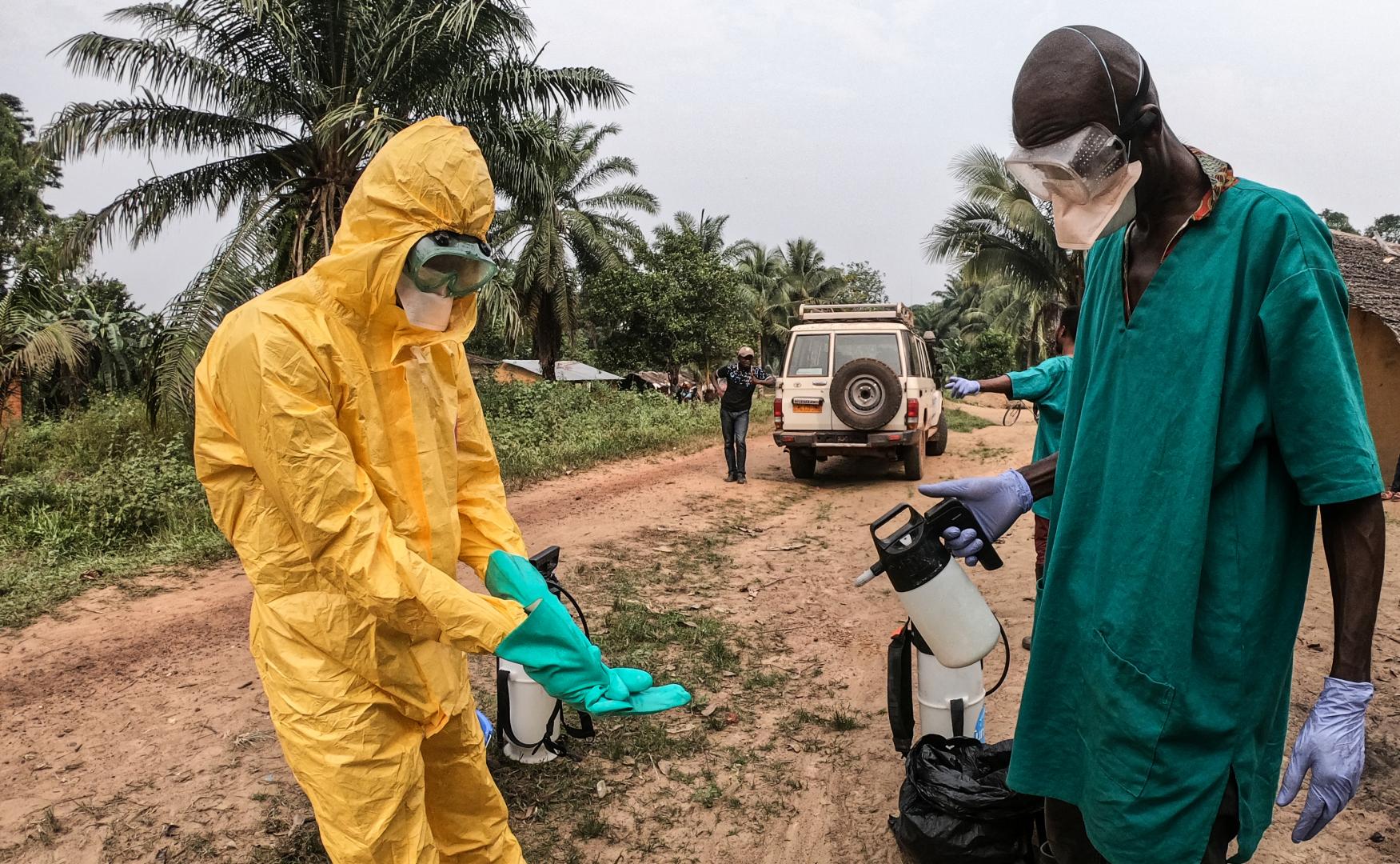

At least 177 suspected deaths and 750 suspected Ebola cases have been reported in the Democratic Republic of Congo (DRC) so far, prompting the World Health Organization (WHO) to raise the country’s public health risk level from “high” to “very high.”
Recently, WHO Director-General Tedros Adhanom Ghebreyesus said that the regional risk across Africa remained “high,” while the global risk was still considered “low.”
Nearly 50 years after the world first encountered Ebola along the banks of a small river in what is now the Democratic Republic of Congo, the virus has once again triggered international alarm.
On May 17, the World Health Organisation declared the ongoing outbreak of Ebola disease caused by the Bundibugyo virus in the Democratic Republic of the Congo and Uganda a Public Health Emergency of International Concern after confirmed cases crossed into Kampala through infected travellers.
So far, the outbreak centred on DR Congo has resulted in 177 suspected deaths and 750 suspected cases. Unlike the Zaire strain of Ebola, for which vaccines and treatments have been developed over the past decade, there are currently no approved vaccines specifically targeting the Bundibugyo virus.
To understand why this outbreak is drawing such concern, it is necessary to examine how the Ebola virus is structured, how it enters the human body, and why it continues to remain one of the more difficult pathogens in modern medicine.
The Ebola virus belongs to a larger group of viruses known as the Filoviridae family, which sits within the broader order Mononegavirales. Within the Ebola group itself, called the Ebolavirus genus, scientists have identified several closely related species, including Zaire ebolavirus, Sudan ebolavirus, Bundibugyo ebolavirus, Taï Forest ebolavirus, Reston ebolavirus, and the more recently identified Bombali ebolavirus.
While they are grouped together, they are not identical. They differ in where they emerge, how they spread, and how severe the disease they cause can be. This distinction is important because Ebola is often spoken about as a single virus, when in reality it refers to a collection of related but distinct viral species under the same broader category.
A key difference between these species lies in the proteins on the surface of the virus, particularly the glycoproteins embedded in its outer envelope. This outer layer acts as the virus’s point of contact with human cells. These glycoproteins function almost like “keys,” allowing the virus to attach to and enter specific cells in the body. Human cells, in turn, have receptors that act like locks, controlling what can enter and what cannot. Once inside, the virus begins to hijack the cell’s machinery to replicate.
The human immune system normally learns to recognise these glycoproteins and produces antibodies that bind to them, helping to block infection. However, because each Ebola species carries slightly different versions of these surface proteins, the immune response triggered by one strain does not always fully protect against another. This variation is one of the reasons why protection is not automatically universal across all Ebola viruses, and why vaccines developed for one species may not be fully effective against others.
Despite the different strains, the mechanism through which Ebola affects the human body remains largely consistent. The virus typically enters through mucous membranes such as the eyes, nose, and mouth, or through broken skin. Once inside the body, it does not immediately attack organs at random. Instead, it first targets key cells of the immune system, particularly macrophages, monocytes, and dendritic cells, which are responsible for detecting and responding to infections. By infecting these early warning cells, the virus effectively disables the body’s ability to recognise the threat in its initial stages.
Inside these cells, the virus hijacks the cellular machinery to replicate rapidly, producing large numbers of viral particles while also interfering with normal immune signalling. This allows the infection to spread quietly through the lymphatic system and into the bloodstream, leading to a sharp increase in viral load, or viremia.
As the virus enters the bloodstream, it spreads to multiple organs, including the liver, contributing to widespread tissue damage and disruption of normal clotting processes. The severe symptoms often associated with Ebola, including bleeding, arise from this systemic breakdown, although visible haemorrhage is not always present in every case. In the later stages, the immune system becomes overactivated in an attempt to control the infection, releasing large amounts of inflammatory chemicals known as cytokines. This uncontrolled response, often described as a cytokine storm, leads to widespread inflammation, leakage of blood vessels, and ultimately multi-organ failure and shock.
Its ability to evade early immune detection, replicate rapidly, and trigger systemic immune collapse is what makes Ebola so dangerous and contributes to its high fatality rate, which the WHO estimates can range between 50 and 90 per cent depending on the outbreak and viral strain.
Since its discovery in 1976, each major Ebola outbreak has reshaped scientific understanding of the virus and exposed new challenges in containing it. The disease was first identified by microbiologist Dr Peter Piot while investigating what was initially believed to be a case of yellow fever in Zaire, now the Democratic Republic of Congo. Doctors were initially confused because Ebola presented with bizarre and atypical symptoms that closely mimicked other infectious diseases common to the region, including yellow fever, malaria, and typhoid. Scientists later recognised it as a previously unknown virus and named it after the nearby Ebola River.
Since then, Ebola virus disease (EVD), once referred to as Ebola haemorrhagic fever, has remained one of the world’s most lethal viral infections, affecting both humans and nonhuman primates. Researchers now believe fruit bats of the Pteropodidae family serve as the natural hosts of the virus in Africa, with transmission occurring primarily through direct contact with infected bodily fluids, contaminated surfaces, or unsafe burial practices.
Despite its high mortality rate, Ebola outbreaks for decades remained largely geographically contained to remote regions of Central and West Africa, limiting global attention and slowing large-scale research efforts. Treatment during earlier outbreaks relied primarily on supportive care rather than targeted antivirals or vaccines. Vaccine development also faced practical challenges, as Ebola research is expensive, logistically difficult, and restricted to a small number of high-containment Biosafety Level 4 laboratories equipped to safely handle the virus.
That changed during the 2014–2016 West African outbreak, which the World Health Organisation described as the largest Ebola outbreak since the virus was first identified in 1976. Beginning in Guinea before rapidly spreading to neighbouring Sierra Leone and Liberia, the epidemic eventually reached the capital cities of all three countries within months.
In August 2014, WHO declared the outbreak a Public Health Emergency of International Concern as cases began appearing beyond Africa, including in Italy, Mali, Nigeria, Senegal, Spain, the United Kingdom, and the United States. According to WHO, more than 28,600 people were infected and 11,325 died during the epidemic, with the outbreak causing more cases and deaths than all previous Ebola outbreaks combined. The scale and international visibility of the crisis transformed Ebola from a geographically contained epidemic into a major global health concern, accelerating funding, vaccine development, and research into the virus.
Even after decades of research, vaccines, and improved scientific understanding, the challenges surrounding Ebola remain far from resolved. On May 21, residents in the Congolese town of Rwampara reportedly set fire to an Ebola treatment centre after authorities refused to release the body of a suspected victim for burial, reflecting the continuing tension between infection-control measures and local funeral practices. Ebola victims remain highly infectious even after death, making burial rituals one of the most dangerous points of transmission during outbreaks.
The fear, stigma, and lack of awareness surrounding this often sensationalised virus can therefore interfere with the very safety measures required to contain it.
Yet Ebola has never evolved into a pandemic-scale threat comparable to COVID-19. One of the primary reasons lies in how the virus spreads. Unlike airborne respiratory viruses, Ebola transmission mainly occurs through direct contact with infected bodily fluids, making outbreaks easier to trace and isolate. While several distinct Ebola strains exist, the virus itself is also not entirely novel to modern medicine, allowing health systems to respond with decades of accumulated scientific understanding.
Scientific understanding of Ebola has advanced significantly over the past decades, yet outbreaks such as the current Bundibugyo epidemic continue to reveal the limits of existing vaccines, healthcare infrastructure, and outbreak containment strategies.
WHO has deployed 22 international staff to support contact tracing, treatment centres, community engagement and risk communication, while UNICEF has sent an emergency response team to Bunia.
The outbreak is spreading amid intensified fighting, mass displacement and widespread mistrust of authorities, fueled by rumours and misinformation. In Ituri province, one hospital was reportedly set on fire by angry relatives after officials refused to release the body of a deceased family member over contamination fears.
UN Emergency Relief Coordinator Tom Fletcher announced up to $60 million from the Central Emergency Response Fund for DRC and neighbouring countries. WHO has separately released $3.9 million.
WHO and the Africa Centres for Disease Control and Prevention have also set up a continental incident management support team. Meanwhile, the UN peacekeeping mission MONUSCO has airlifted nearly 30 tons of emergency supplies, including medicines, tents and protective gear, while providing vehicles and logistics support.
WHO and its partners are preparing clinical trials for experimental Ebola treatments and vaccines targeting the Bundibugyo strain.
Meanwhile, aid agencies warned that misinformation and distrust could severely undermine containment efforts. Gabriela Arenas of the International Federation of Red Cross and Red Crescent Societies said many communities remain traumatised by previous Ebola outbreaks.
“They remember the fear. They remember the rumours spreading to villages,” she told reporters in Geneva. “They remember neighbours disappearing into treatment centres.”
While many residents are seeking treatment and information, some still believe “that Ebola is fabricated,” she added.
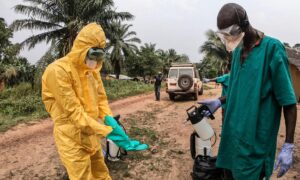
Red Cross volunteers have begun door-to-door awareness campaigns and are supporting safe and dignified burials.
UN agencies warned that women could again bear the brunt of the outbreak due to caregiving roles, frontline health work and burial practices.
Sofia Calltorp, UN Women’s Chief of Humanitarian Action, said that women and girls accounted for roughly two-thirds of reported cases during the 2018–2019 Ebola outbreak in DRC.
“Ebola transmission follows social realities,” she said, adding that pregnant women face heightened risks while quarantines can increase gender-based violence.
WHO said restoring public confidence remains central to containment efforts.
“Building trust in the affected communities is critical to a successful response, and is one of our highest priorities,” Tedros said.