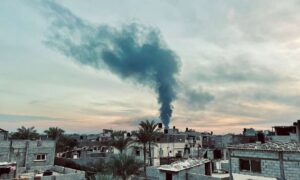


Hostilities in the Iran war intensified on Wednesday as Iranian missile and drone attacks struck targets in the Gulf.
US said it also launched military action near the Strait of Hormuz, raising fresh concerns over regional security and global energy supplies.
Oil prices rose more than 1% after renewed fighting disrupted shipping and aviation activity in the region. The escalation comes despite ongoing diplomatic efforts between Washington and Tehran to formalise a tentative ceasefire announced last week.
Kuwait suspended operations at its international airport after what state media described as an Iranian missile and drone attack on Terminal 1. Aviation authorities diverted flights and halted air traffic until further notice.
The attack injured several people and caused significant damage to airport facilities, according to the state news agency. Kuwait Airways also announced the suspension of its operations.
Bahrain’s military said it intercepted three missiles and several drones targeting the kingdom.
The US Central Command said two Iranian missiles aimed at Kuwait either fell short or broke apart during flight, while several other ballistic missiles targeting regional locations failed. Three missiles heading toward Bahrain were intercepted, it added.
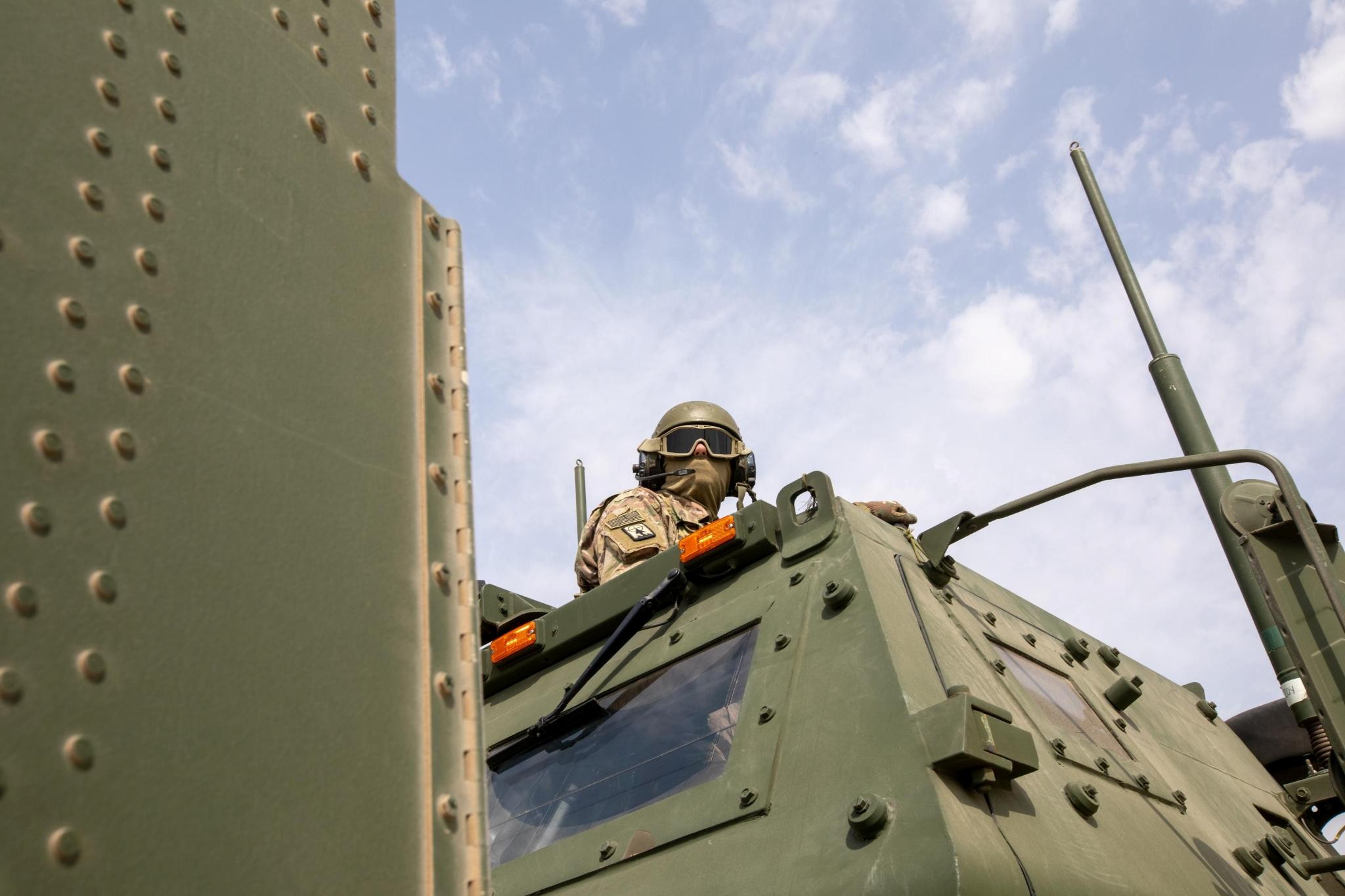
The command said US forces also shot down Iranian drones targeting civilian shipping and American military assets in Kuwait. In response to attempted attacks by Iran, U.S. forces carried out strikes on Qeshm Island near the Strait of Hormuz.
Iranian state media reported that the Islamic Revolutionary Guard Corps (IRGC) targeted the headquarters of the U.S. Fifth Fleet in Bahrain as well as an airbase and helicopters in another regional country. The attacks, it said, were retaliation for what Iran described as a U.S. strike on a communications tower south of Qeshm Island.
The US military said all Iranian attacks had failed and that American forces remained prepared to counter further threats.
The latest escalation comes more than three months after U.S. and Israeli strikes on Iran triggered the current conflict. The Strait of Hormuz, through which roughly one-fifth of global oil and liquefied natural gas shipments previously passed, remains largely closed, disrupting international energy markets.
While both Iran and the United States announced a tentative agreement last week to halt the war, negotiations appear stalled.
Iranian media reported that communication between Tehran and Washington had ceased for several days. US President Donald Trump disputed that claim, saying talks were continuing.
“The conversations between us have been going on continuously,” Trump said in a social media post, adding that discussions had taken place over the previous several days, including Wednesday.
A key point of contention remains Iran’s nuclear programme. Trump has repeatedly said preventing Iran from obtaining nuclear weapons is a top priority. Iran maintains that its nuclear activities are intended solely for peaceful purposes.
Tehran is seeking access to frozen oil revenues, relief from sanctions affecting crude exports and ports, and continued leverage over the Strait of Hormuz as part of any broader settlement.
Iranian media also reported that the IRGC navy struck a vessel identified as the Panaya with missiles, describing the attack as retaliation for a U.S. strike on an Iranian tanker near Hormuz. The IRGC warned that threats to the strait’s security would carry consequences for U.S. forces.
Speaking before lawmakers on Tuesday, U.S. Secretary of State Marco Rubio said sanctions relief would only be considered if Iran agreed to abandon its nuclear activities.
“The war is over,” Rubio said during an exchange with Democratic Senator Cory Booker, who challenged that assessment.
The conflict has also intensified fighting in Lebanon, where Israel has expanded military operations against Hezbollah. Lebanese security sources said Israeli forces carried out strikes on several southern towns on Tuesday despite a U.S.-mediated partial ceasefire announced earlier this week.
The renewed violence has deepened humanitarian concerns. More than 1.2 million people have been displaced in Lebanon, while aid agencies warn that rising transport costs and disrupted supply chains are hindering relief efforts across the Middle East and beyond.
The world’s largest shipping company, MSC, said two projectiles struck one of its vessels in Iraq’s Umm Qasr port on Monday. The IRGC claimed responsibility, saying the attack was carried out in response to a U.S. strike on an Iranian vessel in the Gulf of Oman.
UNICEF warned that the widening conflict was exacerbating humanitarian crises from Gaza to Nigeria as disruptions to transport networks hamper the delivery of essential aid.