

Srinagar: A proposed four-day spiritual retreat titled “Tantra in Silence – A Journey Within” in Kashmir’s Gurez Valley has triggered a political and religious controversy, with former Jammu and Kashmir chief minister and PDP president Mehbooba Mufti, Kashmir’s chief cleric Mirwaiz Umar Farooq and Grand Mufti Nasir-ul-Islam calling for official intervention.
The issue intensified after the Jammu and Kashmir Tourism Department and the Bandipora district administration clarified that no permission or authorisation has been granted for the proposed event.
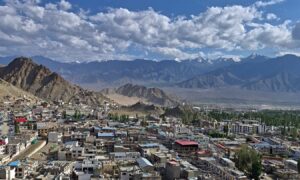
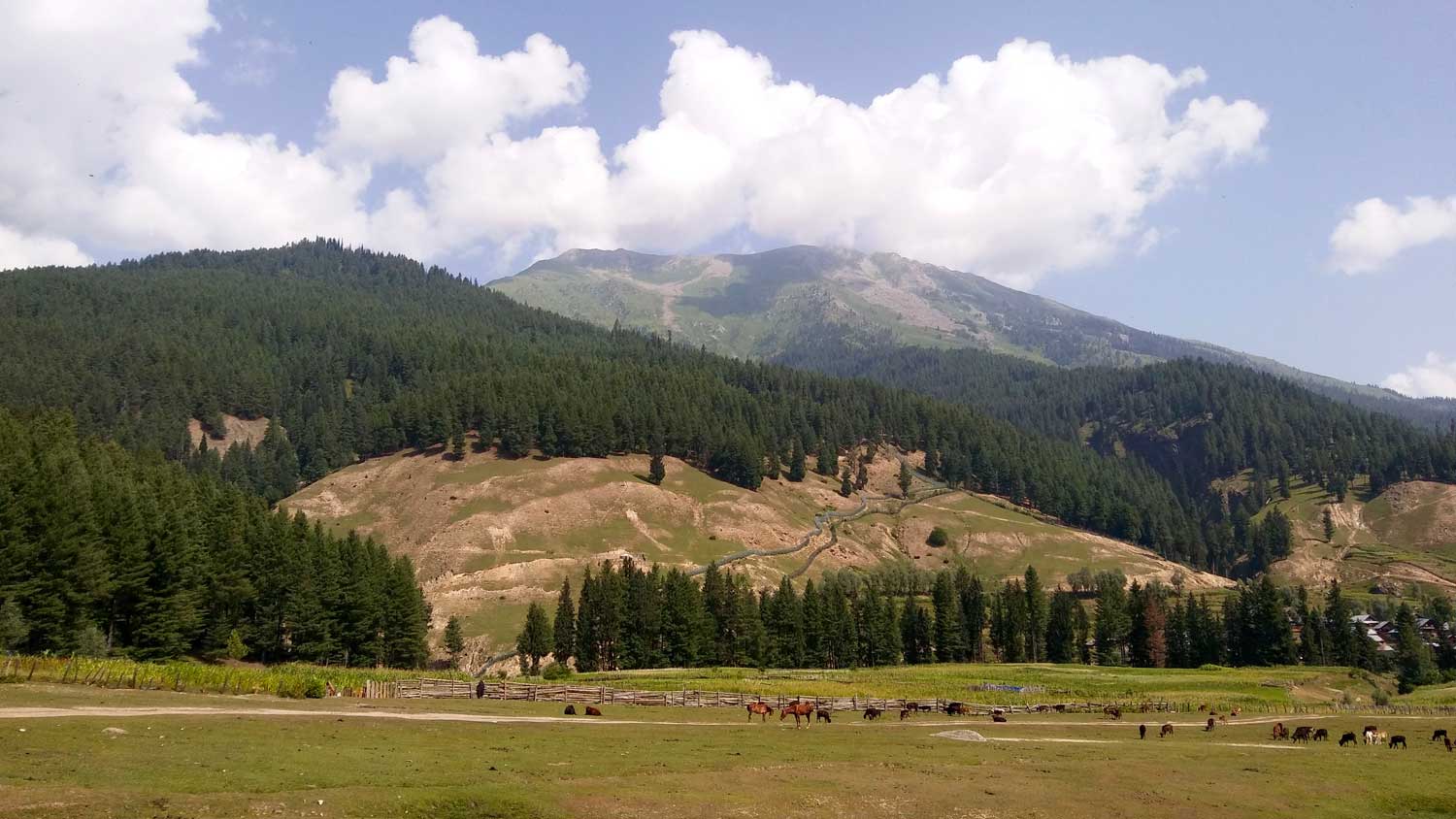
The retreat is advertised for September 24 to 27 in Gurez Valley, a strategically sensitive area of Bandipora district close to the Line of Control. Promotional material circulating on social media identifies Swami Dhyan Sumit as the facilitator and says the programme is inspired by the teachings of Bhagwan Shree Rajneesh, popularly known as Osho.
The poster describes the programme as a “sacred Himalayan experience” and advertises a combination of meditation and spiritual-wellness activities, including meditation, sound healing, “love and awareness”, conscious living and inner transformation.
According to the promotional material, participants are required to wear white and maroon robes. The advertised package has been reported at Rs 11,995 per person, including accommodation, food and retreat sessions. The programme material also outlines arrangements for participants to be picked up from Srinagar Airport, travel to Gurez, stay at a riverside camp and return to Srinagar.
Former chief minister and Peoples Democratic Party president Mehbooba Mufti was among the first prominent political leaders to raise the issue publicly.
In a post on X, Mufti urged Chief Minister Omar Abdullah and the Jammu and Kashmir Police to intervene and take appropriate action.
She referred to what she described as a similar “Tantra” retreat facilitated by Swami Dhyan Sumit in Goa last year, saying it was cancelled following public controversy over its promotional material and police intervention.
“A poster is advertising a ‘Tantra Silence’ retreat in Gurez Valley,” Mufti said, while describing Gurez as “no playground for experiments in the name of spirituality or tourism”.
She also appealed to Mirwaiz Umar Farooq and the Valley’s Grand Mufti to raise awareness about the issue.
Mufti’s account of the earlier Goa episode is a claim made by her; independent confirmation of the precise circumstances surrounding that event was not established in the material reviewed for this report.
Mirwaiz Umar Farooq subsequently backed the concerns raised by Mufti and urged the government to take note of the proposed programme.
In a post on X, Mirwaiz said the concerns over the Gurez event “deserve immediate attention” and questioned the holding of such a programme in the region.
He referred to the reported Goa controversy and said tourism promotion should not be used as a justification for undermining Kashmir’s religious, cultural and social ethos.
“Gurez is the land of sufis and saints,” Mirwaiz said, arguing that spirituality should not be reduced to a commercial proposition.
He called upon Chief Minister Omar Abdullah and the authorities to intervene and stop what he described as exploitation.
The issue was also taken up by Grand Mufti of Jammu and Kashmir Nasir-ul-Islam, who called on the government to establish the facts surrounding the proposed retreat.
Nasir-ul-Islam said concerns had been raised regarding the organisers, the content of the programme and its suitability for the region.
He urged Chief Minister Omar Abdullah, the Jammu and Kashmir Police and the administration concerned to verify the organisers, examine the complete programme and promotional material, ascertain what permissions, if any, had been granted, and ensure that no activity contrary to law or legitimate religious and cultural sensitivities was allowed.
The Grand Mufti also stressed that Gurez should not be viewed solely as a tourist destination, arguing that the area forms part of Kashmir’s broader cultural and spiritual landscape.
He said tourism should respect the character and traditions of the region.
Amid the controversy, the Assistant Director Tourism, Gulmarg, issued a clarification distancing the Tourism Department from the proposed retreat.
The department said it had neither granted permission nor issued any authorisation for conducting the event.
It further said that it had no official information or communication regarding the programme circulated through the social media handle “Tantra in Silence at Gurez”.
“No application seeking permission for the event has been received or processed by this office,” the department said.
It also clarified that the proposed programme had neither been approved nor authorised by the Assistant Director Tourism, Gulmarg, and that the office had no association with the organisation or conduct of the event.
The Bandipora district administration issued a separate clarification, stating that the proposed retreat was unauthorised.
The District Information and Public Relations Office said: “Gurez ‘Tantra Silence’ Retreat Unauthorised; No permission has been granted to the said event by District Administration Bandipora.”
The administration also advised the public and tourists not to rely on or share unauthorised promotional claims relating to the programme.
The government clarification has therefore put the advertised September 24-27 programme under a cloud, with the authorities making clear that the event does not have approval from the Tourism Department or the Bandipora district administration.
The promotional material circulating online identifies the organiser as Rajneesh Tantra Temple and describes it as a spiritual-wellness and retreat community inspired by the neo-Tantric and meditative teachings associated with Rajneesh, also known as Osho.
The advertised programme is presented under the themes of “Tantra, Meditation and Conscious Living”.
The promotional material describes the retreat as a four-day experience and combines the spiritual sessions with accommodation, food and transportation arrangements.
Participants are told to report in Srinagar before travelling to Gurez, with the advertised itinerary including a stay at a riverside camp. The package is listed at Rs 11,995 per person.
The poster also makes white and maroon robes compulsory for participants.
The controversy has also drawn attention to the ideological background of the organisers.
Rajneesh, popularly known as Osho, founded the Rajneesh movement, which became internationally prominent during the 1970s and 1980s. His teachings combined meditation and spiritual practices with ideas that challenged several conventional approaches to religion, morality, sexuality, relationships and social conduct.
The organisers of the Gurez programme describe their work as being inspired by his meditative and neo-Tantric teachings.
The reference to “Tantra” in the programme title has become one of the central points of controversy, particularly because of the political and religious sensitivities surrounding the proposed event in Gurez.
The earlier Goa episode has also become part of the debate.
Mehbooba Mufti said a similar retreat facilitated by Swami Dhyan Sumit was cancelled in Goa last year after controversy over promotional material that she described as obscene, and said police had intervened.
Mirwaiz also referred to the reported Goa cancellation while calling for authorities in Jammu and Kashmir to examine the proposed Gurez programme.
However, the Goa episode has not been independently established in the available official material reviewed for this report. It is therefore being cited here as a claim made by the political and religious leaders who raised the Gurez issue.
The controversy has also drawn a response from Gurez MLA Nazir Ahmad Khan Gurezi, who raised concerns over the proposed retreat and said such activities should take into account the area’s distinct social, cultural and religious character.
According to reports, the MLA said the organisers had not sought permission and urged the authorities to prevent the programme.
He also argued that tourism promotion should not come at the cost of the region’s cultural and social values.
The proposed retreat has consequently raised two separate questions.
The first concerns the nature and presentation of the programme, particularly its use of the term “Tantra”, its association with the Rajneesh tradition and the contents of its promotional material.
The second concerns the legal and administrative status of the proposed event.
On the latter point, the government’s position is clear: the Tourism Department says it did not receive or process an application and did not authorise the programme, while the Bandipora district administration says no permission was granted.
That clarification came after political and religious leaders publicly demanded intervention.
For now, the advertised retreat remains scheduled in promotional material for September 24-27, but the authorities have publicly stated that it has not been authorised by the Tourism Department or the Bandipora district administration.