
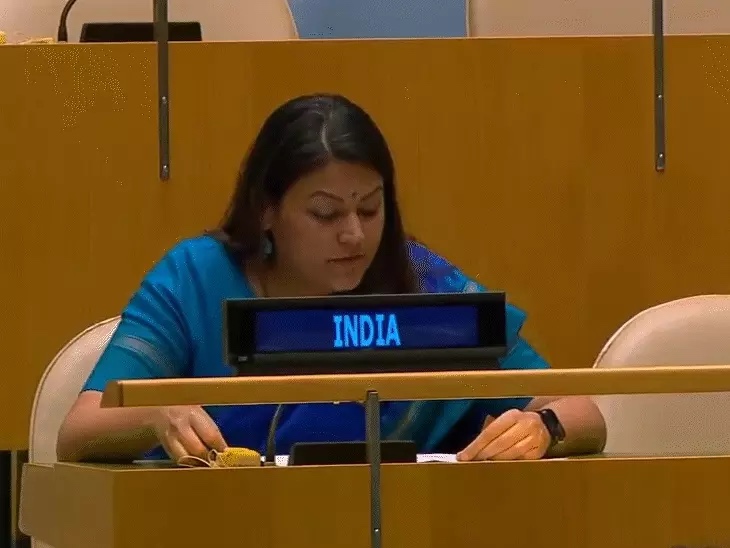

India rejected Pakistan’s characterisation of Kashmir and accused Islamabad of maintaining a longstanding policy of cross-border terrorism
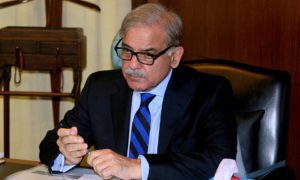
New Delhi: India and Pakistan traded accusations at the United Nations General Assembly, with Pakistan Prime Minister Shehbaz Sharif criticising India’s policies on Jammu and Kashmir and praising Pakistan’s armed forces, while New Delhi accused Islamabad of supporting cross-border terrorism and warned that continued attacks would have consequences.
The exchange followed Sharif’s address to the 81st session of the UN General Assembly in New York on Friday, in which he again raised the Kashmir dispute and spoke about the 2025 military confrontation between the two nuclear-armed neighbours. The UN General Assembly’s 81st session is being held from September 2026 through September 2027, with the high-level general debate taking place from September 22 to 28.
Sharif credited US President Donald Trump with what he called a “timely intervention” during the 2025 India-Pakistan conflict, saying it helped avert a wider confrontation. He also praised Pakistan’s military for what he described as its role in responding to Indian action and called for a “just and fair solution” to the Kashmir dispute.
He also warned India against any attempt to stop, impede or divert Pakistan’s share of the Indus waters, saying such a move would be treated as an “act of war”. India has placed the Indus Waters Treaty in abeyance following the April 2025 Pahalgam attack, while Pakistan has rejected that move as having no legal basis, as reported by Dawn.
Responding to Sharif, Petal Gahlot, First Secretary at India’s Permanent Mission to the UN, rejected Pakistan’s characterisation of Kashmir and accused Islamabad of maintaining a longstanding policy of cross-border terrorism.
Gahlot said Jammu and Kashmir was an “integral and inalienable part” of India and argued that the situation in Pakistan-administered Kashmir should instead come under international scrutiny. She referred specifically to allegations of violence and denial of basic rights in areas including Rawalakot. The Indian Express reported.
On terrorism, Gahlot said India had demonstrated through its military response in 2025 that terrorists would have “nowhere to run and nowhere to hide”. She warned that India would continue to exercise what it described as its right to defend itself against terrorism.
“Continued terrorism by Pakistan will have consequences,” Gahlot said, adding that continued attacks could affect arrangements based on friendship and goodwill, a report by The Statesman said.
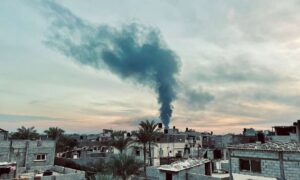
India has linked its May 2025 military operation, Operation Sindoor, to the April 22, 2025 attack in Pahalgam, which killed 26 civilians. New Delhi said the operation targeted terrorist infrastructure in Pakistan and Pakistan-administered Kashmir. Pakistan has disputed India’s account of the conflict and described India’s military action as aggression.
Gahlot also criticised Pakistan’s political system and military establishment, arguing that the country was effectively governed by its military leadership. She cited Pakistan’s 27th Constitutional Amendment and its provisions concerning the country’s army chief as evidence of what she described as the military’s continuing political influence, India Today reported.
She further invoked the 25th anniversary of the September 11 attacks, noting that al-Qaeda leader Osama bin Laden was found in Abbottabad, near Pakistan’s premier military academy. India has repeatedly cited bin Laden’s presence in Pakistan when questioning Islamabad’s record on terrorism, one report by Public Tv English said.
Pakistan responded through Counsellor Saima Saleem, who exercised Islamabad’s right of reply at the General Assembly.
Kashmir was another major point of disagreement.
Sharif told the General Assembly that a lasting settlement of the Kashmir dispute was necessary to prevent South Asia from again approaching the brink of war. Pakistan maintains that Kashmir is a disputed territory whose people should be allowed to exercise their right to self-determination.
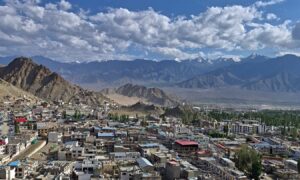
India rejects that position and maintains that Jammu and Kashmir is an integral part of the country. During her response, Gahlot redirected attention to Pakistan-administered Kashmir, citing what India described as killings, violence and restrictions on basic rights there, The Indian Express reported.
The exchange also highlighted the increasingly contentious Indus Waters issue.
Sharif told the UN that Pakistan would regard any attempt to divert or stop its water flows as an act of war. The warning came after India suspended the Indus Waters Treaty following the Pahalgam attack.
Pakistan has argued that the treaty cannot be unilaterally suspended, while India has linked its decision to what it describes as the need for Pakistan to address cross-border terrorism, one report said.
The Indus Waters Treaty, signed in 1960 with World Bank involvement, has historically survived periods of intense political and military confrontation between the two countries. Its suspension has nevertheless added a significant new dimension to bilateral tensions.
The two delegations also exchanged allegations over the treatment of minorities.
Sharif criticised what Pakistan describes as growing religious intolerance in India, while Saleem accused the Indian government of institutionalising Hindutva ideology and targeting Muslims, Christians, Dalits and Sikhs.
Gahlot rejected those accusations and pointed instead to Pakistan’s blasphemy laws and its treatment of religious minorities. India has repeatedly raised these issues in international forums, while Pakistan has rejected New Delhi’s characterisation of its record.