

New Delhi: Two separate cases involving teenage girls in Bihar and Delhi have triggered widespread concern over the safety of women and children in public spaces, with both incidents leading to arrests and further action by police and other authorities.
In Bihar’s Jamui district, a Class 10 girl and her male classmate, both minors, were allegedly stopped and assaulted by a group of people on September 19 after they had attended coaching classes and gone to a nearby scenic area to take photographs.
Videos of the incident, which later circulated widely on social media, showed the teenagers surrounded by a group of youths. The boy was allegedly slapped, pulled by his collar and assaulted, while the girl was allegedly subjected to inappropriate physical contact. In another part of the footage, a man appears to carry the girl away as the boy attempts to intervene. The teenagers can be heard pleading with those surrounding them to let them go.
According to police, the incident took place at around 7pm on September 19 but came to wider attention after the video went viral. The teenagers had not initially approached the police. Investigators traced them using the registration number of a vehicle visible in the footage, recorded their statements and registered a case after the girl submitted a written complaint. The case includes provisions of the Protection of Children from Sexual Offences Act and relevant sections of the Bharatiya Nyaya Sanhita.
Jamui Police formed a Special Investigation Team (SIT) to identify the remaining suspects. Three accused were initially arrested, while police said several other people seen in the footage had also been identified. The National Commission for Women sought an action-taken report and called for swift investigation and arrests.
The investigation subsequently led to further arrests. By September 23, police had arrested two more suspects, taking the total number of people held in connection with the case to five, including three minors. One of the main accused, Nandan Yadav, was shot in the leg during an encounter with police after he allegedly tried to flee, according to police reports.
Police also began action against social-media accounts that circulated footage in which the minor victims could be identified. Reports said authorities had initiated takedown action against dozens of accounts, with police warning against sharing material that could reveal the identities of child victims.
The case triggered a political controversy in Bihar, with opposition leaders questioning the state government’s record on women’s safety. Government leaders said those responsible would face action, while some remarks describing such incidents as isolated or sporadic drew criticism.
The Jamui case also prompted concern over the way videos involving minors were circulated online. Apart from the criminal investigation into the alleged assault, authorities have had to deal with the separate issue of protecting the victims’ identities and preventing further circulation of the footage.
Delhi park case
Two days after the Jamui incident, on September 21, a separate case involving a 17-year-old girl was reported in South Delhi.
According to the FIR and police investigation, the girl was in Aastha Kunj Park near Kalkaji Mandir with a male friend when three men allegedly approached them while claiming to be police personnel. The men allegedly threatened the pair and separated the girl from her friend. The girl was subsequently allegedly sexually assaulted inside the park.
The girl was celebrating her birthday that evening, according to police reports. Investigators said the accused allegedly took the phones of the girl and her friend and threatened them before taking the girl towards a secluded part of the park. Police later arrested all three accused.
Police investigation into the case moved quickly. The survivor’s description of the accused, including their appearance, clothing and other identifying details, helped investigators trace them. All three were arrested within hours of the incident being reported, according to police officials cited by Hindustan Times and The Indian Express.
Investigators subsequently added conspiracy-related provisions to the case after recovering a gun and knife from one of the accused, according to The Indian Express. Police also recorded statements from witnesses, including park guards and workers in the surrounding area.
The case exposed serious questions about security at Aastha Kunj Park. An on-ground report by The Indian Express found that a guard cabin near the relevant gate had no electricity, there were no CCTV cameras inside the park and several cameras at the entrances were not functioning.
The incident also triggered concern among students at nearby Lady Shri Ram College for Women (LSR). Students said they had previously faced problems including harassment, poor lighting and inadequate policing around the college and its surrounding roads. LSR temporarily shifted classes online following the incident.
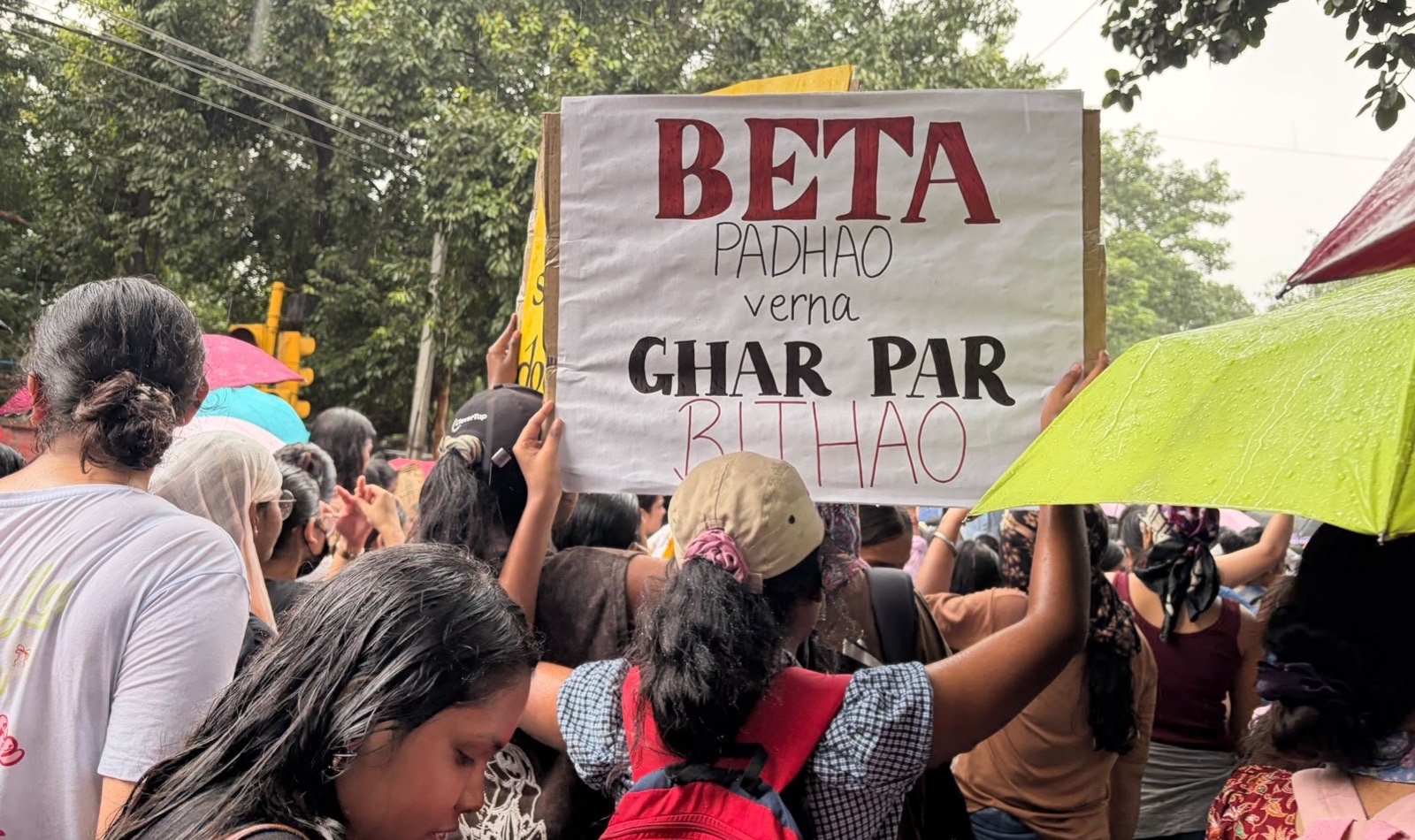
Students subsequently held protests and solidarity marches, demanding better lighting, CCTV surveillance, police patrolling and improved security around the college and nearby areas. Students from several Delhi University colleges joined demonstrations, raising wider concerns about women’s safety in the capital.
Delhi Police also reviewed security arrangements around LSR and discussed student safety with the college administration. The college said security personnel were deployed at its gates and that CCTV surveillance was being monitored and strengthened.
The Delhi Development Authority (DDA) responded by ordering tighter security at its parks. Measures included increased night patrolling, additional lighting and CCTV cameras, and restrictions on entry through selected gates after sunset.
The response has since expanded. On September 29, reports said around 300 DDA parks had been audited, with additional guards, bike patrols and surprise inspections introduced at vulnerable locations. Authorities were also directed to personally inspect major parks under their jurisdiction.
Delhi Police has separately identified security gaps in other vulnerable green spaces and sought additional CCTV cameras and lighting. In areas such as the Hauz Rani forest, Bonta Park and Qudsia Bagh, police assessments found shortcomings in surveillance, lighting and access controls.
The two cases have therefore moved beyond the immediate criminal investigations. In Bihar, authorities have pursued additional suspects, formed an SIT and taken action over the online circulation of material identifying minor victims. In Delhi, the arrests have been followed by a wider review of security at public parks, protests by university students and additional measures involving lighting, CCTV and night patrols.
Both investigations remain subject to legal proceedings, and allegations against accused persons have not been finally determined by the courts.