
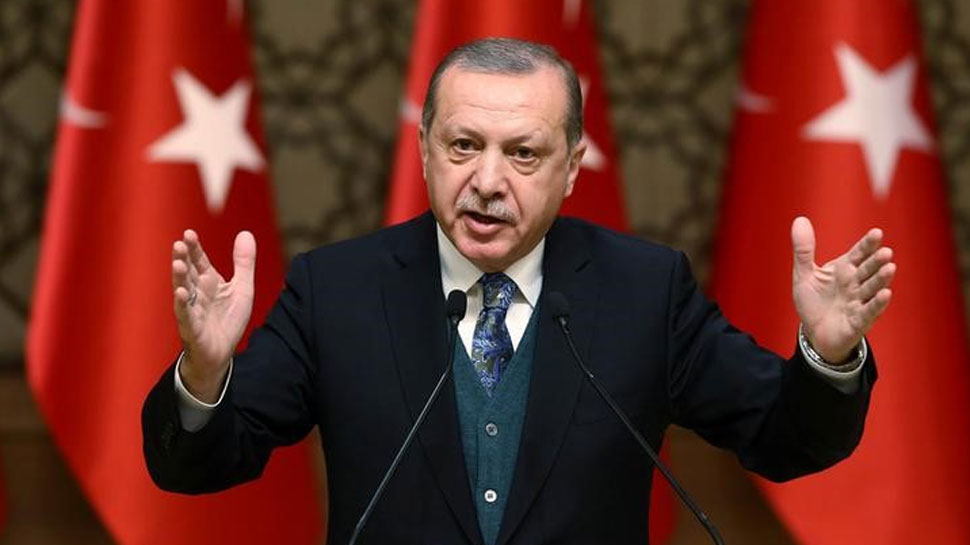

Turkish President Recep Tayyip Erdogan once again raised the Kashmir issue during his address to the 81st United Nations General Assembly in New York on September 22, saying disputes in South Asia, including Kashmir, should be addressed through dialogue within the framework of the UN Charter and relevant resolutions.
Erdogan has repeatedly called for dialogue on Kashmir and a resolution based on relevant UN resolutions. His latest remarks came amid continuing tensions between India and Pakistan and were made at a major international forum.
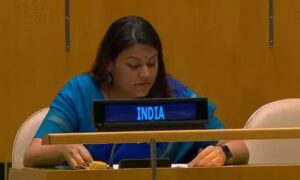
India rejected Erdogan’s remarks, with Ministry of External Affairs spokesperson Randhir Jaiswal describing the reference to Jammu and Kashmir as “unwarranted”. He also added that no external party had “locus standi” on the issue.
At a media briefing on September 29, Jaiswal said the matter concerned India’s territorial integrity and sovereignty and asserted that “no external party has any locus standi on this issue.”
New Delhi has consistently maintained that Jammu and Kashmir is an integral part of India and that issues between India and Pakistan should be addressed bilaterally. India has also opposed third-party involvement in the matter.
Erdogan’s latest remarks are part of a pattern of public statements on Kashmir over several years.
In September 2025, during his address to the 80th UN General Assembly, Erdogan again called for the Kashmir issue to be resolved through dialogue and in accordance with UN resolutions.
India responded at the time by reiterating that Kashmir was a bilateral matter and that outside parties had no role in it.
In February 2025, during his visit to Pakistan, Erdogan also said the Kashmir issue should be addressed through dialogue between India and Pakistan, while referring to relevant UN resolutions and the aspirations of the people of Kashmir. India subsequently lodged a protest with the Turkish ambassador over the remarks.
Erdogan had also raised Kashmir at the UN General Assembly in 2019, after India revoked Jammu and Kashmir’s special constitutional status under Article 370. His comments at the time drew a strong response from New Delhi.
Notably, Erdogan did not mention Jammu and Kashmir in his 2024 UNGA address.
Kashmir has remained one of the recurring points of disagreement in India-Türkiye relations. Ankara has continued to publicly advocate dialogue on the issue, while New Delhi has maintained that third countries have no role in matters concerning its sovereignty and territorial integrity.