

New Delhi: The Supreme Court directed the establishment of a national task force to propose measures ensuring the safety of medical professionals nationwide, emphasising that safeguarding doctors is of paramount national importance, IANS reported.
A bench led by Chief Justice of India DY Chandrachud, acting on its own initiative following the tragic rape and murder of a junior doctor at Kolkata’s RG Kar Medical College and Hospital earlier this month, described the incident as “horrific” and indicative of broader safety challenges faced by doctors nationwide.
Expressing deep concern over inadequate working conditions for young doctors, particularly in public hospitals, the bench stated, “We appeal earnestly to all doctors that ensuring their safety and protection is a matter of utmost national concern. This is no longer an isolated incident but a critical issue affecting the healthcare system across India.”
The bench, comprising Justices JB Pardiwala and Manoj Misra, instructed the Central Bureau of Investigation (CBI) to submit a status report on the investigation within two days. Additionally, it directed the state government to provide a status report on the incident of vandalism within the hospital premises.
The court criticised the West Bengal government for publishing the name, photographs, and video clips of the deceased victim, stating, “While recognising the right to free speech, there are well-established limits.”
Responding to these concerns, senior advocate Kapil Sibal, representing the West Bengal government, mentioned, “We have filed 50 FIRs. Photos were circulated before the police arrived. We took prompt action to prevent further harm.”
The Supreme Court questioned the role of the hospital’s former principal, Dr Sandip Ghosh, who is currently under prolonged CBI questioning, asking why the incident was initially treated as a suicide and why there was a delay in filing an FIR.
Regarding the subsequent vandalism at the hospital, the bench queried, “What measures did the police take? How did the vandals gain entry?”
Solicitor General Tushar Mehta, representing the Central government, highlighted that such large-scale violence could not occur without police knowledge or consent, labeling it a severe breakdown of law and order in West Bengal.
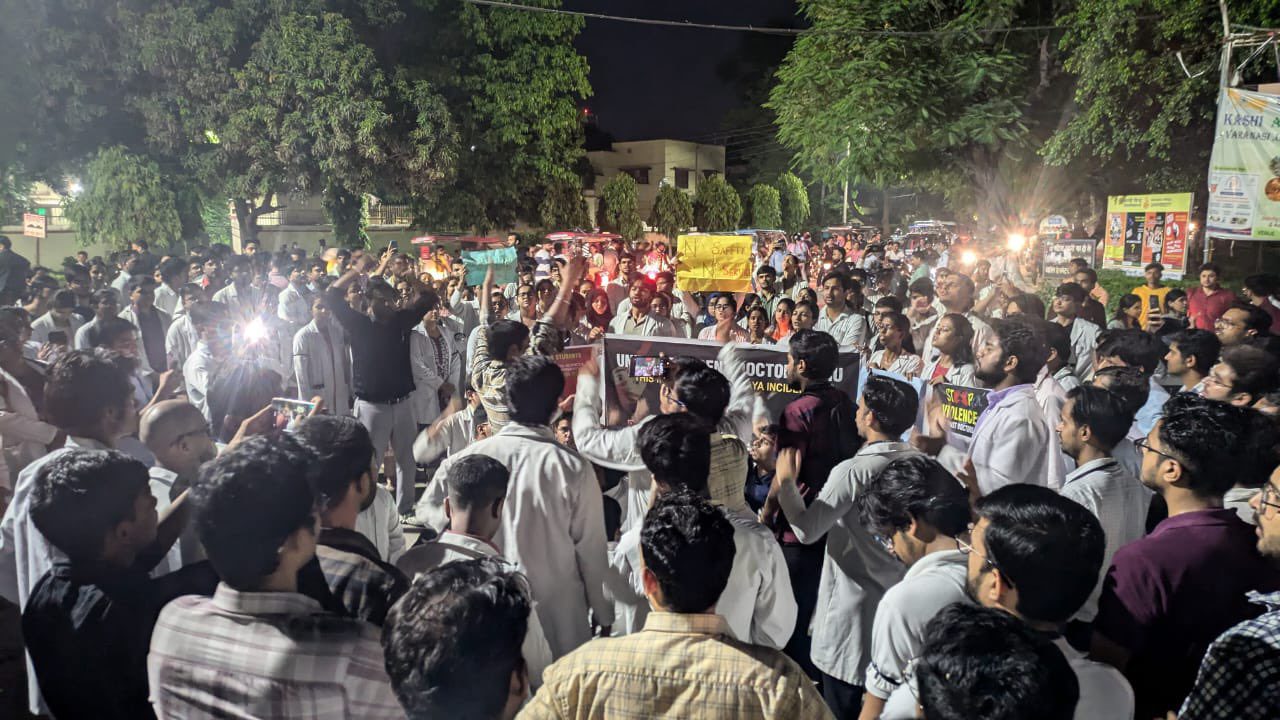
The Supreme Court stressed that state police should not use force against peaceful protesters from the medical community or civil society. “During peaceful protests, whether by doctors or other groups, state power should not be used unless there is violence. This is a moment for national reflection,” remarked CJI Chandrachud.
The three-judge bench was addressing a suo moto case titled “Alleged rape and murder incident of a trainee doctor in RG Kar Medical College and Hospital, Kolkata, and related issues,” prompted by several petitions urging the court to intervene and ensure a thorough and impartial investigation.
Monica Singh, a doctor, filed one of these petitions, urging the Supreme Court to oversee the RG Kar case to guarantee a comprehensive and unbiased investigation. She also sought guidelines to enhance security at medical institutions nationwide and to protect medical professionals effectively.