
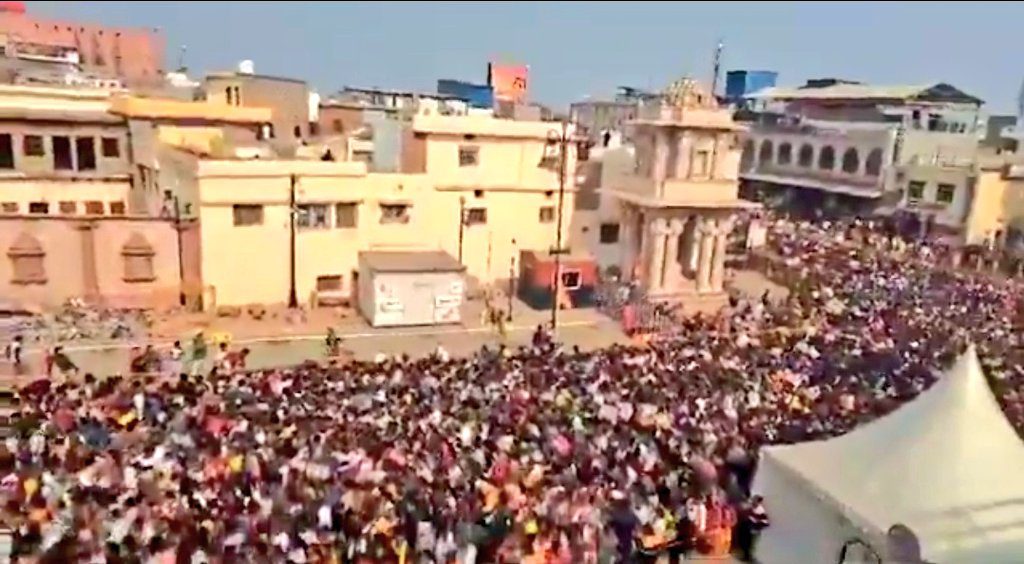

Prayagraj: A crowd crush at the Kumbh Mela festival in Prayagraj, Uttar Pradesh, on Wednesday left at least 40 people dead and many more injured, according to local media reports.
The government is yet to confirm an official death toll, while a doctor in the city reported 15 fatalities. A paramilitary officer at the scene estimated around 50 deaths and at least 200 injuries, as reported by AFP.
Reports quoting eyewitness suggest that multiple crushes occurred. The initial crush took place at the Sangam, the sacred confluence of the Ganga, Yamuna, and mythical Saraswati rivers, where worshippers trying to bathe accidentally tripped over those already seated or lying by the riverbank. As panic spread, people attempting to escape were caught in another deadly crush.
With an estimated 100 million pilgrims expected to take part in the ritual bathing, authorities had warned devotees to use alternate sites along the Ganga. However, Wednesday’s crowds were particularly large as the event coincided with a rare celestial alignment involving the sun, moon, and Jupiter—an occurrence that happens once every 144 years during the Maha Kumbh Mela.
Following the incident, the ritual bathing at the Kumbh Mela was temporarily suspended. Officials stopped further entries into the city, urging worshippers to disperse for their safety. Hindu religious leader Jagatguru Rambhadracharya had earlier warned devotees against overcrowding at the Sangam Ghat, but the sheer number of people made crowd control difficult.
The festival, which began two weeks ago, is set to continue until February 26. Nearly 148 million people have already attended, making it the world’s largest religious gathering.
Crowd-related tragedies are not new to Kumbh Mela. In 1954, more than 400 pilgrims were crushed or drowned in a single day. Other deadly incidents include the 1986 stampede that left 53 dead, the 2003 tragedy in Nasik that claimed 40 lives, and the 2013 disaster where 36 people, mostly women and children, lost their lives. After 10 deaths at the Ganga in 2015, organisers imposed a selfie ban to prevent further accidents.