

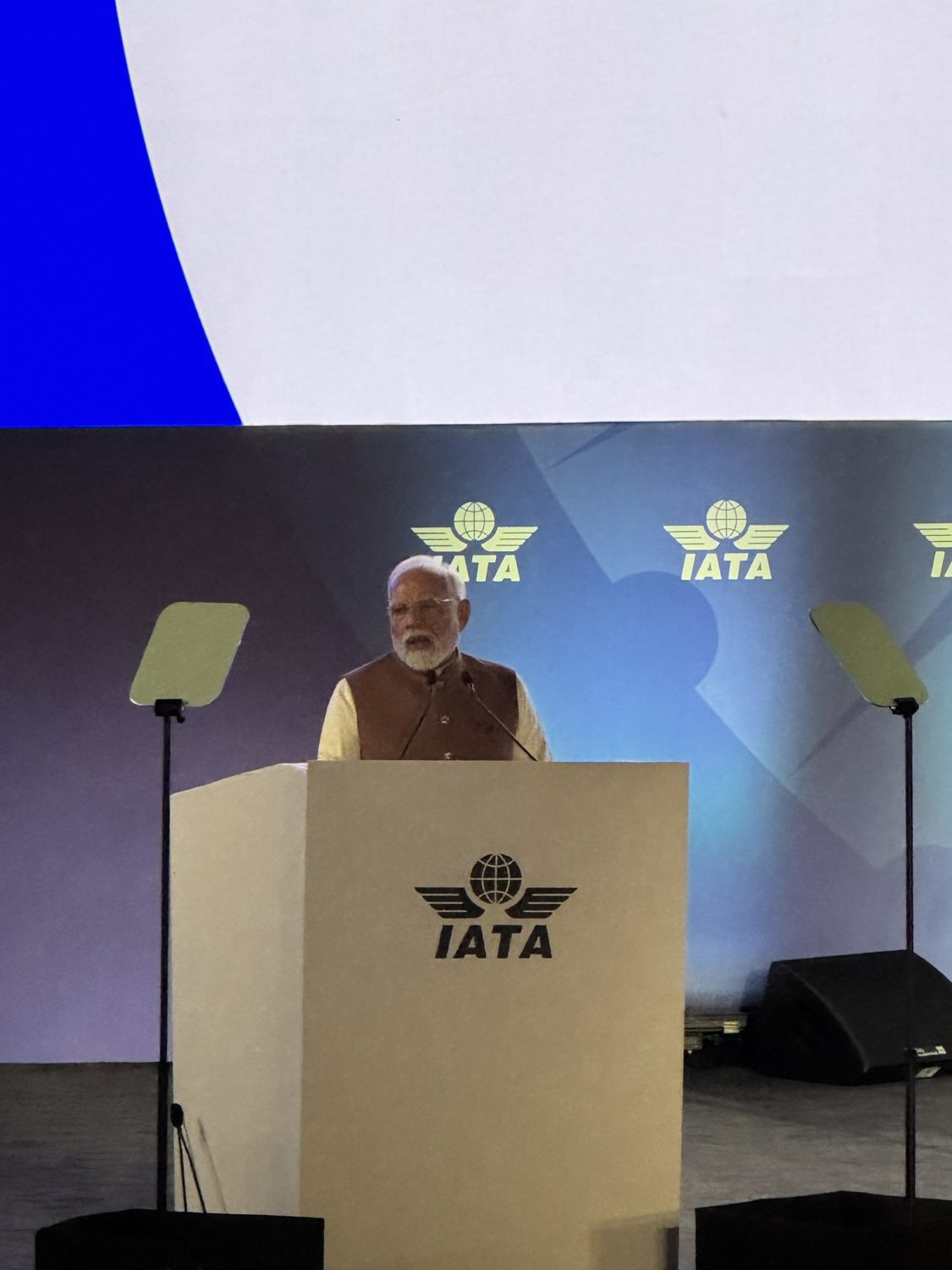

New Delhi: Prime Minister of India Narendra Modi on Monday said India is emerging as a global leader in space-aviation convergence and is committed to building world-class infrastructure to enhance connectivity.
Addressing the 81st Annual General Meeting of the International Air Transport Association (IATA) and the World Air Transport Summit in New Delhi, Modi said India’s civil aviation sector has seen historic transformation in the last decade and is now the third-largest domestic market in the world.
He outlined three pillars driving this growth: a vast aspirational market, a strong talent pool in tech and innovation, and a supportive policy ecosystem.
Modi termed the UDAN scheme a “golden chapter” in aviation history, noting that over 1.5 crore passengers have benefitted from affordable air travel. India now has 162 operational airports, up from 74 in 2014, and Indian carriers have ordered over 2,000 new aircraft.
By 2030, annual passenger traffic is projected to touch 500 million and cargo movement 10 million metric tonnes. India is also working to establish a \$4 billion MRO (Maintenance, Repair, and Overhaul) hub.
He highlighted India’s focus on safety, sustainability, and user experience, citing the Digi Yatra initiative as a model for paperless, seamless travel. India is also pushing for sustainable aviation fuels and green technologies.
Modi said India should not be seen merely as a market but as a value-chain leader in the global aviation sector. With 15% of its pilots being women—three times the global average—India’s inclusive growth in aviation is setting new benchmarks.
He highlighted India’s alignment with global standards, including the ICAO framework and the Delhi Declaration on aviation safety. Modi reaffirmed India’s support for Open Skies and global connectivity, urging stakeholders to collaborate for affordable and secure air travel.
Over 1,600 global aviation leaders, officials, and media delegates attended the summit, held in India after 42 years.