

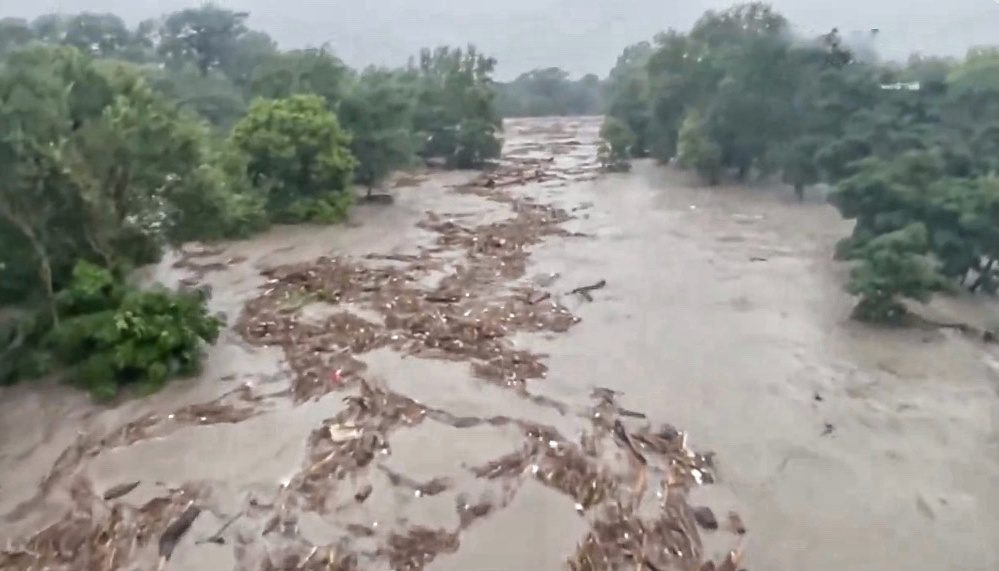

Devastating flash floods in central Texas have killed at least 109 people and left more than 160 missing, with Kerr County emerging as the worst-hit region. Governor Greg Abbott confirmed the figures on Tuesday, warning that the number of missing could still rise as search efforts intensify.
Most of the fatalities — 94 — have been reported from Kerr County, a region infamously known as “Flash Flood Alley.”
Among the victims are at least 27 girls and counsellors who were caught in the rising waters while attending a summer camp on the Guadalupe River. As of Tuesday evening, five campers, one counsellor, and one unrelated child remain unaccounted for.
“There could be more added to that list,” Abbott said, noting that the current figures were based on reports from concerned relatives, friends, and neighbours.
Rescue teams, including Texas Game Wardens, are using helicopters, drones, and sniffer dogs in treacherous conditions. Thick mud and massive piles of debris have slowed recovery efforts. “It’s extremely hazardous work,” said officer Ben Baker. “It’s slow, it’s dirty, and the risk is still high.”
In Hunt, one of the epicentres of the disaster, workers continued combing through rubble. Local resident Javier Torres, 24, who found his grandfather’s body, was still searching for his missing grandmother and said he had also discovered the remains of two children.
Elsewhere in Texas, 15 additional deaths have been reported due to flooding.
Meanwhile, in Ruidoso, New Mexico, the National Weather Service declared a flash flood emergency as rivers swelled beyond safe limits. Multiple homes were damaged, and several residents were reportedly trapped. The Rio Ruidoso is believed to have risen over 20 feet (6 meters).
President Donald Trump is scheduled to visit Texas on Friday, July 11, alongside First Lady Melania Trump. While praising the rescue teams, Trump’s visit comes amid criticism over possible funding cuts to federal warning systems and the pace of the emergency response.
Experts say a combination of extreme drought, which made the soil less absorbent, and record-high temperatures since May, worsened the disaster. Meteorologist Shel Winkley and Climate Central spokesperson Tom Di Liberto also pointed to staffing shortages in the National Weather Service as a contributing factor.
Despite forecasts of more rain in the coming days, authorities vowed to continue the search. “The weather won’t deter us,” said Baker. “Our focus remains on bringing people home.”