

The celebration of the Prophet’s birth in Kashmir stretches back to the 14th century. It grew through khanqahs, relics, and gatherings that still endure today.
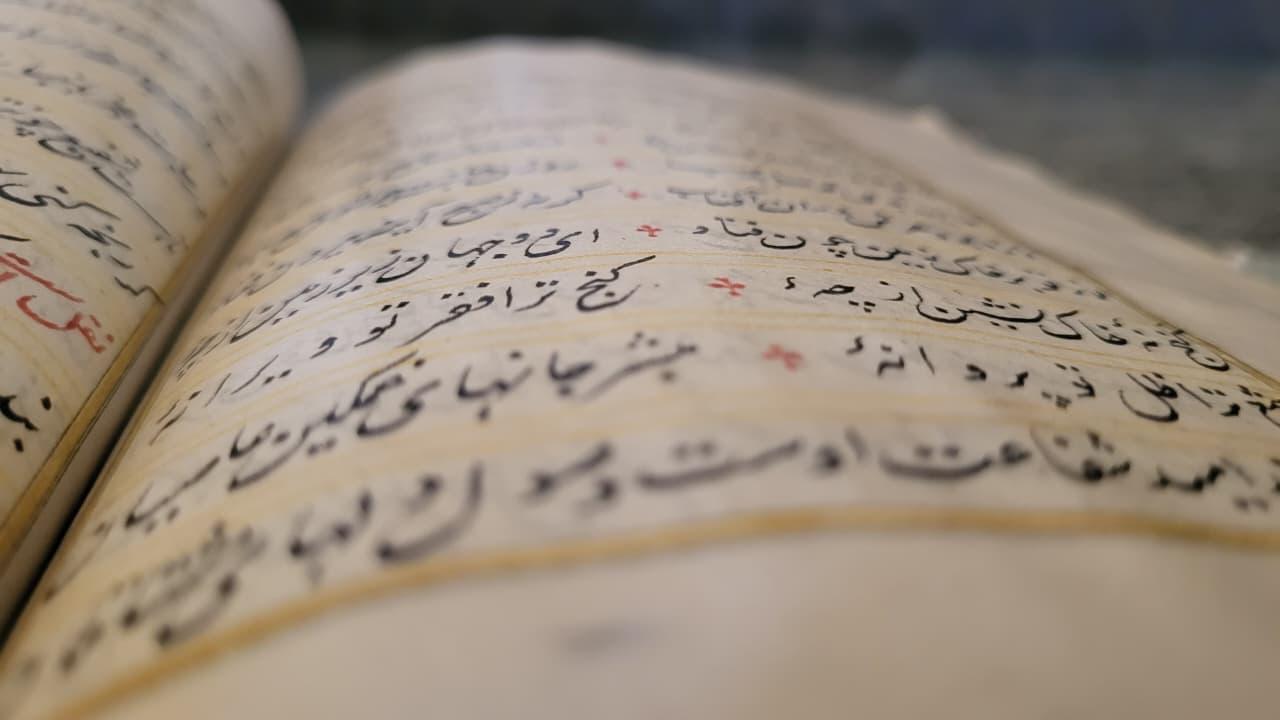
ایدل چو محجتِ محمد داری
میدان که سعادتِ مبدداری
از آتشِ دوزخت کدنشتن چه غم است
چون مِهرِ محمدی تو با خود داری
If you carry the love of Muhammad ﷺ in your heart,
then know you carry the key to felicity.
What fear remains of Hellfire’s flame,
when the light of Muhammad ﷺ you carry within?
These lines are drawn from a manuscript in my possession, Rahmatun Lil-Alamin: Doāzdah Naat (Mercy to the Worlds: A Collection of Twelve Naats) by Mullah Moin Kashafi. Mullah Moin, a Kashmiri poet and supplicant of the 17th century, once filled khanqahs with his verse.
Today, his name is barely remembered, yet his words affirm that love of the Prophet Muhammad (ﷺ) has long formed the foundation of Kashmiri devotion.
In Kashmir, Mawlud Sharif extends beyond Rabiʿ al-Awwal. Gatherings of praise (majalis) accompany weddings, vows, and the commemoration of saints. The arrival of Rabiʿ al-Awwal marks the peak of this devotion.
For twelve days, khanqahs and masjids across the valley resound with Mawlud Sharif and Khatamatul Muazzamat.
At Hazratbal Dargah, the sacred relic (Moi-e-Muqaddas, a strand of the Prophet’s hair) is displayed on the 12th of Rabiʿ al-Awwal and again on the Friday that follows, drawing immense congregations. At the Khanqah of Shah Niyaz Naqshbandi, which houses numerous relics, ziyarat is observed on each of the twelve days, with special reverence on Milad day and the Friday thereafter.
Across the valley, shrines safeguard prophetic relics, and each becomes a locus of devotion where people gather to recite, weep, and renew their bond of love with the Messenger of Allah.
This rhythm, year-round Mawlud intensified during Rabiʿ al-Awwal and crowned by Hazratbal’s vast Friday congregation, shapes Kashmiri Milad with its distinctive cadence.
The arrival of the Prophet’s relics in the 17th century transformed the garden of Sadiq Khan into Darbar-e-Rasulullah dar Mulk-i-Kashmir, revered ever since as Madinat-us-Sani, the “Second Medina.” The deedar (vision) of the Moi-e-Muqaddas on Milad became the spiritual heartbeat of the valley.
The tradition reaches further back. From the 14th century onward, khanqahs, especially Khanqah-e-Moula, established in 1395 by Sultan Sikandar, cultivated collective recitation, zikr, and naat, weaving Mawlud into daily life.
Kashmiri practice converses with a wider Islamic heritage. Imam al-Ghazali (1058–1111), the Persian theologian and mystic, described salvation as inseparable from love of the Prophet. For him, this love guided moral and spiritual refinement.
In his Ihyaʾ ʿUlum al-Din, he writes, “The sign of love for the Messenger of God is abundant mention of him, for one who loves something remembers it often.” To follow the Prophet (AS) was to shape one’s character through mercy and humility.
Ibn Arabi (1165–1240), the Andalusian Sufi philosopher, presented the Prophet as al-Insān al-Kāmil—the Perfect Man—who manifests divine reality most fully. In his writings, he explained that remembrance of the Prophet was inseparable from remembrance of God: “When you remember him, you remember God, for he is God’s most perfect mirror.”
For Ibn Arabi, the Prophet embodied the very reality of remembrance itself, for through him, divine mercy becomes present in the world.
Persianate poets carried this devotion into verse. Amir Khusro (1253–1325), the Indo-Persian poet and musician, filled his poetry with longing for the Prophet.
Abdur Rahman Jami (1414–1492), the Persian scholar and poet of Herat, composed richly layered praises that Kashmiris preserved and recited. In Kashmiri majalis, these works are read alongside local naat collections, sustaining a tradition where poetry becomes prayer.
Four devotional texts anchor Kashmir’s Milad traditions. Mawlud al-Barzanji (18th century), composed by Jaʿfar al-Barzanji, blends prose and verse to provide both rhythm and emotional depth to gatherings.
Its flow stirs remembrance of the Prophet, with believers rising in qiyam at the mention of his birth. Dalā’il al-Khayrāt (15th century), al-Jazuli’s celebrated compendium of salawat, was once copied with extraordinary care in Kashmir and recited in mawlid assemblies.
Elders recall its recital as a vibrant part of devotion, though today the practice has grown rare, reminding us that traditions flourish only when renewed.
The Qasidah al-Burdah (13th century), by Imam al-Busiri, the Egyptian poet, remains beloved; its verses are still sung in khanqahs, binding poetry to devotion across the centuries.
The Kibrit Ahmar (12th century), a collection of salawat attributed to Shaykh Abd al-Qadir al-Jilani, the Baghdad saint and founder of the Qadiriyya order, continues to be recited with reverence, its cadence carrying the fragrance of centuries into the present.
Over time, Kashmiri Mawlud developed two prominent styles: one shaped by Mirza Akmaluddin Kamil Beg Khan-e-Badakhshi (17th-century Sufi figure), and the other rooted in Barzanji recitation.
Together, they form a composite tradition that blends local memory, Persian poetry, and the rhythms of Sufi practice.
Through centuries of upheaval, certain elements have shown remarkable constancy: year-round Mawlud gatherings in homes and khanqahs, the twelve-day rhythm of Rabiʿ al-Awwal, the relic ziyarats at Hazratbal and other shrines, and the khanqah mehfils where Qurʾan, salawat, naat, and niyaz shape the living fabric of devotion.
To celebrate Milad in Kashmir is to enter a centuries-old current of love. It is poetry and relics, khanqah and household, memory and living practice. From Mullah Moin’s nearly forgotten lines to the crowded courtyards of Hazratbal, the message endures:
Whoever carries the love of Muhammad (ﷺ) carries within himself the key to happiness.