
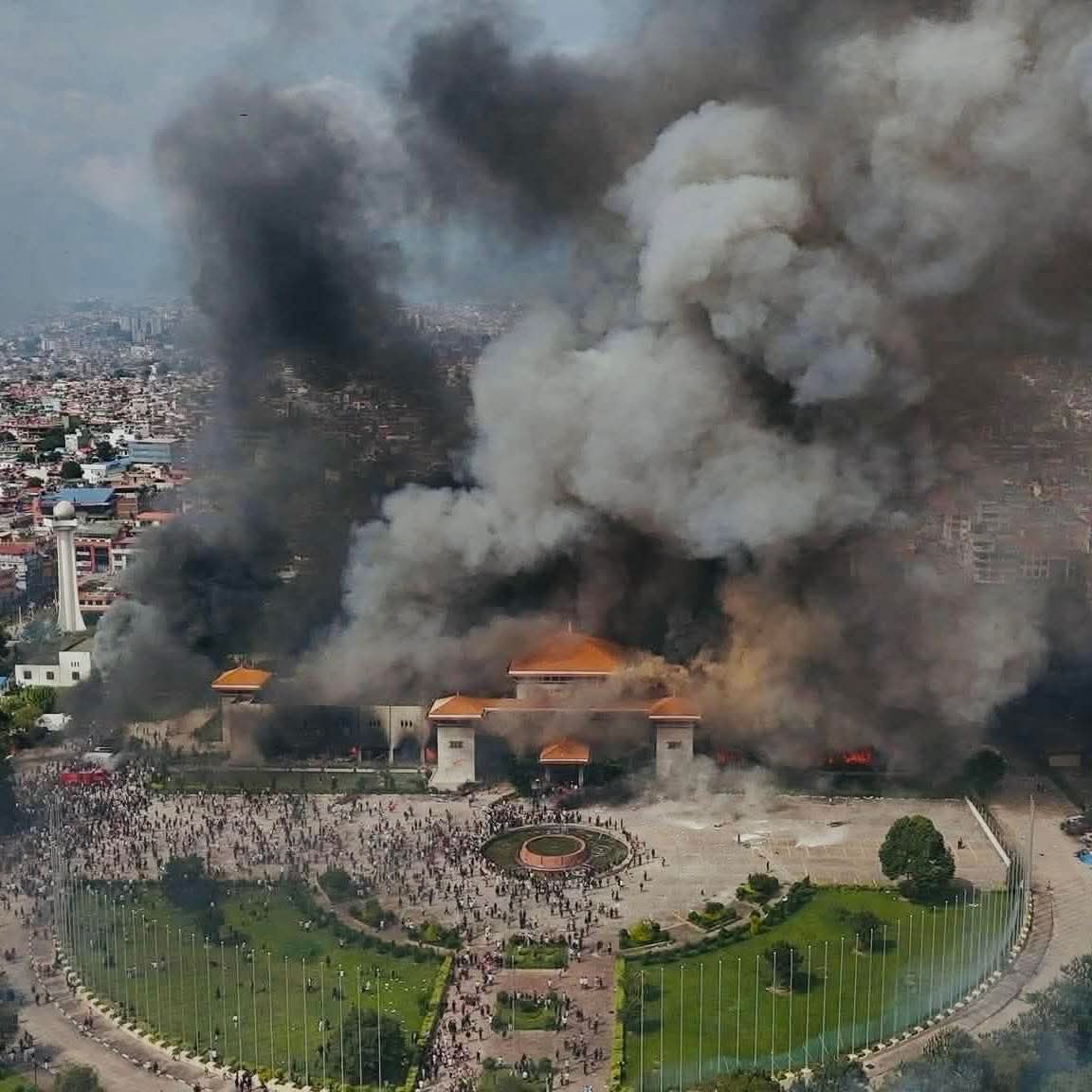

Nepali Prime Minister KP Sharma Oli resigned Tuesday after days of mass protests against a government ban on social media platforms and mounting anger over corruption escalated into some of the most violent unrest the Himalayan nation has seen in years. The country’s parliament and houses of many leaders were demolished.
Oli’s resignation came after protesters set fire to the homes of senior leaders and torched the Parliament building in Kathmandu, according to local media and Reuters.
The unrest also forced the closure of Tribhuvan International Airport, Nepal’s main gateway, amid growing security concerns.
The demonstrations, driven largely by Gen-Z activists, have spread across multiple cities in defiance of an indefinite curfew.
On Monday, at least 19 people were killed when police opened fire on protesters during a mass rally that saw crowds storm Parliament. Rights groups have condemned the crackdown, with the UN Human Rights Office calling for a “prompt and transparent investigation” into the killings and injuries.
“We have received deeply worrying allegations of unnecessary or disproportionate use of force by security forces during youth-led demonstrations,” said spokesperson Ravina Shamdasani in a statement.
The protests first erupted last week after authorities moved to ban more than two dozen social media platforms, a move critics say was aimed at stifling dissent. But the movement has since grown into a broader expression of public frustration over entrenched corruption and weak governance.
Sahil Singh, a 29-year-old entrepreneur in Kathmandu, said Oli’s resignation would not be enough to pacify the protesters. “I want genuine change this time — a proper system and government,” Singh said in a phone interview. “Right now, the entire nation is in turmoil.”
Home Minister Narayan Lekhak also stepped down late Monday following an emergency Cabinet meeting, signaling deep fractures within the government as it struggles to contain the unrest.
With Oli gone, Nepal faces a period of deep political uncertainty as both protesters and the international community press for accountability.