
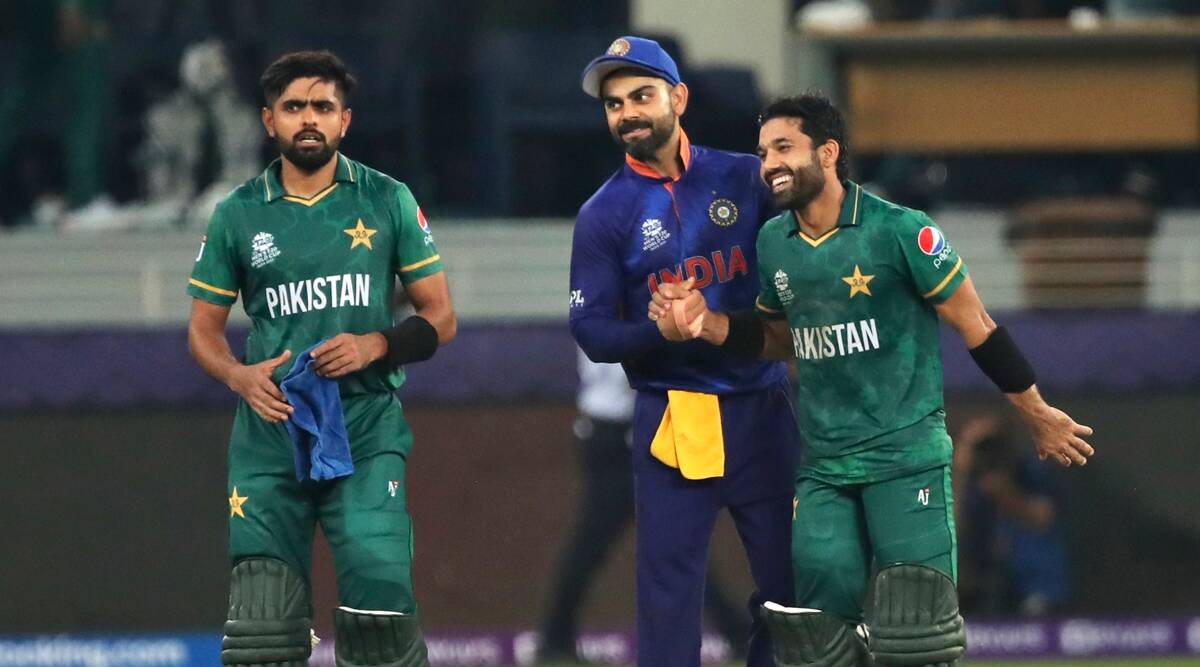

India and Pakistan are once again locking horns on a cricket field; there is huge resentment among the Indian masses against this particular cricket match.
The resentment is genuine, owing to the dastardly attack in Pahalgam earlier this year; therefore, we can’t expect this cricket match to be a normal show. However, against all odds and odd makers, India and Pakistan cannot remain perpetually trapped in cycles of hostility.
Both nations bear a significant responsibility for maintaining geopolitical stability and peace, not just in South Asia but across wider regions of the world.
Sports, in any form, can act as a bridge. It holds transformative power. For India, it is not just about competing on the field; it is about showing maturity, resilience, and the confidence of a rising power.
Cricket can connect divided people, carrying the power to heal wounds and break barriers that politics often struggles to dismantle.
Emotions around the India–Pakistan issue are genuine and understandable. However, the larger picture is the big-brotherly responsibility of India, which requires us not to let emotions cloud our judgment.
As a rising global leader with over a billion citizens and vast stakes in international politics, economics, trade, and technology, India cannot afford to let momentary emotions dictate its global standing.
Our diplomacy is admired worldwide; we are part of BRICS, SCO, and QUAD, and these multilateral forums give India an upper hand in world affairs.
We engage with the USA in QUAD, and Russia and China in SCO and BRICS, a clear picture of our global stakes. On top, our democratic values give us moral weight.
Therefore, rising above domestic passions, we must never hold international affairs hostage to the whims and fancies of Pakistan.
India is a stable country, far more stable than Pakistan. The only threats that appeared to India were of unemployment and communalism, while external threats were largely contained.
India had successfully de-hyphenated the Indo-Pak comparison, at least in terms of economy and international relations. India is now increasingly basketed with advanced nations like the US and China.
There is talk of offshoring and friend-shoring from China to India. India is marching towards becoming a manufacturing giant, a possible replacement of China, with Apple and Samsung already setting up large units here.
The G20 summit was a success; India mediated between Russia and Ukraine while maintaining good relations with both.
PM Narendra Modi’s recent visits to African nations have opened new gates of opportunity.
India’s start-up culture is thriving, women-led SHGs are producing inspiring stories, and India successfully landed on the south pole of the Moon. Despite warnings, India procured the S-400 missile system from Russia without attracting CAATSA sanctions.
India laundered cheap Russian crude oil and sold it to the West, building forex reserves and international credibility. Our reserves can last for nine months; a stark contrast to Pakistan’s reserves that at one point could barely last a week.
During COVID, India was among the few nations to prepare vaccines at a speed equivalent to world giants.
We exported and helped our neighbours, earning the title of “pharmacy of the world.” Our diaspora is spread across politics, business, and technology globally. Do we still intend to re-hyphenate the Indo-Pak comparison? There are structural ways to isolate Pakistan, and sports certainly is not one.
The recent escalations between India and Pakistan may have changed many things, but surely not the value and stakes India holds.
Our soldiers and diplomats are already entrusted with tackling terrorism and are fully capable of safeguarding sovereignty.
As citizens, our role is to strive for excellence, unity, and progress in our respective fields. In this spirit, the show of sports must go on. When sports and art meet, borders blur. Cricket, cinema, music, and culture bring people closer.
Love, respect, and stories become the real victories, not disputed borders. Humanity wins whenever we celebrate the spirit of competition, not confrontation.
It is pertinent to mention here that some fringe elements within the country vitiate the environment of excellence we all aspire to achieve, by physically or verbally attacking their own countrymen, merely because some nation happens to play sports with us.
Identities such as Kashmiris are trolled, judged, abused, beaten, abandoned, and isolated by those who claim to be hyper-nationalists.
Day in and day out, Kashmiris are harassed to prove their nationalism and patriotism. Our countrymen forget that we share the same pain whenever dastardly attacks such as Pahalgam take place.
In Kashmir, we held organic and spontaneous protests after the Pahalgam attack, and we observed shutdowns in solidarity with the victims, cutting across party lines and ideologies.
We rose together to condemn terror in unison. Despite all this, do you still intend to hurt us and isolate us? We belong to this land as much as any other citizen, no less than those very fringe elements. Therefore, players should be free from distractions and politics.
Their task is to perform on the field, just as the government’s task is to safeguard national interests.
The BCCI and Sports Ministry have clarified that India will only play Pakistan in ICC and ACC tournaments, not in bilateral series.
This ensures that cricket continues on terms defined by policy and diplomacy, not by chaos or emotion.
An India–Pakistan cricket match is not merely a cricket match; it is an event that attracts the world’s imagination. It reflects the very essence of cricket: resilience, skill, sportsmanship, and unity in diversity.
Watched by millions worldwide, it is a reminder that while politics may divide, cricket can unite.
People watch not merely for victory, but to witness the possibility of peace through competition.
India today is a rising sun, a global power in the making. Our confidence lies not in avoiding challenges, but in leading responsibly, whether in diplomacy, economics, or sports. Cricket remains one of the softest yet strongest tools of diplomacy, and India must use it wisely.
Games are games. Cricket is cricket. Peace is peace. For peace to triumph, the game must go on!
Nasir Khuehami is a political commentator and the National Convenor of the Jammu and Kashmir Students Association. He can be reached at [email protected].
Peerzada Mahboob-ul-Haq is a policy consultant and advisor to the Jammu and Kashmir Students Association. He can be reached at [email protected].
Views and opinions expressed in this article are those of the author and do not necessarily reflect the editorial position and policy of Free Press Kashmir. Feedback and counter-views are welcome at [email protected]