

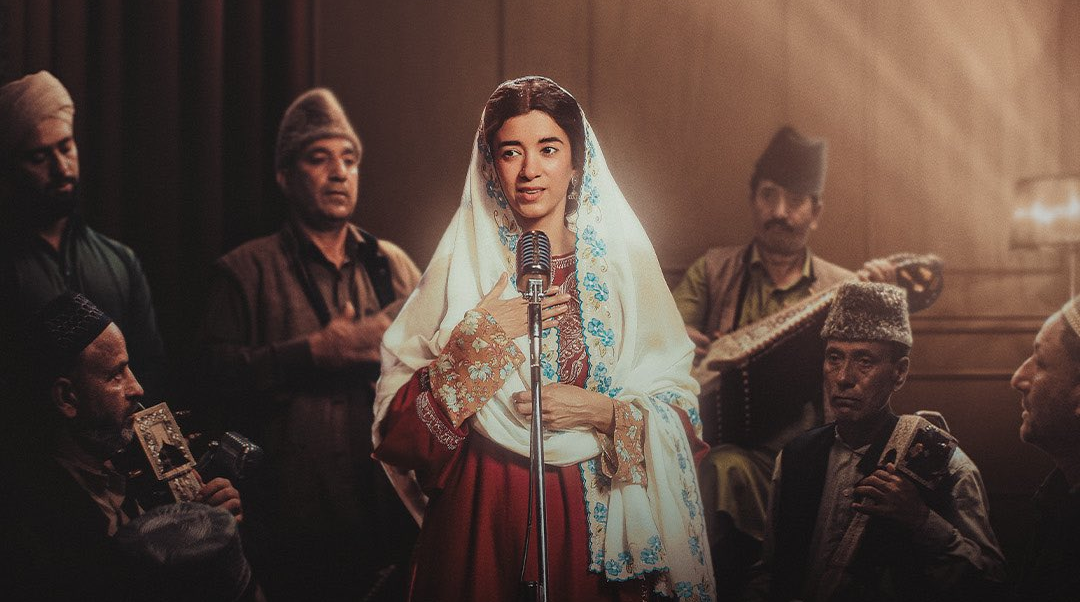

Since its grand premiere in Mumbai, Songs of Paradise has captivated audiences worldwide, a moment marked by the illustrious presence of Bollywood stars like Hrithik Roshan, Alia Bhatt, Shabana Azmi, and Naseeruddin Shah, among others.
This film, a unique portrayal of Kashmir, is distinguished not only for its artistic quality but also for its commitment to celebrating the region’s rich heritage without succumbing to political or ethnic controversies.
Director Danish Renzu has brought to life the spiritual essence of Kashmir, renowned for its ethereal music over the centuries.
With Songs of Paradise, Renzu transcends mere cinematic storytelling, weaving an artistic tapestry that appeals to a global audience—one that has resonated with viewers in hundreds of countries through multilingual subtitles.
The film has achieved significant acclaim, securing its status on Amazon Prime and earning recognition for being one of the most important contributions to the genre of art cinema.
At the heart of Songs of Paradise lies a powerful homage to the legacy of Raj Begum, the first female singer of Kashmir. The film chronicles her struggles as she emerges as a voice of resistance against the cultural confinement imposed on women.
Through the character of Zeba, portrayed brilliantly by Saba Azad, the film underscores the importance of female empowerment.
Azad’s performance evokes the spirit of Raj Begum while simultaneously challenging traditional notions of women’s roles within a patriarchal society.
The film showcases Zeba’s journey, skillfully navigating the complexities of her identity amidst societal orthodoxy.The narrative powerfully highlights the historical suppression of music and singing—a deliberate act intended to rob people of their spiritual ecstasy.
Through its storytelling, Songs of Paradise emerges as a beacon of hope, exposing the detrimental ideologies aiming to stifle artistic expression. The film’s celebration of heritage is complemented by an exploration of the Sufi traditions that resonate deeply with Kashmiri culture, reinforcing the idea that music serves as a vital connector among individuals across generations.
Visually, the film is stunning, adorned with the cultural imagery of Kashmir—its landscapes and historical artifacts. We can understand impact of film by the fact that as the ancient Harwan tiles, symbolise the region’s 5,000-year-old history and its imprint on music and art same way Songs of paradise has become epitome of kashmir culture.
Danish Renzu’s meticulous direction harnesses these elements to reflect the profound relationship between Kashmir’s heritage and contemporary society, cementing the film’s status as a continuation of cultural values that have stood the test of time.
The connection between Raj Begum’s melodious contributions and the traditional instruments, like the tanpora gifted by her mentor, evokes a deeper appreciation for Kashmir’s rich musical history.
Saba Azad’s portrayal of Zeba encapsulates the spirit of a bygone era while anchoring the narrative in authenticity. Her ability to convey nuanced emotions through dialogue delivered in a blend of Kashmiri and Hindi highlights the cultural amalgamation intrinsic to the region, demonstrating the resilience and adaptability of local dialects over centuries.
Azad’s representation of women in the music industry invites audiences to witness a period when mere participation was fraught with challenges, enhancing the film’s emotional depth.
The Fim “Songs of Paradise” is not merely a cinematic experience; it is a revival of Kashmiri culture and spirituality, aiming to extinguish the flames of hatred and ignorance that have afflicted the region.
The film’s hyped presence on social media and its popularity in households echo the timeless appeal of its music, ensuring the songs of Raj Begum live on as contemporary expressions of Kashmir’s cultural identity.
In conclusion, Songs of Paradise triumphantly illustrates that true art retains its power to inspire, challenge, and unite.
It serves as an extraordinary testament to the heritage and spiritual essence of Kashmir, solidifying its place in the annals of cinematic history while reigniting a collective pride in the region’s profound legacy.
This film, by artfully connecting the past with the present, ensures that the mesmerising story of Raj Begum and the soulful music of Kashmir resonate for generations to come.
(Three-week review by Shamsi Abdul Hamid)