
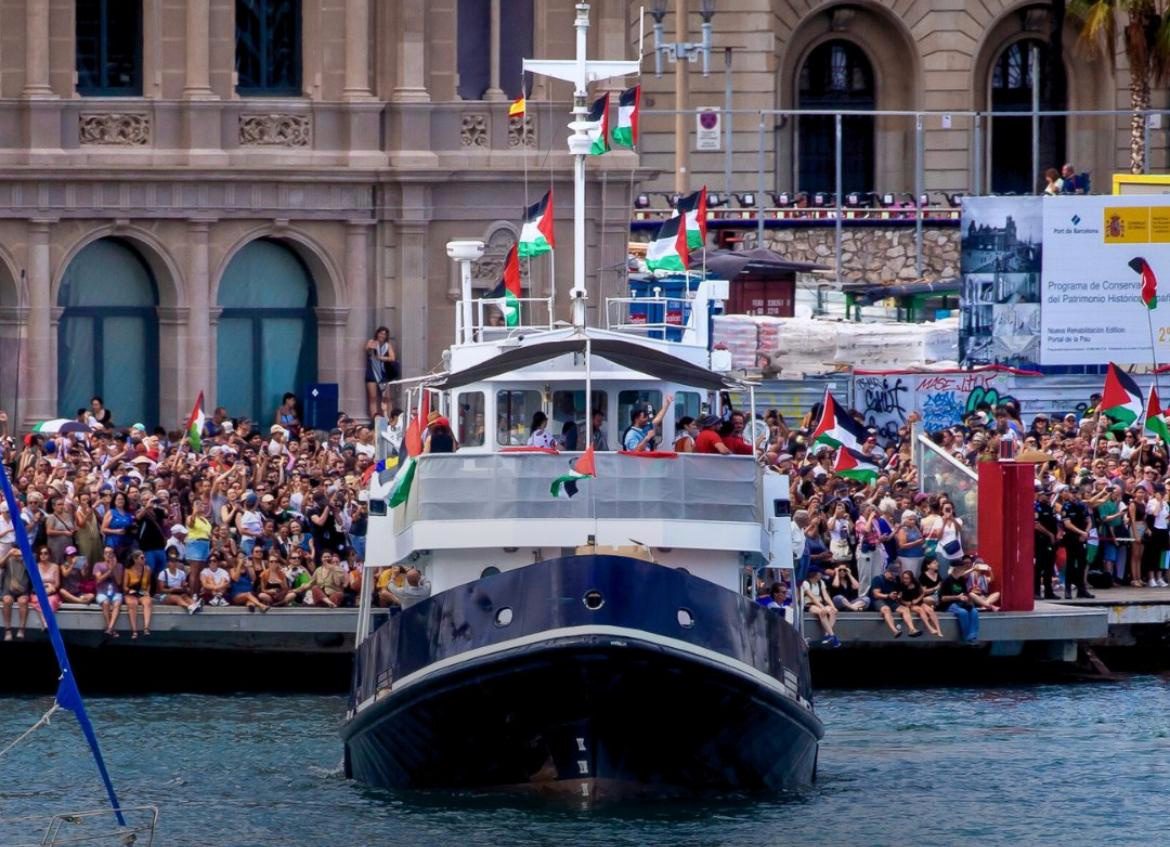

Ahead of their final attempt to pass Israel’s naval blockade, activists aboard the Family Boat gathered on deck for a safety briefing on the risks of sailing toward Gaza.
The previous day, drones had struck parts of the 40-strong flotilla in international waters, prompting Spain and Italy to dispatch warships. But the most perilous stretch of the journey was still ahead.
“This is our last safe port,” Brazilian activist Thiago Avila, a coordinator of the Global Sumud Flotilla, was quoted as saying. He urged anyone unwilling to face the dangers to step off. None of the 28 passengers did.
The boats, flying Palestinian flags, are now preparing to push ahead in the largest effort yet to defy a blockade Israel has enforced for 16 years. Hundreds of activists from more than 40 countries have joined, frustrated by their governments’ inability—or unwillingness—to restrain Israel. They hope to reach Gaza within a week, if Israel does not intervene.
Nearly two years into the war, international opinion has shifted. More than 65,000 Palestinians have been killed, with rights groups and a UN inquiry describing Israel’s campaign as genocidal. Several Western governments, including the UK, have recently recognised Palestinian statehood.
The risks are real. Boats near Greece have been hit by explosions and unidentified projectiles, while earlier drones targeted the flotilla off Tunisia. Spain and Italy sent naval escorts after the latest attacks, and hundreds of European lawmakers demanded protection for the civilian boats.