

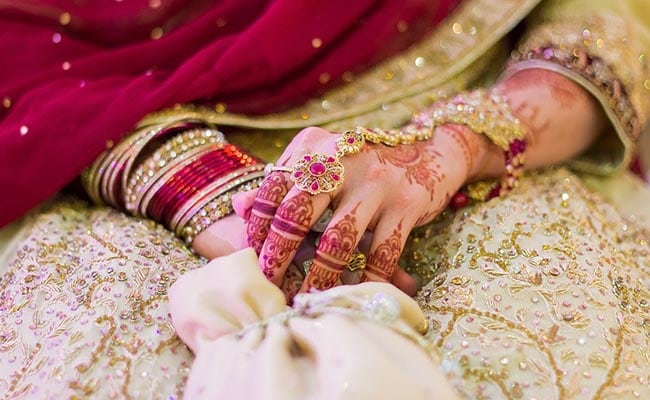

It begins in silence. A match struck somewhere deep inside a house, maybe in Haryana, maybe in Kashmir.
A woman screams. Just once, muffled, brief. Neighbours hear it and hesitate. They know, and yet they do nothing. Someone will call the police later. Someone will say it was fate.
Seventeen Indian women die like this every day. Seventeen homes filled with smoke, kerosene, and shame.
Seventeen lives ended because someone decided the gold wasn’t enough, the car wasn’t enough, the fridge wasn’t enough.
And still, the stories appear in small newspaper columns, tucked between political quarrels and cricket scores. We scroll past them. We do not stop.
The National Crime Records Bureau reports that over six thousand women were killed in 2023 under circumstances linked to dowry.
One death every eighty-three minutes. Alongside that, nearly fifteen thousand cases were registered under the Dowry Prohibition Act and related sections of the Indian Penal Code, a number steadily rising over the last five years. These deaths are not accidents. They are patterns.
They are the consequence of a social logic that still measures a woman’s worth in rupees rather than respect.
Sociologist Dr. Ranjana Kumari calls these numbers just the visible tip of a much deeper cultural problem.
For every reported case, there are dozens more that remain invisible, unregistered, hidden behind a curtain of fear and shame.
Families worry more about public humiliation than private horror. And the woman who dies or suffers is often left alone in both.
Dowry is often spoken of in polite words. Families call it a gift, a gesture, a custom.
But beneath the politeness lies a brutal truth. It is a transaction. A way to control, to remind a woman that her place in the home is conditional, bought, negotiated.
A 2024 study in the Journal of Gender and Society confirmed what many suspected: women subjected to dowry pressure are nearly three times more likely to experience physical abuse and four times more likely to endure emotional coercion.
In many marriages, the bride’s family pays in instalments: a car this year, gold next year, a household appliance later, long after the wedding day, disguised as help or tradition.
When the cycle breaks, the violence begins.
The law is meant to protect. India’s Dowry Prohibition Act of 1961, bolstered by sections 304B and 498A of the Indian Penal Code, should stop this. But the problem is not the absence of law. It is the absence of will.
Over thirty-eight thousand dowry-related cases were pending in India’s lower courts in 2023.
Many drag on for years. Witnesses withdraw. Evidence fades. The law exists, but falters, its protection uneven, its execution coloured by cultural biases.
Police often treat dowry complaints as domestic disputes, not crimes.
And so the fire burns quietly, repeatedly, in villages and towns across the country.
It begins early, when parents save for a daughter’s wedding before they save for her education.
It creeps into conversations, whispers during engagements, a negotiation disguised as affection.
A father in Lucknow who lost a young daughter in a dowry-related fire once said: She was proud of the little house we built for her.
But they said it wasn’t enough. I don’t know what enough even means anymore.
His words echo in silence across countless homes, grief without an audience, sorrow without acknowledgement.
In Kashmir, the fires smoulder differently. Dowry here often takes subtler forms, a whispered comparison between brides, a quiet expectation of gold or furniture. Families insist it is not our custom, yet the pressure persists in smaller, emotional ways.
Sociologist Dr. Nayeema Mehjoor notes that cruelty can be invisible, psychological, a sense of inadequacy forced upon a young woman because her parents could not meet expectations.
Economic dependence makes the problem worse. In regions where women have limited employment opportunities, the inability to assert independence amplifies vulnerability.
A woman who resists risks more than confrontation with in-laws. Sometimes her own parents withdraw, fearing the shame of societal gossip.
These deaths rarely dominate headlines. WOMAN FOUND DEAD IN KITCHEN. IN-LAWS BOOKED FOR HARASSMENT. By the next day, the details fade, and the victim’s name disappears from memory.
And yet, each death is a quiet indictment of collective silence.
Gender equality is often spoken of, but the weight of gold still measures worth. Progress is declared, but rituals remain chained to transaction logic. We pretend the fire is far away until it burns too close.
In a small town, a young bride sits on the edge of her new bed, a sari pressed neatly beside her, her hands trembling as she smooths it.
Outside, neighbours gossip about how the gold is insufficient. Inside, she wonders how a home filled with laughter and hope became a place of calculation. A father in another village counts coins to meet a demand that shifts with every visit.
His daughter smiles, unaware that the price of that smile is rising every day.
The path forward is not only legal but moral, cultural, and social.
Police must treat every complaint seriously, fast-track cases, and act without prejudice.
Communities must refuse to participate, parents must declare, My daughter is not for sale, and neighbours must intervene before tragedy strikes. Education matters.
Financial independence shields against dowry harassment. Education is the dowry every daughter deserves.
The media has the power to break the silence. Every time a name is remembered, the quiet begins to fracture.
Dowry deaths are not accidents. They are the consequence of choices, economic, social, and moral.
The figure, seventeen women every day, is not merely a statistic. It is a reflection of deep societal failure. The question is not who lit the fire, but who kept the silence.
When a bride walks into her new home, she should bring laughter, books, and dreams, not a cheque or a refrigerator. That will be the day the fire is finally out.