
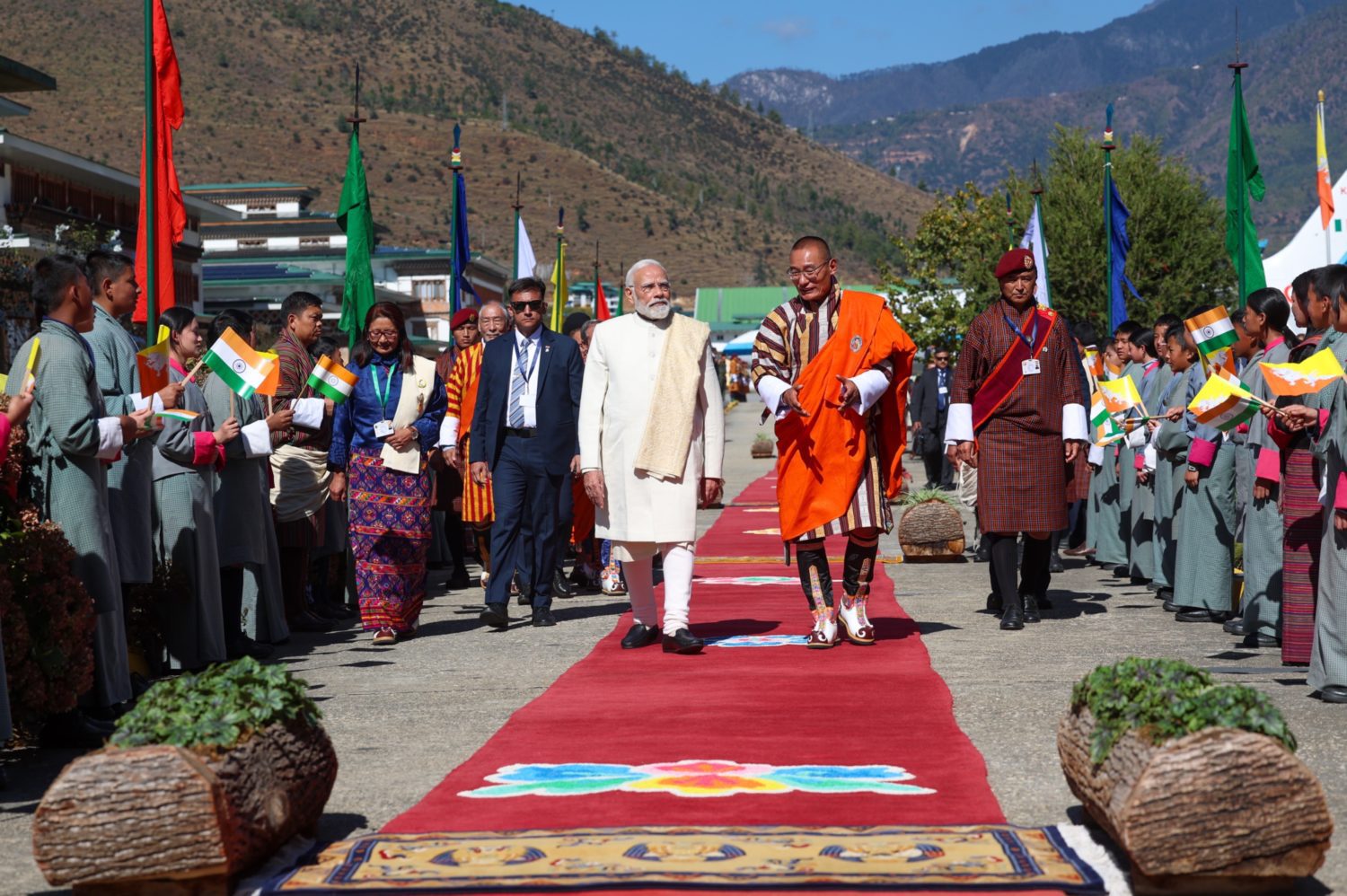

Indian Prime Minister Narendra Modi reached Bhutan on Tuesday to inaugurate a major hydroelectric power project in the country, where electricity remains the primary export.
Bhutan, one of the few nations with a negative carbon footprint, has long promoted hydropower as a cornerstone of its green energy strategy. The sector not only brings in crucial revenue through electricity exports to energy-hungry India but also supports new ventures like cryptocurrency mining, which rely on low-cost power.
Modi and Bhutan’s King Jigme Khesar Namgyel Wangchuck jointly inaugurated the 1,020-megawatt Punatsangchhu-II hydroelectric plant, one of the country’s largest projects and a symbol of Indo-Bhutan cooperation.
The Indian leader was received at the airport by Bhutanese Prime Minister Tshering Tobgay. “This visit reflects the deep friendship and cooperation between our two nations,” Modi said on X, adding that the trip marks “another important step in our successful energy partnership.”
Bhutan, located between India and China in the eastern Himalayas, has drawn interest from both regional powers. For Modi, ties with the kingdom are a “key pillar” of India’s “Neighbourhood First” policy.
India remains Bhutan’s top trading partner, accounting for over 80% of its total trade — valued at $1.78 billion in 2024–25, according to India’s Ministry of Commerce. Bhutan exported around $513 million worth of goods to India, mainly electricity and construction materials.
In September, New Delhi announced plans to build two cross-border railway lines connecting the two countries. Bhutan, with a population of around 800,000, has an annual per capita income of about $3,800, according to World Bank estimates.