

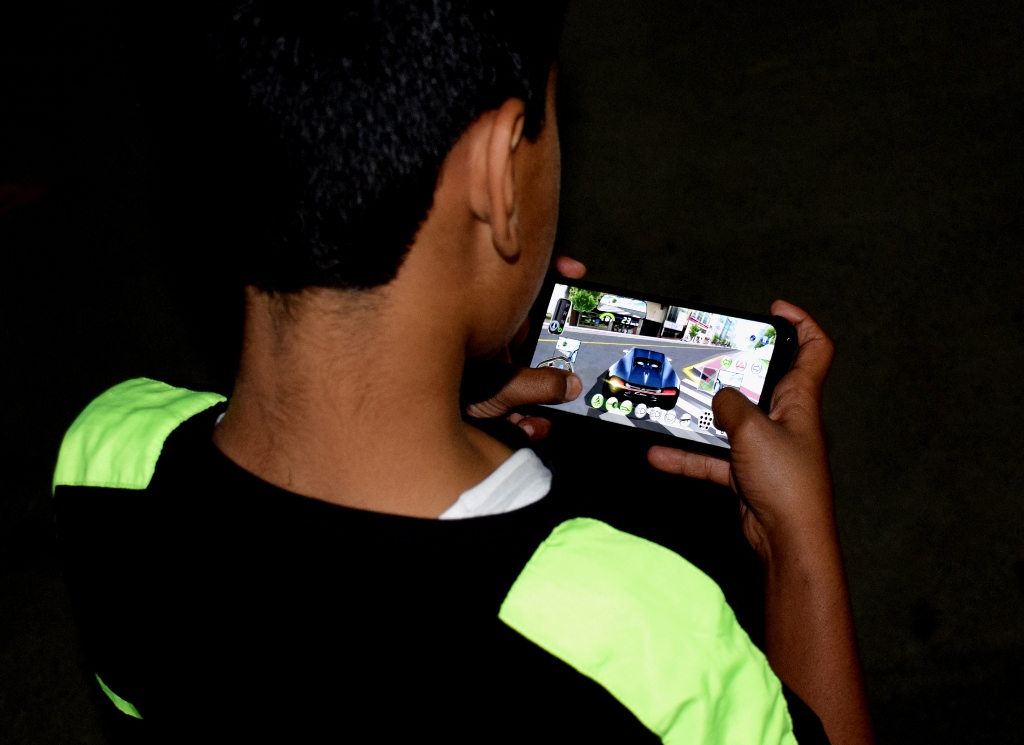

You can see it in any home these days. A child sitting with a phone. The room is quiet except for the soft hum of a video playing in the background.
The child barely moves. The thumb just slides upward, again and again, while the screen keeps throwing new things at them.
Small bursts of colour. Faces. Jokes. Music. And then more of the same.
TikTok was once a place for dance clips and harmless fun. Now it has become something larger.
Something that sits inside the day like an extra presence.
Children carry it in their pockets, and it follows them through evenings, meals, and long stretches of time when they would have once looked somewhere else.
Studies tell us what parents already sense. The Pew Research Centre says 67 per cent of American teenagers use TikTok, and many admit they use it almost constantly.
In India, a report in 2024 from Common Sense Media shows children between 10 and 17 spending nearly 95 minutes a day on short video apps.
The numbers look cold on paper, but in real homes they feel warmer, closer. You see it in how a child bends over a screen, how they retreat into those quick videos as if the world outside has lost its shape.
These platforms are built for speed. Videos flash past like thoughts you don’t hold for long.
One clip promises something new, and before you know it, another one appears. It feels harmless. It feels ordinary. But the brain pays attention.
The American Psychological Association says these quick videos trigger the dopamine reward system.
That little shot of anticipation every time the thumb moves. Children, whose brains are still wiring themselves, find it hard to break the rhythm once it starts.
At AIIMS Delhi, researchers noticed how this fast-paced content leaves its mark.
Children who watch too much struggle with attention. They jump between tasks. They grow impatient.
Their minds expect the world to move as fast as the screen does.
A study in the Indian Journal of Psychiatry in 2024 found higher irritability, anxiety, and trouble with impulse control among children watching short videos for more than an hour a day.
These behaviours do not shout. They arrive quietly, the way a room becomes dimmer without anyone switching off the light.
There is also the matter of comparison.
The National Institute of Mental Health points out how children absorb what they see. Perfect bodies. Perfect faces. Perfect lives. All of it polished, filtered, arranged for the camera. Children do not always realise this.
They just feel the distance between themselves and the image on the screen.
Psychologists at the Fortis Mental Health Programme say this has led to rising body dissatisfaction and low self-worth, especially among adolescents.
These feelings settle in slowly. They appear in the way a child looks at their reflection or the way they speak about themselves in a small, tired voice.
Sleep gets affected, too.
Harvard Medical School says screens seen late at night delay melatonin. Children stay up, telling themselves they will sleep after just one more video. Then another. Then another. The next morning comes with its own weight. Fatigue. Irritation.
A kind of fog that stays with them the whole day. Parents recognise this. They see their children quieter, more withdrawn, or easily upset after a late night with the phone glowing in the dark.
And we must remember that not every video is safe.
The US Surgeon General has warned that harmful content sometimes slips through. Dangerous challenges. Unhealthy beauty trends. Cyberbullying.
Even self-harm-related material. A young viewer watches something alarming, and they might not talk about it.
They carry the image inside like a stone in their pocket.
Children are vulnerable for simple reasons. Their brains are still developing. Their identity is still taking shape.
They want to feel accepted, and platforms offer that feeling in quick, bright bursts.
They do not always know how to set boundaries, so they wait for adults to help them. Without guidance, the screen becomes louder than the world around them.
So what can families do?
Experts say balance matters more than strict rules. A quiet home before bedtime helps.
Keeping phones out of bedrooms helps. Limiting screen time gently and consistently helps.
The American Psychological Association recommends under 60 minutes of recreational use for younger teens.
Talking to children about what they watch helps even more. A conversation can soften the weight of what they have seen.
Encouraging play, reading, art, and outdoor time gives them other places to put their energy.
And adults must model what they want children to learn. A child notices how a parent handles their own phone far more than we imagine.
TikTok is not an enemy. It brings creativity, humour, and small joys into the day. Children learn trends. They share moments. They laugh. These things matter too.
But when the screen becomes their main source of comfort or identity, something inside them begins to shift.
The research is detailed, and the signs at home are often quiet but present.
What children need is simple. Guidance. Steady routines. A bit of structure. A bit of patience.
Technology is not going away, but neither is a child’s need for calm, for connection, and for a world that does not move faster than they can understand.
Families and schools can give them this balance.
And with it, the chance to enjoy the good in technology without losing the parts of childhood that help them grow into steady, confident adults.