
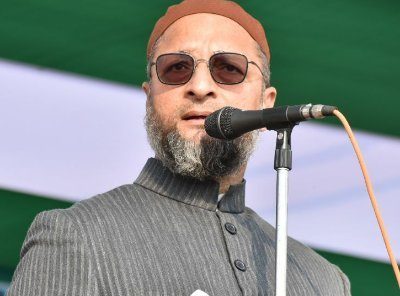

Ladakh: AIMIM chief Asaduddin Owaisi on Wednesday criticised the Government of India’s decision to create five new districts in Ladakh, alleging the move was intended to divide the unified statehood movement of Buddhists and Muslims.
In a post on X, Owaisi termed the reorganisation “another instance of gerrymandering” in the erstwhile state of Jammu and Kashmir. The Union Territory now has seven districts, up from two earlier.
Citing Census 2011 data, Owaisi said Muslims constitute 46.40% of Ladakh’s population, while Buddhists account for 39.65% of the total 2.74 lakh residents. He claimed that under the new arrangement, five districts have a Buddhist majority, while only two are Muslim-majority.
“Five districts for 39.65% and only two for 46.40%,” he wrote, questioning the rationale behind the reorganisation.
The Government of India has not yet responded to the allegations.
On Monday, Lieutenant Governor Vinai Kumar Saxena approved the creation of five new districts in the Union Territory, taking the total number of districts to seven. The newly created districts are Nubra, Sham, Changthang, Zanskar and Drass. Earlier, Ladakh had only two districts: Leh and Kargil.