

In India today, private tuition has become a deeply embedded part of the education system. What once existed as optional academic support for weak students has now evolved into a parallel system running alongside formal schooling.
For millions of students, tuition is no longer a choice, it has become an essential part of education shaped by competition, pressure, and the belief that school learning alone is not enough.
Across the country, coaching centres and private tutors have expanded significantly in both urban and rural areas. Students attend school during the day and tuition in the evening, leaving very little time for rest, independent study, or personal development.
In many cases, learning continues outside the classroom in structured coaching environments where exam preparation takes priority over conceptual understanding.
According to the Comprehensive Modular Survey on Education conducted by the Ministry of Statistics and Programme Implementation (MoSPI), Government of India in 2025, about 30.7 percent of urban students and 25.5 percent of rural students in India take private tuition or coaching.
The survey further shows that overall, nearly one-third of students in higher secondary education depend on private academic support outside formal schooling. This is an official national-level dataset and reflects a significant structural shift in Indian education.
These figures clearly indicate that private tuition is no longer a marginal or optional practice. It has become an integral part of the education system in the country.
For students, this system offers both support and pressure. On one hand, tuition helps in understanding difficult concepts, revising lessons, and preparing for examinations in a structured way. On the other hand, it adds to academic burden.
A typical student’s day begins with school in the morning and continues with tuition in the evening, followed by homework and revision late into the night. This routine leaves very little time for rest or mental relaxation.
Education experts link this growing dependence on tuition to structural challenges in formal schooling. Large class sizes, limited individual attention, and increasing emphasis on examination results often push students towards private coaching. In many cases, students feel that tuition provides clearer explanations and better exam preparation compared to school classrooms.
Over time, this perception has strengthened. Many students now believe that success in examinations depends not only on school performance but also on coaching support. As a result, even academically strong students are enrolled in tuition classes to remain competitive in an increasingly demanding academic environment.
Parents also play a key role in sustaining this system. Most families are willing to invest a significant portion of their income in tuition fees, even when it creates financial pressure. The fear that their child may fall behind others drives this decision. In many households, sending children to tuition has become a social expectation rather than an academic choice.
This growing dependence has also contributed to inequality. Not all families can afford regular coaching. As a result, students from economically weaker backgrounds often rely solely on school education, while others benefit from additional academic support. This creates an uneven learning environment, especially in competitive examinations where coaching exposure can influence performance.
At the same time, the purpose of education itself comes under question. Ideally, education should develop understanding, curiosity, and independent thinking. However, in many cases, it becomes focused primarily on memorization and exam performance. Students often study to score marks rather than to fully understand concepts.
Experts have noted that the rise of private tuition reflects broader systemic challenges in schooling. Where schools are unable to provide sufficient clarity, individual attention, or structured exam preparation, coaching centres naturally fill the gap. This has led to a situation where tuition is no longer supplementary, but central to academic success.
Despite these challenges, the growth of tuition also reflects aspirations. In a competitive environment where higher education and employment opportunities are limited, families see education as a primary path toward stability. Tuition becomes a tool to improve performance and secure future opportunities.
Another important factor is the changing nature of examinations. Modern competitive exams require not only knowledge, but also speed, accuracy, and strategic preparation. Coaching centres often focus heavily on these skills, making them attractive for students aiming for higher scores.
However, the long-term consequences of this system cannot be ignored. Continuous academic pressure, lack of free time, and constant comparison can lead to stress and burnout among students. Many struggle to balance school, tuition, and personal life, which can affect mental well-being, creativity, and independent learning abilities.
Education specialists argue that strengthening school education is essential to addressing this issue. Improving teaching quality, reducing class sizes, and focusing on conceptual understanding can gradually reduce dependency on tuition. Alongside this, there is also a need for better transparency and regulation within the private coaching sector to ensure fairness and quality.
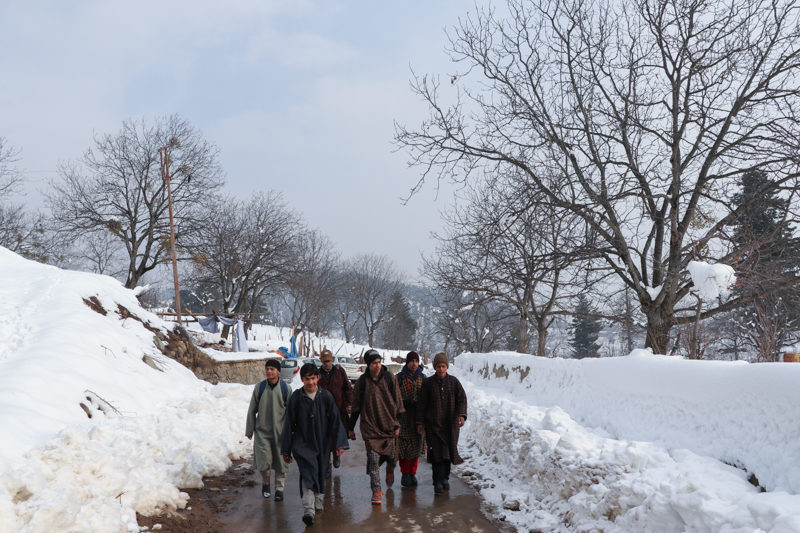
The situation in Kashmir, while not separately measured in official tuition statistics, reflects this broader national transformation in education. The patterns seen across India are visible in most regions, where tuition has become a central part of academic life.
In conclusion, the private tuition culture in India represents both support and strain. It helps students academically but also increases pressure, inequality, and dependency. The challenge is not to eliminate tuition entirely, but to restore balance within the education system.
Stronger schools, better teaching practices, and equitable access to learning are essential to ensure that education returns to its primary space, the classroom, rather than the coaching centre.