

For centuries, the image of a traditional Kashmiri house was incomplete without imagining its sloping roof.
Historically, one simply could not picture the houses of the Valley without the protective layers above it, be it the humble thatched roof, the practical wooden shingle, or the rare and prized birch bark roof.
But beneath these protective layers lay an art form that turned architecture into jewellery.
While the roofs themselves were masterpieces of sloped design to combat heavy snow and rain, their true character was defined by the wooden edges-the rack (rafters) and eaves.
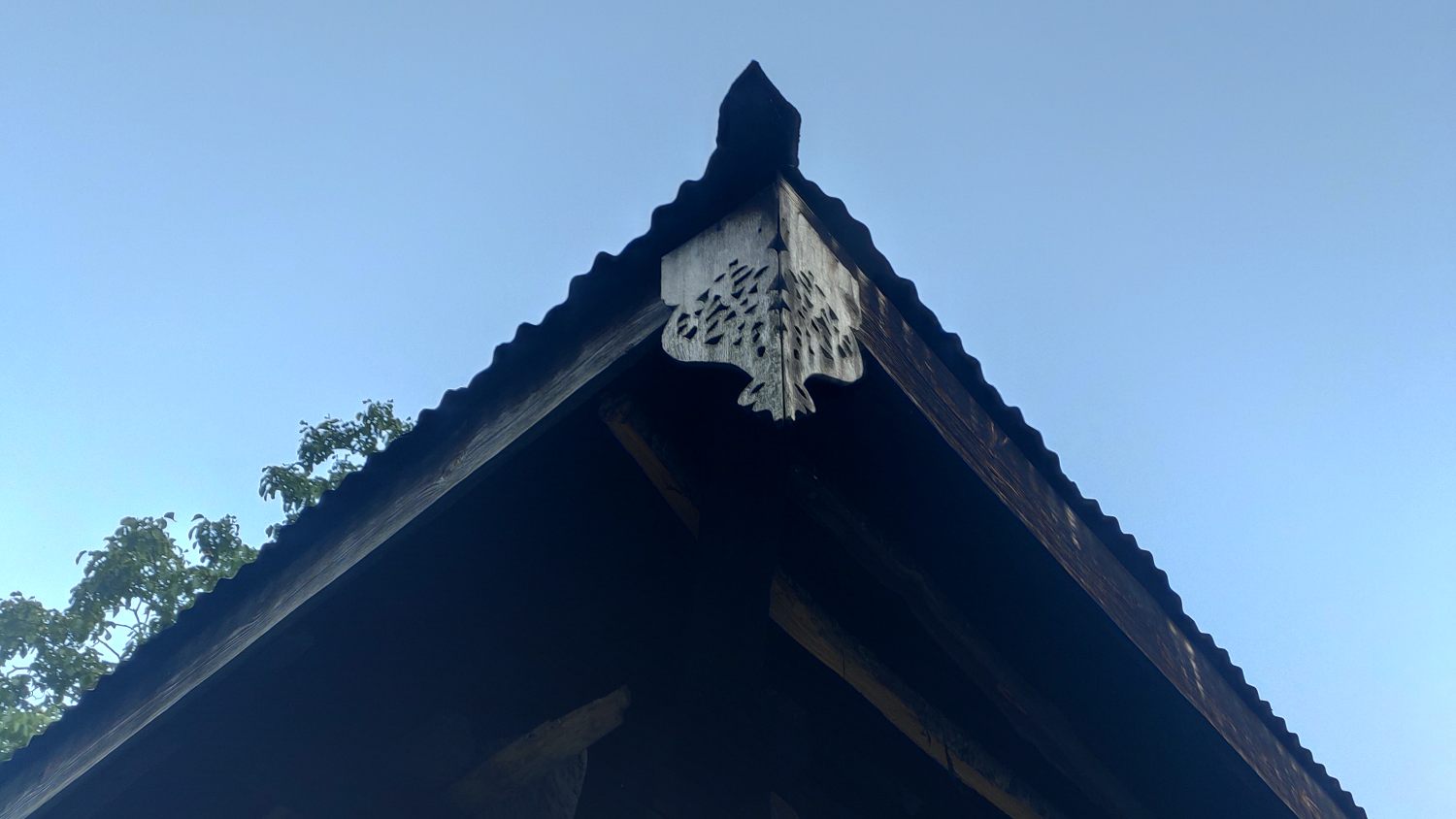
And at the very ends of these eaves, Kashmiri builders placed Dūr, a collective term for roof-corner ornaments that served as the “earrings” of the house.
Dur came in many forms. Some were ornate carved wooden wind chimes that swayed and sounded with the breeze.
Others were simpler, subtler carved blocks fixed silently at the corners. But all were called Dur, and all dressed the house like a bride wears her jewellery.
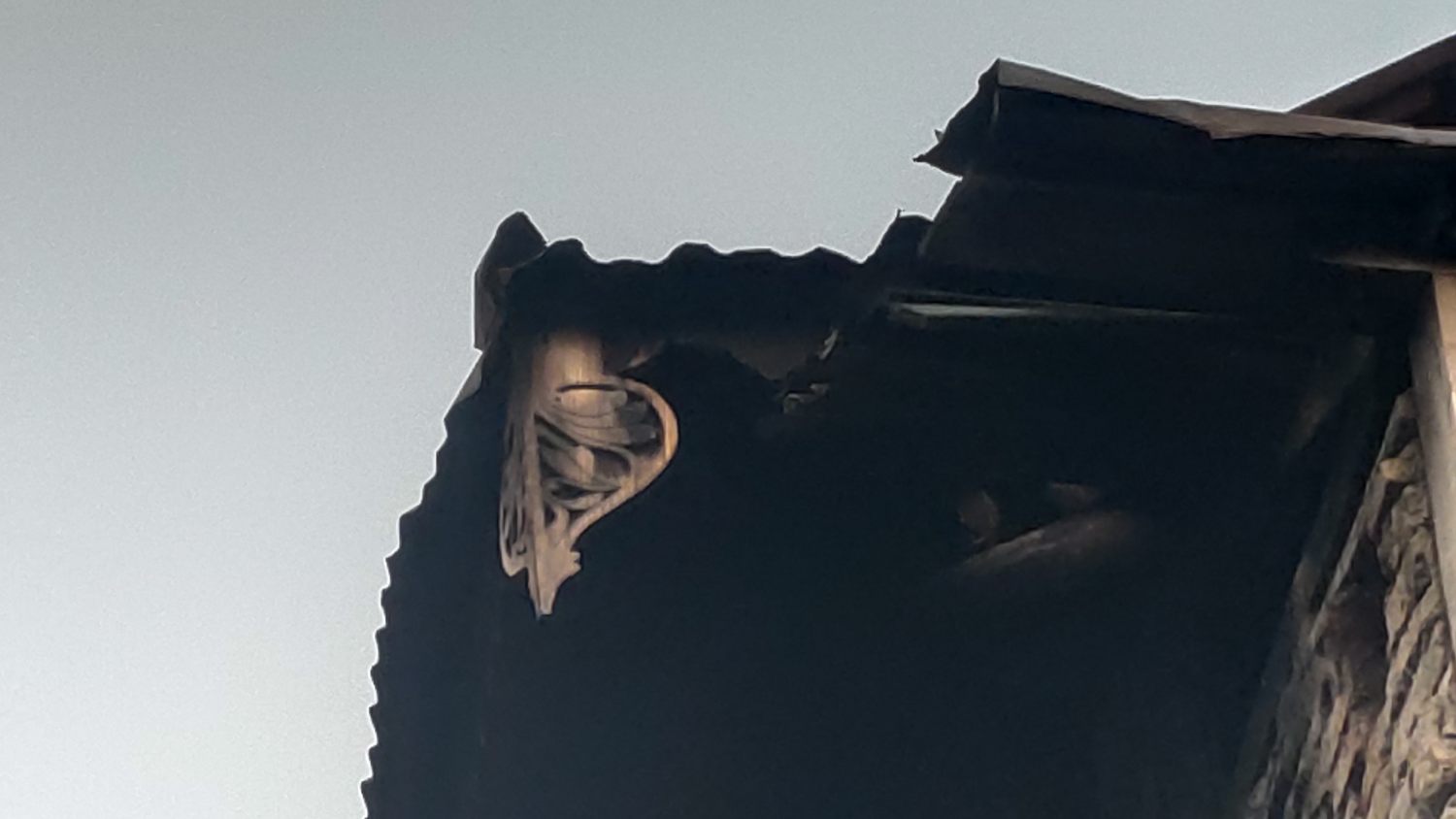
In the lexicon of Kashmiri craftsmanship, the Dūr holds a special place.
Translating literally to “earrings,” the term evokes a powerful cultural image.
Just as a bride adorns her ears with elaborate jewellery to complete her appearance, a newly built traditional house was not considered finished or fully dressed until its Dur was fixed in place.
Kashmiri karegars (artisans) were masters of woodwork, and the Dur showcased their precision.
These were not massive, heavy structures but comparatively simpler wooden ornaments placed at the roof’s corners. The Dur was fixed externally, typically at all four corners of the house or at least the two front-facing corners, acting as the face of the building.
While the ornate carved wooden wind chimes-complex, moving, and musical-were mostly seen in shrines and khankas, the Dur on ordinary homes was simpler in form.
Yet both were called Dūr, both hung at the ends of rooftops, and both served as the earrings of Kashmiri houses.
The wood of choice for crafting Dūr was almost always locally sourced deodar (cedrus deodara) or pine.
These timbers were prized for their straight grain, durability, and resistance to decay in Kashmir’s harsh, wet climate.
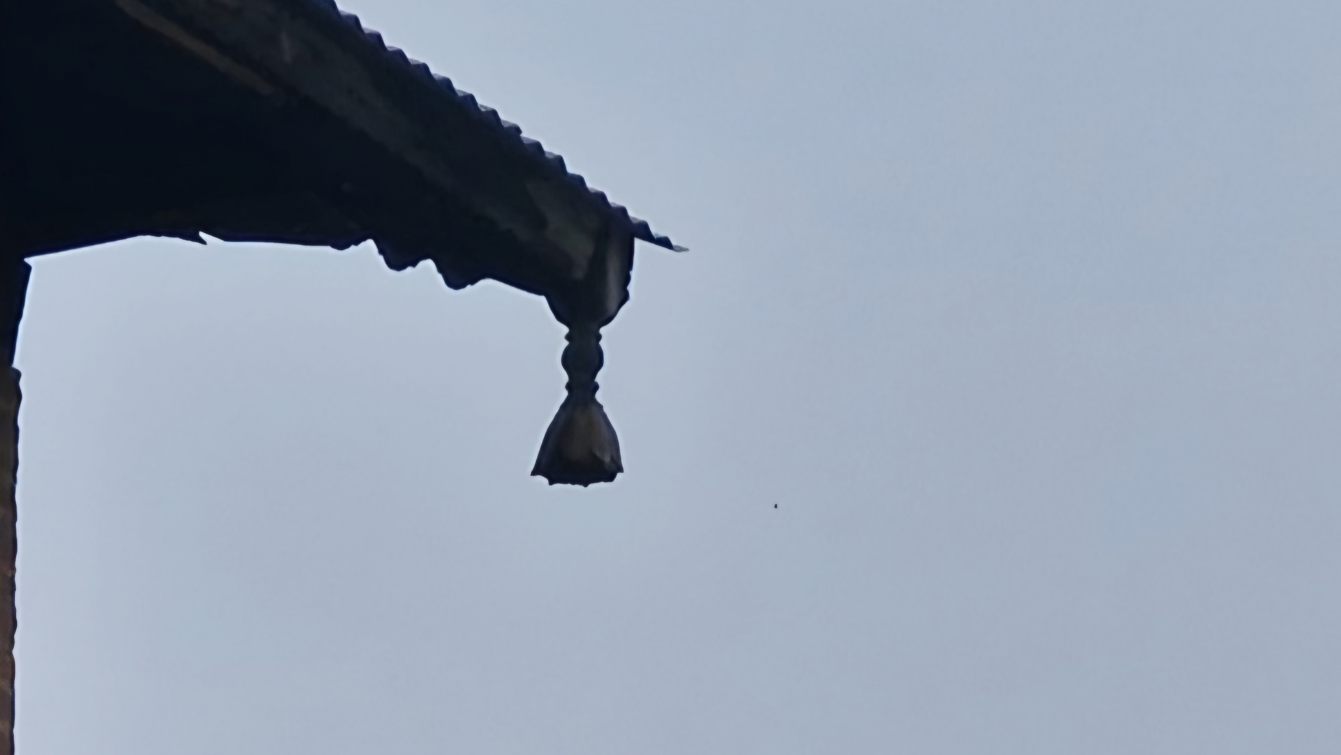
Over time, the Dūr evolved into multiple primary traditional forms:
Engraved Designs: Where the broad flat surface of the wood is carved with floral or geometric motifs.
Hollowed-Out Patterns: Where sections of the flat surface are cut away to create a lattice-like, shadow-casting effect.
Pendant Variations: A hanging form suspended from the eaves, slimmer and vertical in shape, often resembling a tassel or bell-shaped ornament.
Wind Chimes: Unlike the flatter Dur fixed to roof corners, these hanging forms were more dynamic and ceremonial in appearance, sometimes resembling bells, tassels, or miniature chandeliers.
Beyond beauty, the Dur may have served a remarkably practical—and clever—purpose.
An old belief in the Valley suggests that these hanging ornaments were unintentional seismic indicators.
Given Kashmir’s long history of earthquakes, the idea was this: during a tremor, the Dur would shift or tilt from its original position.
After the shaking stopped, homeowners could assess how much the Dur had moved or warped, allowing them to estimate the intensity of the shock and the potential structural damage to the house’s frame, though the accuracy of this assessment remains uncertain.
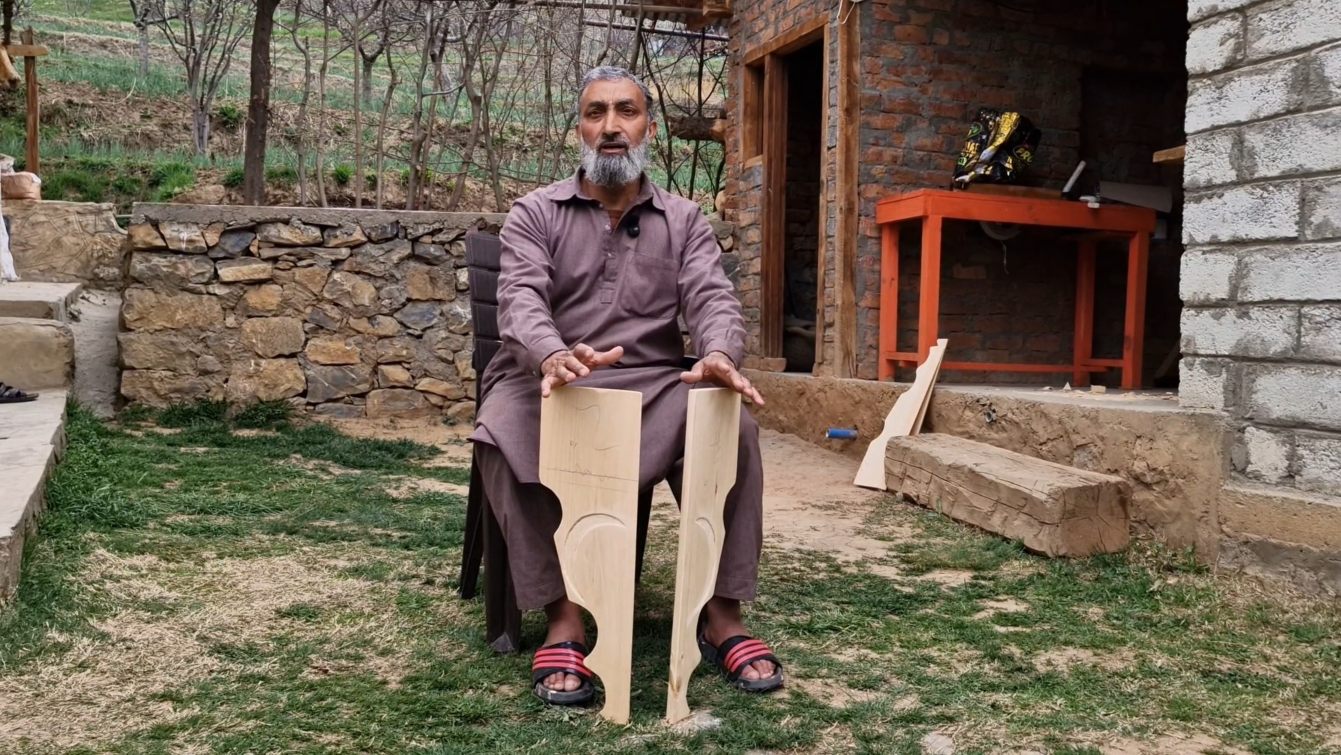
Master craftsman Mohammed Yasin Reshi of Bandipora holds two freshly cut Dūr blanks outside his workshop.
In Bandipora, Mohammed Yasin Reshi is one of the last craftsmen who still makes Dūr to order.
When recently asked about the tradition, he had little to say, the silence of a man watching his craft disappear.
Wood has become costlier, he noted, and people no longer ask for Dür. Those who do, mostly settle for tin.
Tragically, the traditional wooden Dur is fading from the Valley’s rooflines.
Modern construction and economic pressures have led to widespread replacement with cheaper tin versions.
While these metal substitutes mimic the shape of the original Dur, they lack the soul and durability of deodar.
During heavy rain and wind, the tin sheets easily bend, corrode, or break apart—a stark contrast to the resilient wooden originals that weathered decades of snow.
Similar wooden roof ornaments are found across the broader Himalayan region, particularly in Himachal Pradesh, reflecting shared mountain architectural traditions that once stretched across these valleys.
As concrete and corrugated steel have altogether replaced Kashmir’s old sloping wooden roofs — except in a few rare rural areas — the Dur, the “earring” of the traditional house, risks fading into memory along with a time when every corner carried beauty and meaning.