
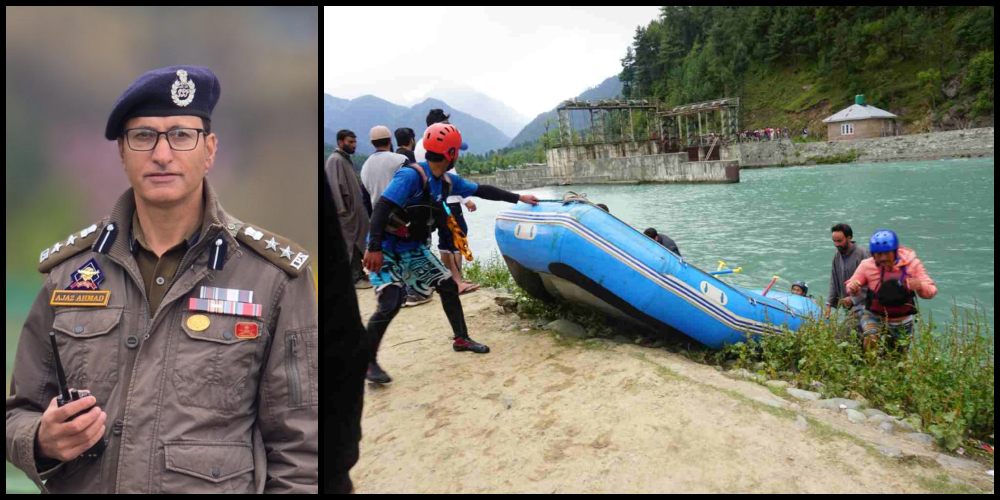

In this article, Aijaz Bhat (IPS), SSP Traffic Srinagar, whose engagement with the outdoors and firsthand understanding of Kashmir’s landscapes lend valuable perspective, writes about how moments of panic and a lack of awareness often turn Kashmir’s scenic rivers into sites of tragedy.
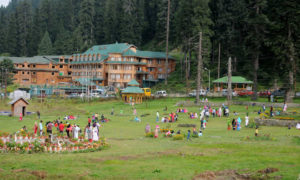
Every summer, as temperatures rise and visitors pour into Pahalgam, the Valley’s rivers become a magnet for tourists seeking adventure, photographs and moments of quiet escape.
Families gather along riverbanks, children hop across rocks, and groups venture into the streams to experience nature up close.
Yet, almost every year, reports emerge of people getting stranded in fast-flowing waters, while some tragically lose their lives.
The rivers that lend Pahalgam its charm are also among its most powerful natural forces. What appears calm and inviting in the morning can become dangerous within a matter of hours.
Understanding how these rivers behave and how people respond when caught in difficult situations is essential if such tragedies are to be avoided.
Being a trekker and having some basic knowledge about the terrain around riverbanks, I can safely construe some of the reasons behind these incidents.
One of the major factors is the shelf created by the caving in of riverbanks along the sides of a river flowing at speed in its upper course.
These seemingly stable areas can be deceptive and may give way without warning.
Another reason is the lagooning of rocks in the afternoon when the water level in streams rises suddenly.
As temperatures increase during the day, snowmelt intensifies and significantly adds to the volume of water flowing downstream.
Parts of the river, especially rocks that could easily be reached earlier in the day, become completely cut off from the banks.
As a result, venturing picnickers often find themselves stranded on large rocks, frequently in the middle of the river, where they seek temporary refuge.
The problem is often compounded by panic. People begin to fear the gushing stream and, because help may not be immediately visible, they resort to risky decisions or acts of bravado.
A chain reaction follows. Those stranded start choking with fear, attempt to take charge of the situation and begin acting irrationally.
Panic may enable some individuals to cross the stream, but they fail to realise that the river is continuing to swell and that conditions are becoming more dangerous for others who try to follow.
As the volume of water increases, so does the panic. People take greater risks, lose their footing and, in some cases, slip to their deaths.
The key to survival in such situations is remaining calm.
There are several precautions that visitors should keep in mind when venturing near rivers that are flowing at full strength.
First and foremost, avoid venturing onto rocks in the river, especially during the afternoon when water levels can rise rapidly. What appears safe in the morning may become inaccessible a few hours later.
If you find yourself stranded and notice the water rising between the rock you are standing on and the riverbank, do not panic.
Stay calm and avoid unnecessary movement. Keeping your composure is often the difference between safety and disaster.
Children, as well as those unfamiliar with trekking or unsure on uneven terrain, should never undertake such adventures.
Rivers in their upper courses are unforgiving, and even a minor misstep can have serious consequences.
Those who insist on exploring river stretches should consider carrying a rope and, where possible, life jackets.
Such precautions may appear excessive until an emergency arises.
Most importantly, waiting for help is usually wiser than taking matters into your own hands.
People standing safely on the bank are often in a better position to assess the situation and determine the safest course of action. A few extra minutes of patience can save a life.
Kashmir’s rivers are among Kashmir’s greatest natural treasures. Their crystal waters, roaring currents and dramatic landscapes draw thousands of visitors every year.
But admiration should never be mistaken for understanding. Beneath their beauty lies immense power that can change conditions within moments.
Last but not least, I would like to stress that our rivers can become ruthless at will. Never be driven solely by their beauty while ignoring their strength and energy.
Respect for nature, awareness of risk and the ability to remain calm in a crisis can make all the difference between a memorable outing and a preventable tragedy.
 Widely appreciated for his and his team’s efforts to decongest city traffic and improve road safety, the author, Aijaz Bhat, serves as SSP Traffic, Srinagar and is working to improve traffic management and road safety in Kashmir. Beyond his professional responsibilities, he is an avid hiker, a passionate lover of nature, and an active participant in social and community welfare initiatives.