
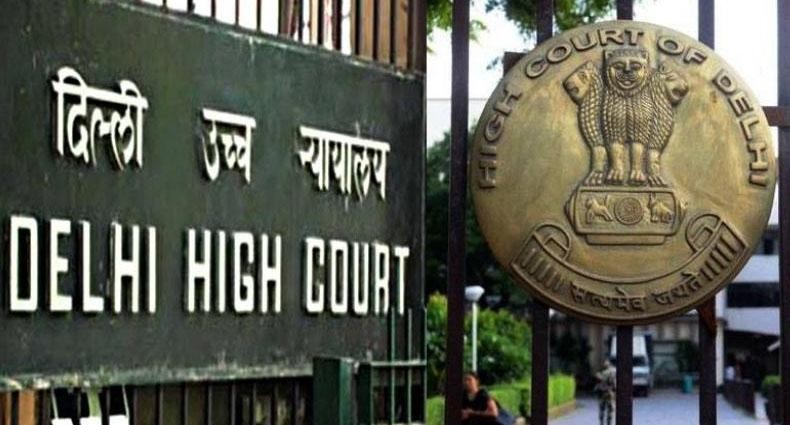
New Delhi: The Delhi High Court on Friday rejected a petition filed by Telegram challenging the Government of India’s decision to block the messaging platform till June 22 to prevent misinformation regarding an alleged paper leak ahead of the NEET 2026 re-examination, scheduled on June 21.
The GoI had also ordered the disabling of the app’s message-editing feature till June 30, a measure that also received the Court’s approval.
Justice Tejas Karia, pronouncing the order, expressed satisfaction with the procedure followed under Section 69A of the Information Technology Act to restrict access to the platform, given the emergency nature of the issue. The bench rejected Telegram’s challenge based on the non-supply of reasons, Live Law reports.
The Court held that the GoI was empowered under Section 69A of the Information Technology Act to entirely block a platform and that the measure satisfied the tests of proportionality, as it was necessary and the least restrictive course available.
The Court observed that the app’s unique features, including public channels with large memberships, the presence of bots capable of disseminating information without human intervention, concealment of phone numbers, and a feature enabling the editing of messages without a time limit, made it a potential tool for spreading misinformation.
The Court noted that even if a particular channel is removed, it can be easily duplicated on the platform.
“As a result, illicit activity may resume within a short period notwithstanding takedown action against the original channel,” the Court said.
Regarding the editing feature, the Court said, “Telegram permits messages, including files, to be edited at a later point in time. Such functionality may be employed to disseminate misinformation by editing messages sent prior in time by replacing the attachment to give impression that the examination paper was leaked prior to the examination even though such editing takes place after conclusion of the examination.
Accordingly, any subsequent editing of messages relating to NEET UG, 2026 may mislead general public and, consequently, give rise to a potential public order situation.”
The court noted that the ban was only a temporary measure and was “narrowly tailored” to meet a specific objective. It held that the decision satisfied the four tests of proportionality laid down by the Supreme Court in the Anuradha Bhasin case: (i) identification of a legitimate objective; (ii) existence of a rational nexus between the objective and the measure adopted; (iii) necessity of the measure in the facts and circumstances of the case; and (iv) adoption of the least restrictive measure available.
The temporary blocking order against Telegram was passed following recommendations by the National Testing Agency and the Department of Higher Education under the Education Ministry.
Telegram asserted that it had put in place proactive measures, including the takedown of more than 900 links containing unlawful NEET-related content. The platform also highlighted the deployment of artificial intelligence and machine learning tools to address unlawful information.
The GoI, on the other hand, argued that the platform’s technical and architectural features enabled the creation and deployment of automated accounts through bots capable of disseminating bulk communications without continuous human intervention.
“Once a Bot is blocked, it can mirror channel, i.e. it is automatically redirected to another Bot,” Solicitor General Tushar Mehta had told the Court.
During the hearing, the judge had orally asked the GoI whether the rights of 150 million users could be curtailed merely because one group of citizens, namely NEET aspirants, was appearing for an examination.
Telegram CEO Pavel Durov had also issued a statement, claiming that the Centre’s action punishes “150M+ ordinary Telegram users in India” and not the “insiders” who leaked the exam materials.